
The Real Cost of Clothing Manufacturing: What Brands Actually Pay Per Unit
If you’ve ever received a quote from a manufacturer and wondered how they landed on that number, you’re not alone. Most apparel brands first encounter the real cost of clothing manufacturing when they see the gap between “material cost” and “total landed cost.” That gap is where things get interesting — and where most buyers get confused.
Understanding what drives clothing costs isn’t just about negotiating better prices. It’s about knowing which line items are fixed, which are negotiable, and where small changes in your spec can move the needle significantly on your per-unit cost. This guide walks through the actual cost breakdown you’d see inside a garment factory cost sheet.
What Goes Into a Clothing Cost Sheet
A clothing cost sheet is a detailed document that lists every expense tied to producing one unit of your garment. It’s not a price list — it’s a transparency tool. Manufacturers use it internally, and sharing it with serious buyers is common practice in B2B apparel production.
The major categories on a typical cost sheet look like this:
- Fabric and raw materials — the single largest line item, typically 40–70% of total cost
- Trims and accessories — zippers, buttons, labels, thread, elastic, hangtags
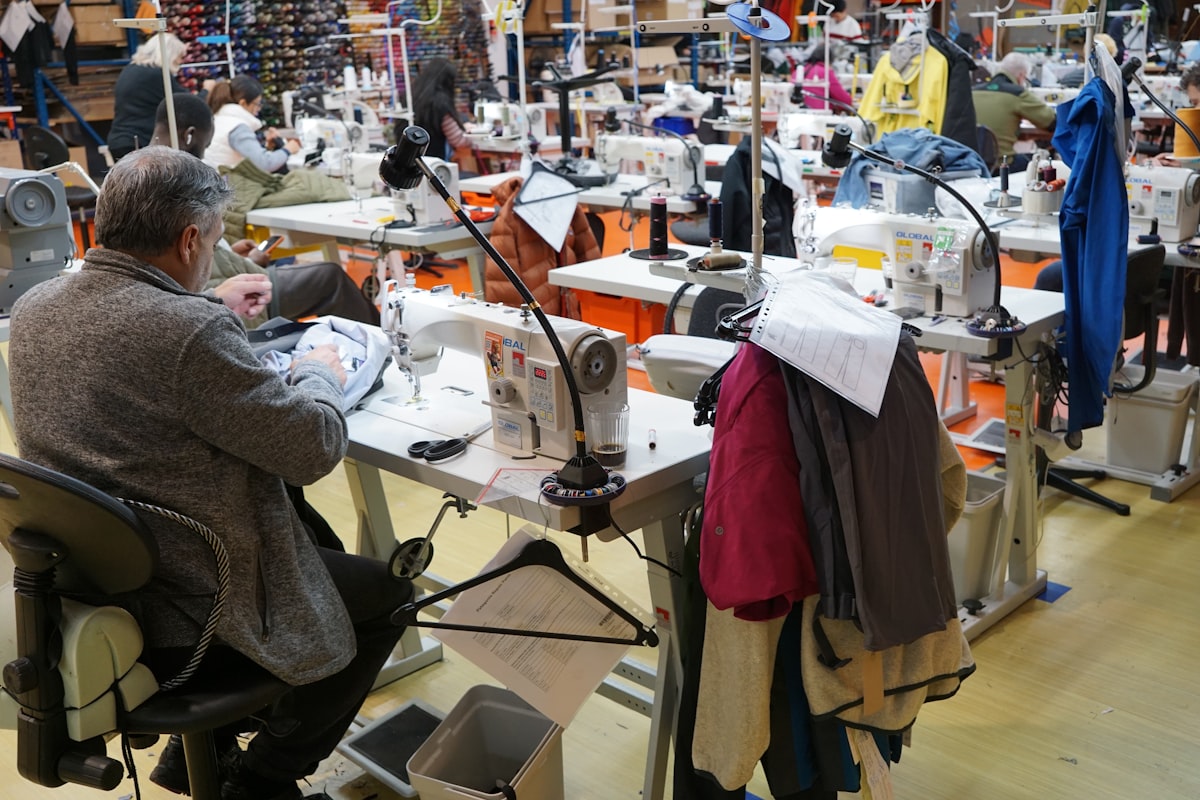
- Labor — cutting, sewing, finishing, inspection, packing
- Factory overhead — rent, utilities, equipment, supervisory staff
- Packaging — polybags, tissue, boxes, brand labels
- Logistics — freight, duties, handling
- Pre-production costs — pattern making, sampling, testing
- Wastage allowance — fabric waste during cutting, typically 5–15%
Fabric: The Biggest Variable in Your Cost
Fabric cost is the most volatile component, and it starts with the type of fiber. Natural fibers like organic cotton, linen, and wool are generally more expensive than polyester or nylon blends. But fiber type is just the beginning.
Fabric weight — measured in GSM (grams per square meter) — directly affects how much material goes into each garment. A 180 GSM fleece hoodie uses substantially more fiber than a 140 GSM crew neck t-shirt. Higher GSM means more raw material, higher fabric cost per unit, and heavier freight charges. It’s one of the first places manufacturers look when a buyer asks for a lower price on a heavyweight garment.
Fabric construction matters too. A 200 GSM French terry and a 200 GSM polar fleece may weigh the same but cost differently because of how the fibers are woven or knitted. Compression fabrics, moisture-wicking treatments, and four-way stretch all add processing steps that increase material cost.
Origin of fabric also influences pricing. Locally sourced fabrics may have higher material costs but lower shipping and import duty. Overseas fabrics may be cheaper per meter but add 6–12% in import tariffs depending on the destination country.
Labor Costs and What Drives Them
Labor typically makes up 15–30% of garment cost, varying by production country. China, Vietnam, Bangladesh, and Ethiopia all have different wage scales and minimum requirements. But labor cost isn’t simply “hourly rate times hours per garment.” Complexity is the real multiplier.
A basic t-shirt with set-in sleeves and a straight hem might take 10–15 minutes of sewing labor. A zippered hoodie with a lined hood, kangaroo pocket, ribbed cuffs, and flatlock stitching could take 45–60 minutes. That’s the difference between a $2 labor cost and a $6 labor cost on the same production line.
Design features that drive up labor cost include:
- Multiple seam types (flatlock, coverstitch, french seams)
- Intricate stitching patterns or embroidery
- Hand-finishing steps
- Mixed material panels (woven sleeves on a knit body)
- Badges, patches, or appliqués requiring separate attachment
Trims, Packaging, and the Hidden Line Items
Trims are easy to underestimate. Zippers alone can range from $0.10 for a basic nylon zipper to $2.50+ for a premium YKK metal zipper with custom pulls. Custom hangtags, woven labels, printed tissue, and branded polybags all add up — typically $0.30–$2.00 per unit depending on complexity and order volume.
Packaging specifications often get negotiated last, but they shouldn’t. If your order is shipped ocean freight, packaging weight and volume directly affect your freight cost. Polybagged garments folded flat pack more efficiently than garments on hangers. Rigid boxes protect better but cost more and take up more container space.
Wastage allowance is a line item that surprises many first-time buyers. When a factory cuts a garment from fabric rolls, there’s always leftover fabric between pattern pieces. That waste is factored into your fabric cost — typically a 5–15% allowance depending on the garment’s geometry and the fabric width. If you’re supply a narrower fabric width or a pattern with lots of angles, your wastage allowance will be higher.
How Order Quantity Affects Per-Unit Cost
Minimum order quantities exist because every production run has fixed costs — machine setup, pattern preparation, color mixing for dyes. These setup costs are spread across the units produced. The more units you order, the less of that fixed cost gets assigned to each garment.
A 500-unit order and a 3,000-unit order for the same style will have meaningfully different per-unit prices, even with identical specifications. The gap is usually most dramatic between 100–500 units and 1,000–3,000 units.
If your order falls below a factory’s typical MOQ, expect a per-unit premium of 15–30%. Some factories accept below-MOQ orders for sampling or prototype runs, but they won’t extend those prices to production volumes.
Lead Time and Its Cost Impact
Rush orders cost more. This is non-negotiable everywhere. When you compress a 60-day lead time into 30 days, the factory has to either run overtime shifts or shuffle your order ahead of existing commitments. Both options carry a premium — typically 15–25% for a 50% lead time reduction.
Standard lead times allow factories to schedule production efficiently, source fabrics at better prices, and avoid air freight at the end. If you’re building a supply chain on tight retail windows, the cost of speed needs to be part of your pricing model from day one.
Where You Can Actually Negotiate
Most buyers approach negotiation as a single lever: unit price. But the most effective cost negotiations focus on specification adjustments that reduce the manufacturer’s cost without meaningfully affecting the end product.
Consider negotiating on:
- Fabric weight: Dropping from 220 GSM to 200 GSM can shave 5–10% off fabric cost on fleece garments
- Trims: Swapping a custom YKK zipper for a standard brand option saves $0.30–$0.80 per unit
- Order grouping: Combining styles with compatible construction reduces setup time
- Packaging: Switching from individual polybags to dozen-packaging reduces material and labor cost
- Payment terms: Offering faster payment can sometimes unlock better pricing — factories love cash flow

Reading Your Cost Sheet Correctly
When a manufacturer sends you a cost sheet, look for the fabric cost breakdown first. If they can’t tell you the fabric weight, fiber content, and source, that’s a red flag. A transparent factory will break down fabric cost by weight and price per kilogram or meter.
Then check the wastage allowance. A 10% wastage figure is standard; anything above 15% warrants a question about pattern efficiency. Below 5% and you may be underestimating actual fabric consumption.
Finally, look at how pre-production costs are amortized. Pattern making, sample production, and testing should appear as one-time costs in your first order — or be clearly amortized over a specific unit volume. If those costs seem to be hiding in your per-unit price with no explanation, ask for a breakdown.
Building a Cost-Conscious Sourcing Relationship
The brands that get the best outcomes with manufacturers aren’t necessarily the biggest buyers. They’re the ones who understand the cost sheet, ask informed questions, and treat the factory as a partner rather than a vendor.
Share your target retail price upfront. A good manufacturer can tell you within a range whether a given specification can hit that price at your target volume. Getting that feedback before you commit to a tech pack saves months of revision cycles.
Be willing to compromise on features that drive cost but don’t drive value for your end customer. That premium waterproof zipper might make sense for a $120 technical jacket. For a $25 basic hoodie, it’s a margin killer that nobody notices.
Frequently Asked Questions
What percentage of clothing manufacturing cost is fabric?
Fabric and raw materials typically account for 40–70% of the total manufacturing cost per unit, depending on the garment type, fabric weight, and fiber content. Heavyweight garments like hoodies and fleece jackets lean toward the higher end, while lightweight basics like t-shirts and tank tops may see a lower fabric percentage because labor makes up a larger share.
How can I reduce my clothing manufacturing cost without sacrificing quality?
The most effective cost reductions come from specification changes: slightly lower fabric weight, standard trims instead of custom options, simplified seam construction, or switching packaging from individual units to grouped packs. These changes can reduce per-unit cost by 10–20% while maintaining the same quality level in the finished garment.
Why do smaller orders cost more per unit?
Every production run has fixed setup costs — machine preparation, pattern calibration, color or material staging. These costs are spread across the units produced. Smaller orders have fewer units to absorb these fixed costs, so the per-unit allocation is higher. This is why most factories set minimum order quantities (MOQs).
What is wastage allowance in garment costing?
Wastage allowance is a percentage added to fabric cost to account for fabric that gets cut away and discarded during the cutting process. Standard wastage ranges from 5–15% depending on the garment’s pattern complexity and fabric width. Higher wastage directly increases your fabric cost per unit.
How does lead time affect clothing manufacturing cost?
Shorter lead times require the factory to either run overtime production or prioritize your order ahead of others, both of which carry a premium. Compressing a standard 60-day lead time by half typically adds 15–25% to the manufacturing cost. Planning production schedules in advance is the most reliable way to avoid rush order premiums.