
Six Techniques. One Factory That Tells You When Not to Use Them.
We are Prophesy Apparel (PRP), a garment factory in Dongguan founded in 2015. Most factories can print a logo and sew a straight seam. Complex embellishment — a pleat that survives a wash, a silicone patch that does not lift at the edge, a 3-metre laser-cut panel that seals instead of scorching — is where most of them stop. This page is the honest map of where we start: what each technique is actually good for, what it costs, and which fabric will ruin it.
Techniques we run
6
laser cutting to hand beading
MOQ, even on heavy embellishment
50 pcs
per style, per colour
Built in-house
3 processes
laser cutting · embroidery · sequin work
Manufacturing since
2015
Dongguan, China
The 6 Embellishment Techniques We Work In
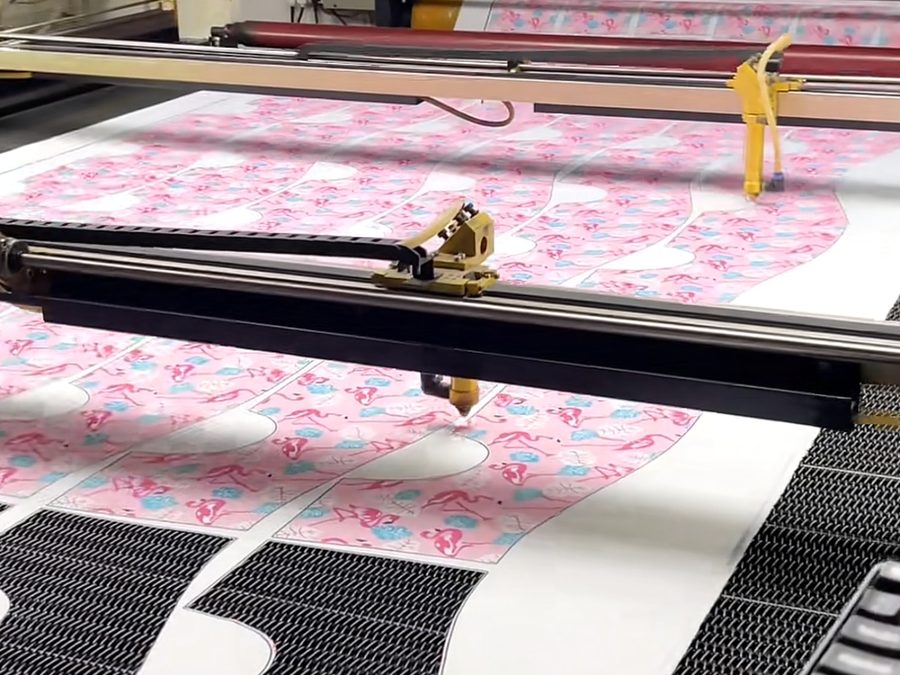
Laser Cutting
In-house, 3-metre roll-fed format — wide enough for a full dress front or a long coat panel with no seam piecing. The laser seals synthetic edges (polyester, nylon, neoprene, PU leather) instead of fraying them, which is the entire reason to choose it over a die-cutter. On 100% cotton, linen or wool it does the opposite — it scorches and leaves a smoke smell, so we will not run natural fibers through it without an edge-finishing plan. One line we will not cross: laser-cutting PVC releases chlorine gas, and we turn that order down.
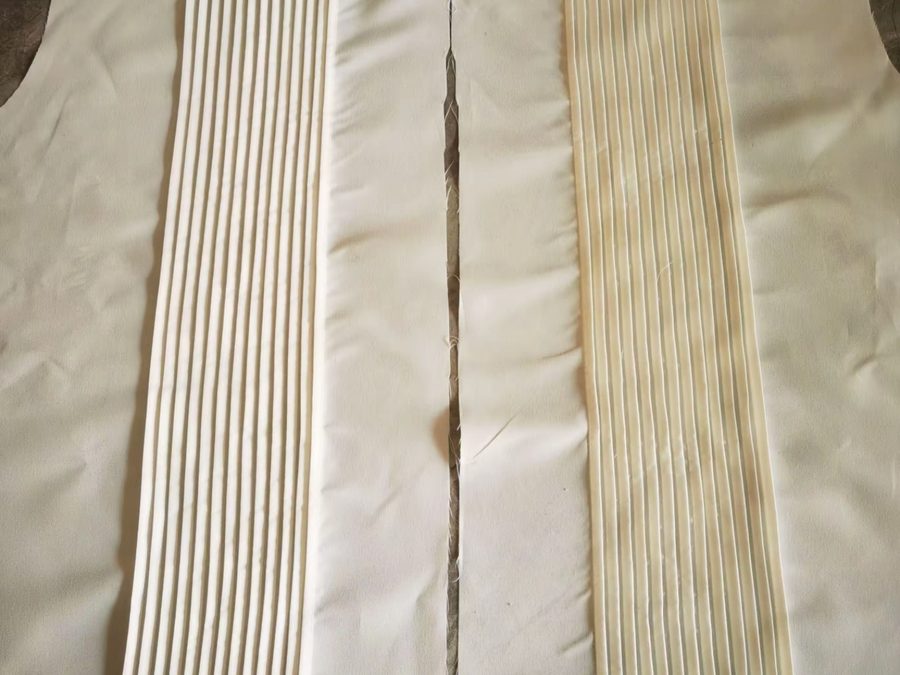
Pleating & Smocking
Run through our partner facility, not our own floor. Heat-set pleats need a thermoplastic fabric — polyester, acetate, nylon, or a lightweight woven like chiffon or satin. Cotton, linen and viscose are not thermoplastic, so a cotton pleat collapses in the first wash; cotton can be shirred or smocked with stitching instead, a different technique that holds up fine. The real cost driver is not labour — it is fabric. Pleating consumes 2.5–3× the flat yardage.
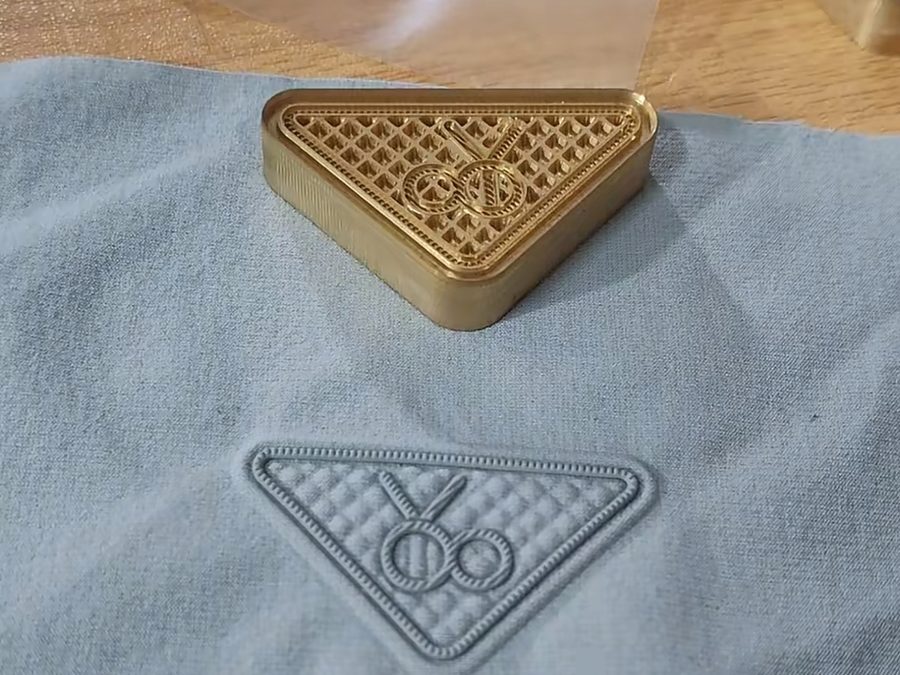
3D Silicone Patches
Made through our partner facility from a one-time mould, USD 40–100 per style. Heat-pressed at 150–170°C, they survive 50+ washes at 40°C — when they fail, it is edge lift, not the silicone breaking down. They will not press cleanly onto thin nylon, ultralight polyester, wool, leather or waterproof-coated fabric; a sew-on version exists for those. Below a few hundred pieces, an embroidered patch is usually cheaper than paying for the mould; above that, silicone wins.
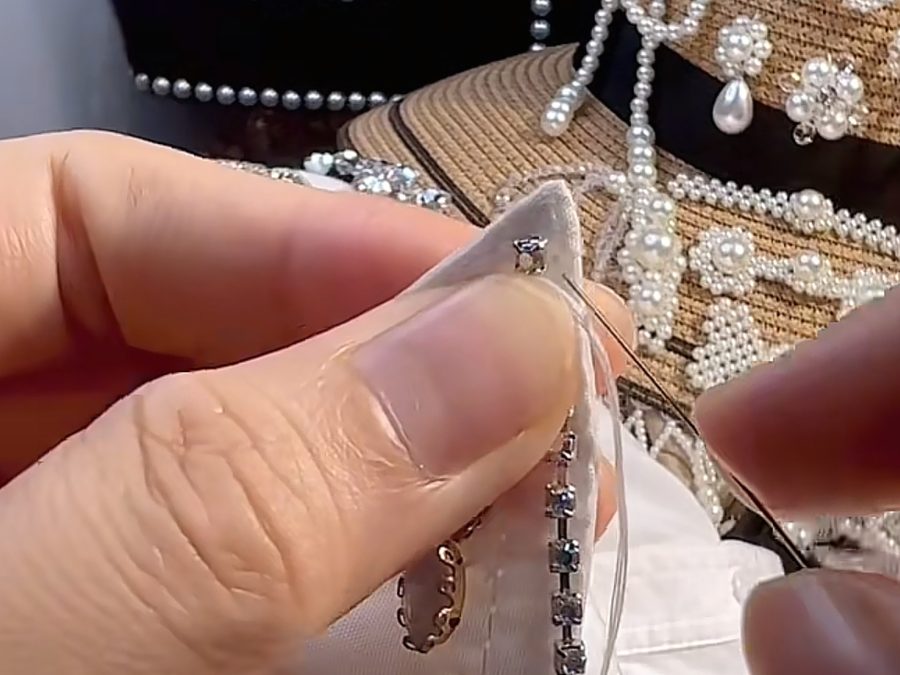
Beading & Rhinestone
Three different techniques, not one: hand beading (partner workshop), hotfix rhinestone (partner facility) and sequin embroidery (in-house, on our own embroidery machines). Fabric has to carry the weight — wovens at 80gsm or more, knits interlined, never a coated or high-stretch fabric. Fastening strength runs hand-sewn, then hotfix, then glued, in that order. We send spare beads with every order for touch-ups after delivery.
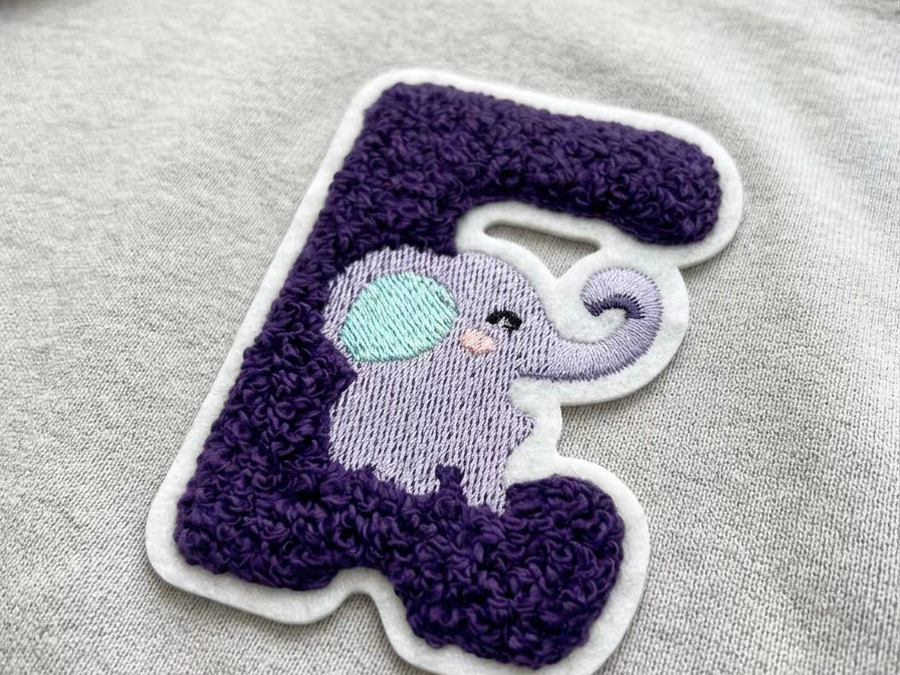
Chenille & Appliqué
Sourced through our partner facility on heavy wovens, melton wool, twill, canvas or heavy fleece — chenille’s coarse looped yarn turns to mush below roughly 5cm letter height or 8mm stroke width, the mistake we see most often in a first design file. Sewn attachment lasts the life of the garment; heat-press alone starts lifting at the edges within 10–20 washes. Anything going through a wash cycle needs to be sewn, not pressed.
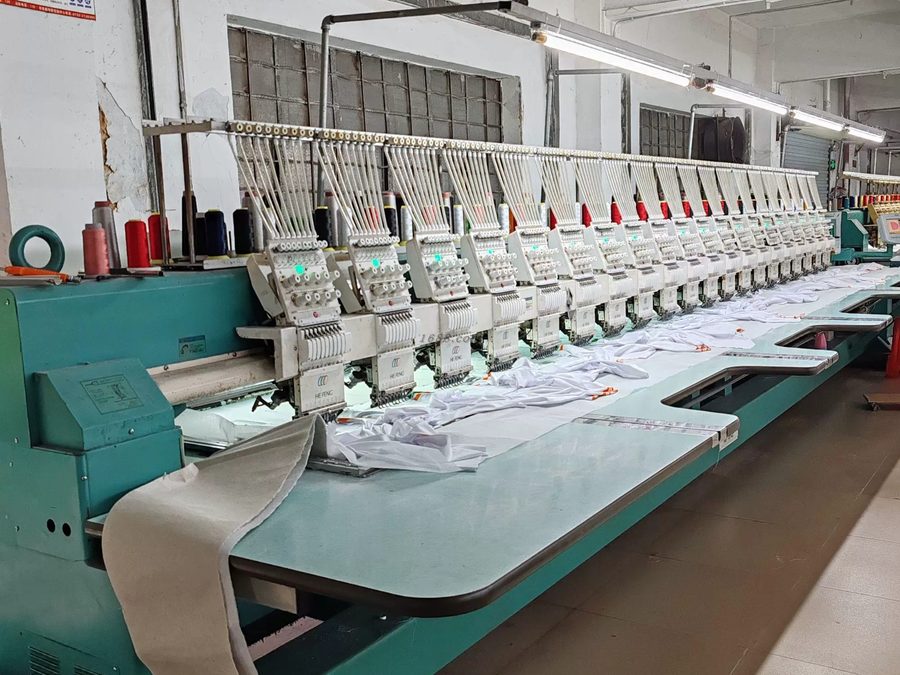
Multi-Head Embroidery
In-house on our own 24-head machines — 24 garments stitched in a single pass, production-scale capacity, not sample-scale. We also run all seven specialty stitches in-house: 3D puff, chenille/towel, sequin, cording, cross-stitch, chain stitch and fringe. It will not work on waterproof-coated fabric (needle holes kill the coating) or genuine leather (it tears along the perforation line), and flat lettering below about 5mm just fills in.
How the 6 Techniques Actually Compare
Buyers usually ask this as “what’s the best decoration option”, which is really three separate questions: how it’s made, how it holds up in the wash, and what it can’t do. Attribution matters here more than on a typical spec sheet — three of these six run on our own machines, three run through partner facilities we coordinate.
| Technique | Made | Relative Cost (50–300 pcs) | Wash Durability | Detail Fidelity | Best Fabric |
|---|---|---|---|---|---|
| Laser Cutting | In-house | Low–Med (no mould fee) | N/A — cut, not applied | High (fine curves & cut-outs) | Polyester, nylon, PU leather |
| Pleating & Smocking | Partner facility | Med (2.5–3× fabric use) | Permanent on 100% poly below 60°C | Med (pattern limited by mould) | Polyester, acetate, lightweight wovens |
| 3D Silicone Patches | Partner facility | Med (one-time mould USD 40–100) | 50+ washes at 40°C; edge lift is the failure mode | High (fine embossed detail) | Cotton, poly blends, twill |
| Beading & Rhinestone | Mixed* | High (hand labour or hotfix) | Hand: dry-clean only. Hotfix: 20–30 washes | Highest (dimensional, reflective) | Wovens ≥80gsm, interlined knits |
| Chenille & Appliqué | Partner facility | Med–High | Sewn: garment lifetime. Heat-press: 10–20 washes | Med (coarse, bold shapes only) | Heavy wovens, melton, twill, canvas |
| Multi-Head Embroidery | In-house, 24 heads | Low–Med (digitizing fee USD 40–100) | Very high, industry-standard | High (fine lettering & logos) | Most wovens & stable knits |
*Beading & Rhinestone splits three ways — hand beading and hotfix rhinestone run through partner facilities, sequin embroidery runs in-house.
How to Choose Between Six Techniques
Most buyers start with a look in mind, not a technique — but the fabric usually decides the technique before the budget does. A 3D-embossed logo on a polyester tech shell is a silicone patch question; the same logo on a heavy cotton varsity jacket is a chenille question, because silicone will not press onto some finishes and chenille needs a fabric heavy enough to carry it. Curved, printed, or multi-colour panels that need a clean sealed edge point to laser cutting, but only on synthetics — the same cut on cotton comes back scorched. If you are not sure which fabric your design needs, read our fabric and materials guide first — it is the other half of this decision.
What to Send Us So the Embellishment Quote Is Accurate
Embellishment is the single biggest lever on price and lead time, and the fastest way to get a number that will not move later is to answer these before we quote:
- Artwork in the right format — AI/EPS/PDF with fonts outlined for laser cutting and appliqué; DST or EMB for embroidery, or vector art we digitize for a one-time USD 40–100 fee.
- The exact garment and fabric — some fabrics rule a technique out before cost even comes up.
- Placement and finished size — chenille and beading both have real minimum-size floors.
- Quantity per style, per colour — our MOQ is 50, but multiple techniques or colourways change the sampling math.
- Whether it is one technique or stacked — two techniques through different partner facilities typically add 3–5 days to bulk lead time; three or more adds roughly 7–10.
- Target wash and use conditions — a piece that never gets machine washed opens up techniques we would otherwise steer you away from.
Send it through the enquiry form or on WhatsApp. If a fabric will not do what a design needs, we would rather say so before a sample round than after.
Feel It Before You Order It
Photos flatten texture — a raised silicone patch, a pleated panel, and a hand-beaded appliqué all look similar in a product photo and nothing alike in your hand. Request our embellishment swatch card and we will put real samples of pleating, laser cutting, silicone patches, beading and specialty embroidery in your hands. It is free to make; shipping is paid by you, and we will confirm the cost before anything ships.
Embellishment Questions Buyers Actually Ask
What is the minimum order for an embellished style?
50 pieces per style, per colour — the same minimum whether it’s a plain tee or a hand-beaded jacket. Most factories that take on heavy embellishment want 300 or more pieces before they’ll discuss it; we start at 50, including on pleating and multi-technique styles.
Can you combine two or three techniques on one garment?
Yes — a laser-cut panel with an embroidered logo, or a chenille patch next to hotfix rhinestone, are both normal requests. Each additional technique routed through a different partner facility typically adds 3–5 days to the bulk lead time; three or more techniques adds roughly 7–10 days. We’ll tell you the real number once we know the combination.
Which of these do you actually make in-house versus send out?
Laser cutting, multi-head embroidery and sequin embroidery run on our own machines. Pleating, silicone patches, hand beading, hotfix rhinestone and chenille go through partner facilities we’ve coordinated with for years. We say which is which on every technique above rather than blur the line.
Do the mould and digitizing fees ever get waived on large orders?
Not something we can promise. The one-time mould fee for silicone patches and the digitizing fee for embroidery both run USD 40–100 per style regardless of order size — what changes is how thin that fee spreads per piece: roughly $0.80–2.00 at 50 pieces, down to $0.08–0.20 at 500.
My design is mainly a printed graphic — is that something you do?
We don’t specialise in flat printing. This page covers structural and dimensional decoration only: cutting, pleating, patches, beading, and embroidery. If a printed graphic is the main ask, we’re not the right fit and would rather say so upfront.
How do I know if my fabric will even work with the technique I want?
Tell us the fabric and the technique together, not just the technique — pleating needs a thermoplastic fabric, laser cutting needs a synthetic to seal cleanly, chenille needs a heavy weave to carry the yarn. Our materials guide covers which fabrics pair with which decoration method, or send us a swatch and we’ll tell you directly.
Tell Us What You're Trying to Decorate
Send the garment, the artwork, and which of the six techniques you’re considering — or send a photo of something similar and let us tell you which technique actually made it. We’ll tell you honestly if a technique won’t work on your fabric before you pay for a sample that won’t survive the first wash.