
3-Metre Laser Cutting: Sealed Edges on Synthetics, Never on Cotton
Prophesy Apparel (PRP) runs laser cutting in-house, on our own 3-metre-format machine — not sent out to a partner facility like five of our other six embellishment techniques. Laser cutting looks simple from a distance: a beam follows a file and the fabric falls away cut. What that beam actually does to the fibre determines whether the edge holds together or falls apart, and that depends entirely on what the fabric is made of.
Laser cutting format
roll-fed, no panel piecing
Ownership
our own machine, not a partner facility
MOQ, per style per colour
same minimum across all six techniques
Sample lead time
25–45 days to bulk
What the Laser Actually Does to the Fabric
On polyester, nylon, polyester mesh, neoprene, PU leather and scuba-style air-layer fabric, the beam melts the fibre at the cut line and the edge fuses shut as it cools. No fraying, no serged binding, no separate edge finish afterward. That self-sealing edge is the entire reason laser cutting exists as a technique instead of a die press or a pair of scissors.
100% cotton, linen, silk and wool do not seal — they scorch. The beam burns through the fibre, leaves a brown, carbonised edge, and the cut area smells like smoke. We can still run natural fibres where the edge will be hidden or bound afterward, but a visible laser-cut edge on cotton reads as a mistake, not a finish.
One material we will not run under any circumstance: PVC. Cutting PVC with a laser releases chlorine gas — toxic to breathe and corrosive to the machine’s optics and rails. If a tech pack calls for a PVC trim that needs laser-cut shaping, we flag it before cutting starts, not after.
The beam holds a minimum hole diameter of roughly 0.5–1mm and a minimum line width of about 1mm — finer than that and the fabric tears instead of cutting cleanly. Cut-out patterns work well until a connecting bridge between two openings drops under 1.5mm; below that, the bridge burns through and the piece you meant to keep attached falls away on the table. Our materials guide covers which fabrics pair with which decoration method if you are still deciding between laser cutting and another technique.
Industry-standard laser cutting tables run 1300×900mm or 1600×1000mm — workable for panel-by-panel cutting, not for a single continuous run. Our table is a 3-metre, roll-fed format: wide enough to cut a full dress front, a long coat panel, or an all-over cutout pattern in one continuous pass, without piecing smaller panels together afterward. Streetwear brands ask for this most often on mesh panels and large logo cutouts — see how that plays out on our streetwear production page.
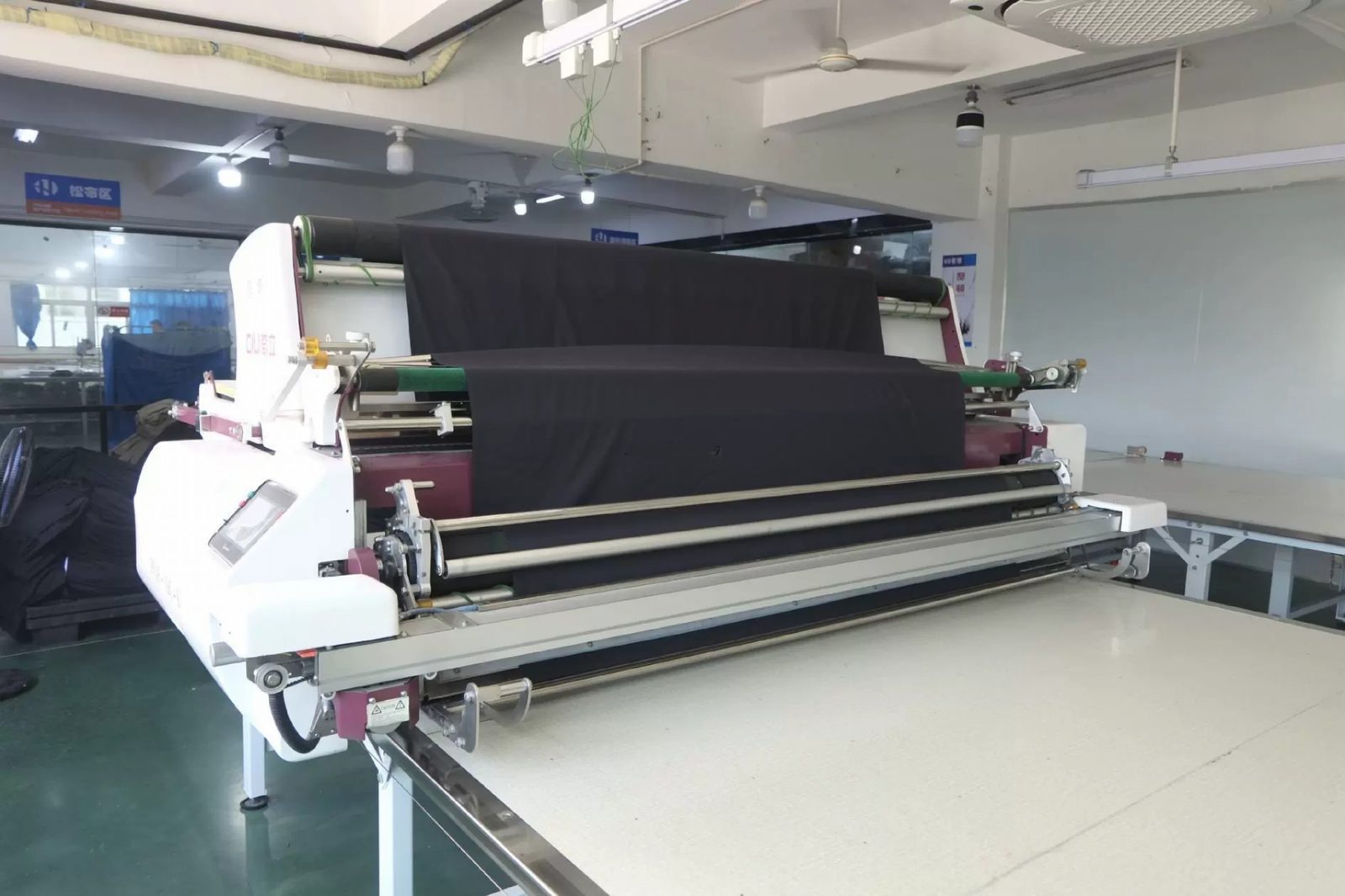
Fabric is spread and aligned flat before it goes onto the cutting table — a fold or wrinkle here becomes a cutting error at 3-metre scale.
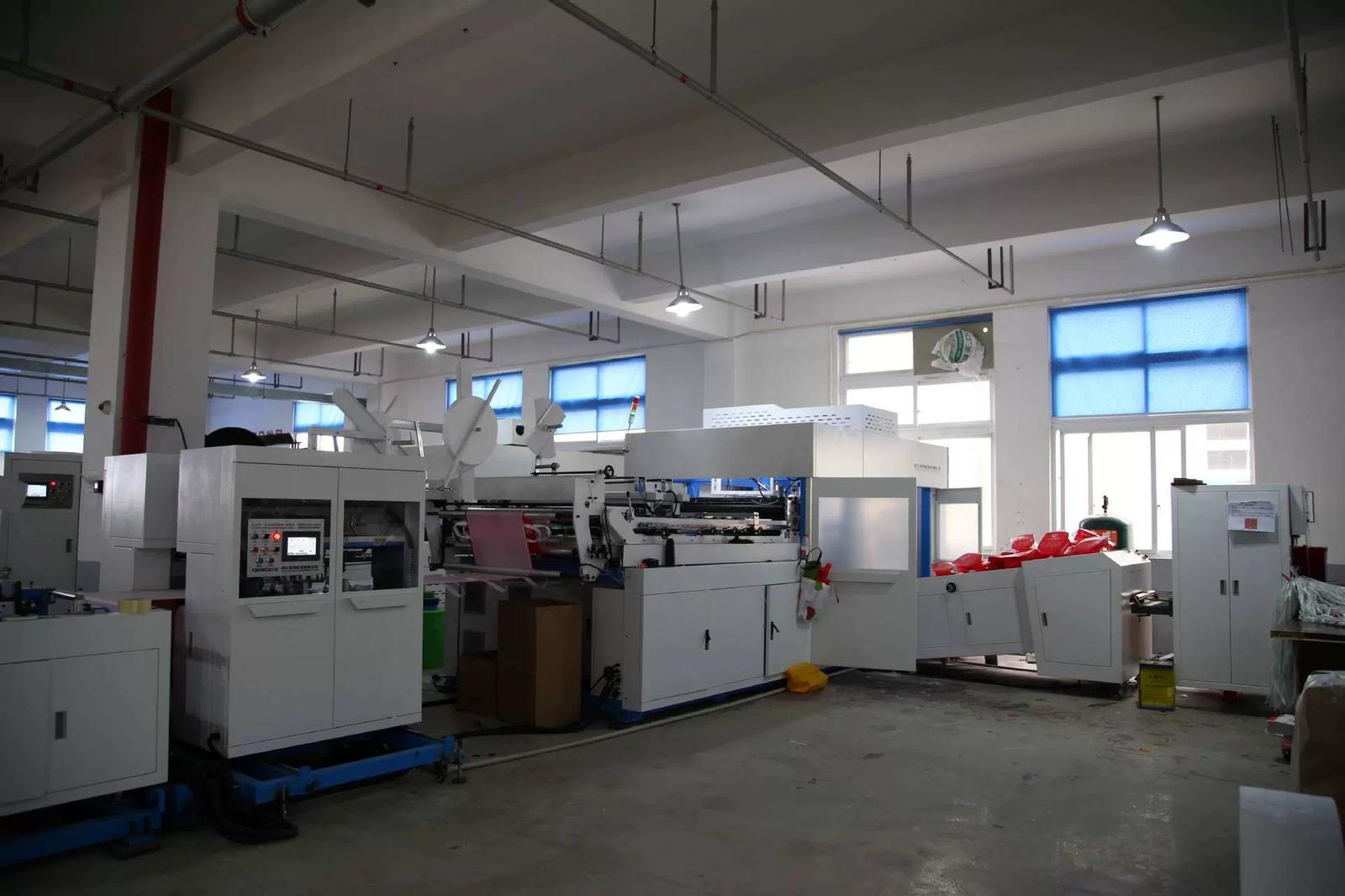
Our production floor in Dongguan, where the laser cutting line runs alongside pattern preparation and cutting.
Laser Cutting Specifications
| Brand | Prophesy Apparel (PRP) |
| Founded | 2015 |
| Ownership | In-house — our own 3-metre laser cutting machine |
| MOQ | 50 pieces per style, per colour |
| Sample lead time | 7–14 days |
| Bulk lead time | 25–45 days from approved sample |
| Format | 3 metres, roll-fed |
| Precision limits | ≈0.5–1mm minimum hole diameter · ≈1mm minimum line width · 1.5mm minimum connecting bridge |
| Suitable fabrics | Polyester, nylon, polyester mesh, neoprene, PU leather, scuba / air-layer |
| Unsuitable fabrics | 100% cotton, linen, silk, wool (carbonises) · PVC (prohibited — releases chlorine gas) |
| File formats accepted | AI, EPS, PDF with fonts converted to outlines |
When Laser Cutting Is the Wrong Call
Laser cutting is not the right call every time a cutout or a clean edge is the goal. Five situations where we would rather steer you elsewhere:
- Your fabric is a natural fibre and the edge will show. Cotton, linen, silk and wool scorch instead of sealing — the edge reads as burnt, not finished. Appliqué or a bound edge looks intentional; a raw laser-cut edge on visible cotton does not.
- Your design needs text or detail finer than 1mm. The beam tears fabric below that width instead of cutting a clean line. Scale the artwork up, or move fine lettering to embroidery.
- You need a PVC trim shaped by laser. We will not run it — the fumes are toxic and the equipment damage is real. Ask about die-cutting for PVC instead.
- Your cutout pattern has bridges under 1.5mm holding sections together. Widen the connecting bridge in the artwork, or the piece separates on the cutting table before it reaches sewing.
- You want a raised or textured surface effect. Laser cutting removes material; it does not add texture or dimension. That is what silicone patches or chenille are for.
Laser Cutting vs Die-Cutting vs Hand-Cutting
Three ways to get a cut edge on a garment panel, and none of them are interchangeable. The difference that matters most is whether the edge needs to survive on its own or gets finished afterward.
| Laser Cutting | Die-Cutting | Hand-Cutting | |
|---|---|---|---|
| Made | In-house, 3-metre roll-fed | Steel rule die, per shape | Manual, no machine |
| Setup cost | None — file-based | Die tooling cost, one-time per shape | None |
| Edge on synthetics | Self-sealed, no fray | Clean but unsealed — needs binding | Unsealed, frays without finishing |
| Edge on naturals | Carbonised — visible scorch | Clean, no fray issue | Clean, standard method for naturals |
| Continuous format | Yes, up to 3 metres | No — limited to die size | No — panel by panel |
| Best for | Fine detail, cutout patterns, synthetic panels | High-volume repeat shapes | Low-volume naturals, prototypes |
| Typical MOQ fit | 50 pcs — sampling has no real minimum | Higher — die cost only pays off at volume | Any — but slow at scale |
What to Send Us So the Laser Cutting Quote Is Accurate
Laser cutting quotes move fastest when we have these up front:
- Artwork in AI, EPS or PDF, fonts converted to outlines — the file drives the cut, so a raster image or an un-outlined font stalls the quote.
- The exact fabric — a synthetic seals, a natural fibre scorches, and PVC is off the table entirely.
- Minimum bridge width in cutout patterns — anything under 1.5mm needs to be redrawn before we cut it.
- Quantity per style, per colour — our MOQ is 50, and sampling itself is mostly file setup time, not a production run.
Send it through the enquiry form or on WhatsApp. If cotton is non-negotiable for a visible edge, we will say so before a sample round, not after.
Feel the Sealed Edge Before You Order
A sealed synthetic edge and a scorched natural-fibre edge look almost identical in a product photo. Request our embellishment swatch card and you will have both in your hands — along with real samples of pleating, silicone patches, beading and specialty embroidery. It is free to make; shipping is paid by you, and we will confirm the cost before anything ships.
Laser Cutting Questions Buyers Actually Ask
Can you laser cut cotton fabric?
Not cleanly for a visible edge. Cotton, linen, silk and wool scorch under the laser instead of sealing, leaving a brown, carbonised line. We can run natural fibres where the edge is hidden or bound afterward, but a raw laser-cut edge on visible cotton reads as burnt, not finished.
What is the minimum order for laser-cut styles?
50 pieces per style, per colour — the same minimum as our other embellishment techniques. Sampling itself carries effectively no minimum since it is file preparation and machine setup rather than a production run.
What does the 3-metre laser cutting format actually let you do?
Industry-standard machines cut 1300×900mm or 1600×1000mm panels. Our table is 3 metres and roll-fed, so we cut a full dress front, a long coat panel, or an all-over cutout pattern in one continuous pass instead of piecing smaller panels together.
Can laser cutting handle fine or intricate cutout patterns?
Yes, down to a minimum hole diameter of about 0.5–1mm and a minimum line width of about 1mm. The limit that trips people up is the connecting bridge between two openings — anything under 1.5mm burns through before the pattern is finished.
Will you laser cut PVC or vinyl trims?
No. Laser-cutting PVC releases chlorine gas, which is toxic to breathe and corrodes the machine’s optics. We flag any tech pack that specifies PVC for laser shaping before cutting starts and suggest die-cutting instead.
How does laser cutting compare to die-cutting on cost?
Die-cutting needs a steel rule die per shape, so it only pays off at higher volumes on a repeat pattern. Laser cutting works from a file with no tooling cost, which is why it fits our 50-piece minimum better than die-cutting does.
Send Us the Fabric and the Cutout
Tell us the fabric, the pattern, and the quantity, and we will tell you whether laser cutting is the right call before you commit to a sample round. If cotton is non-negotiable for the visible edge, we will say so and point you to a technique that will actually work.