
Decorating Cotton and Cotton Blends: What Stitches On, What Scorches, What Won't Pleat
Cotton does not melt. That one fact settles most decoration questions before sampling: heat-set pleats fall out of it and laser edges scorch, while needle-and-thread work — embroidery, sewn chenille, smocking — holds for the life of the garment. Prophesy Apparel (PRP) runs embroidery in-house on a 24-head line and routes chenille, smocking and beading through our production network. Below is which decoration suits which cotton base, and where a blend changes the answer.
Heat-set pleat on 100% cotton
collapses — shirring and smocking hold
Smallest chenille letter
stroke width about 8mm
Embroidery line
in-house, 24 garments per pass
MOQ, per style per colour
same minimum on decorated cotton
Why Cotton Rewards Thread and Punishes Heat
Polyester softens under heat and re-sets in a new shape. Cotton does neither — it scorches or relaxes back to flat. So on cotton, anything that depends on heat to hold is the weak option, and anything held by stitches is the strong one.
Pleats do not survive. A heat-set pleat pressed into 100% cotton collapses on the first wash. Cotton can still be shirred and smocked, because there the stitching holds the shape, not the fibre. Our pleating and smocking page keeps the two apart for exactly this reason.
Laser edges scorch. Our 3-metre-format laser cutting seals a polyester edge, but on 100% cotton the beam leaves a brown edge and a smoke smell. On cotton it is only usable on dark fabric or where the edge is hidden, and the edge must be finished afterwards.
Heavy cotton is the best base for patch work. Twill, canvas, denim and heavy fleece are the fabrics chenille and appliqué is built for — they carry the patch weight without puckering. Our hoodie fleece runs 280–400gsm, well inside that range.
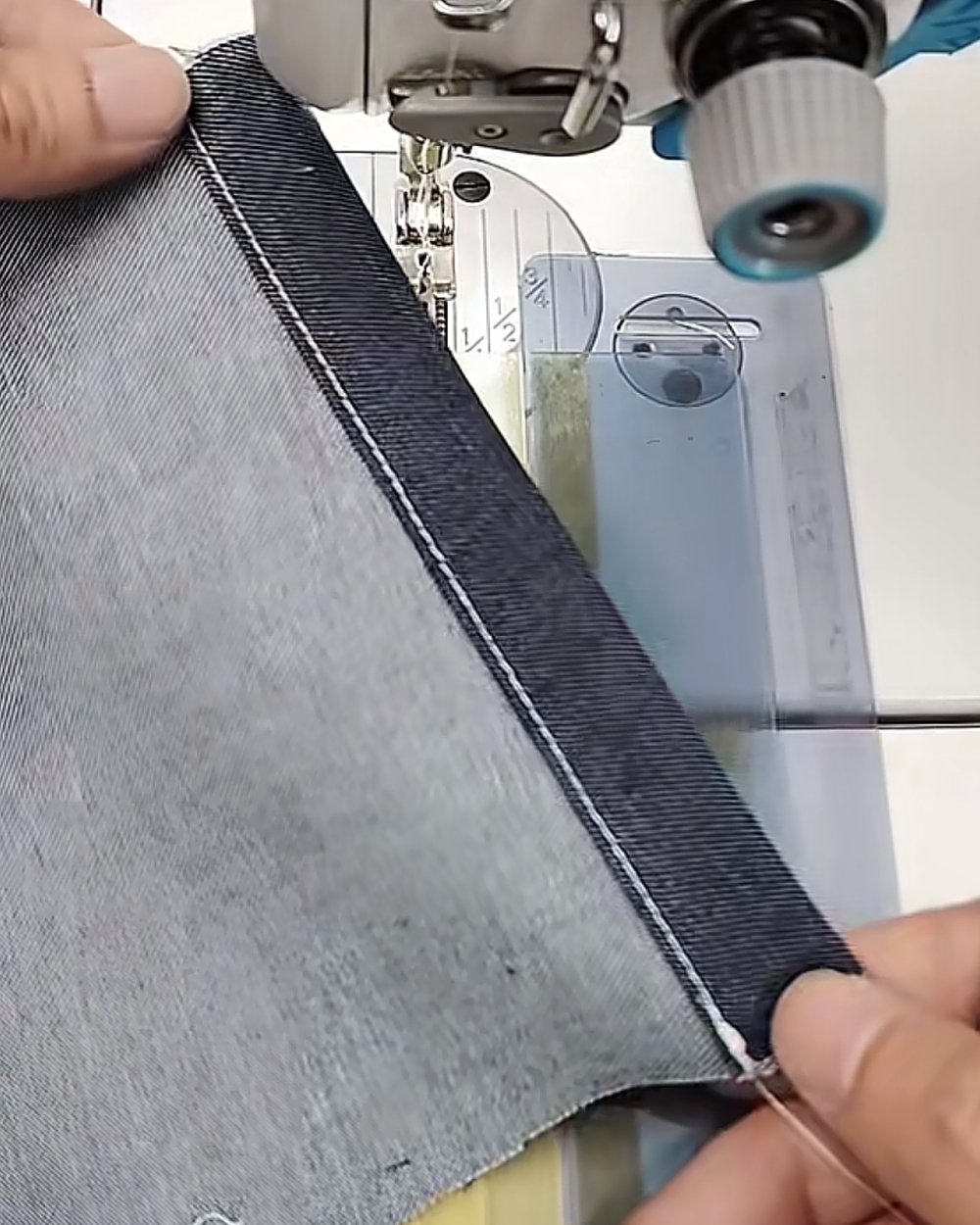
Topstitching a folded twill hem. A dense woven like this takes a sewn patch without puckering.
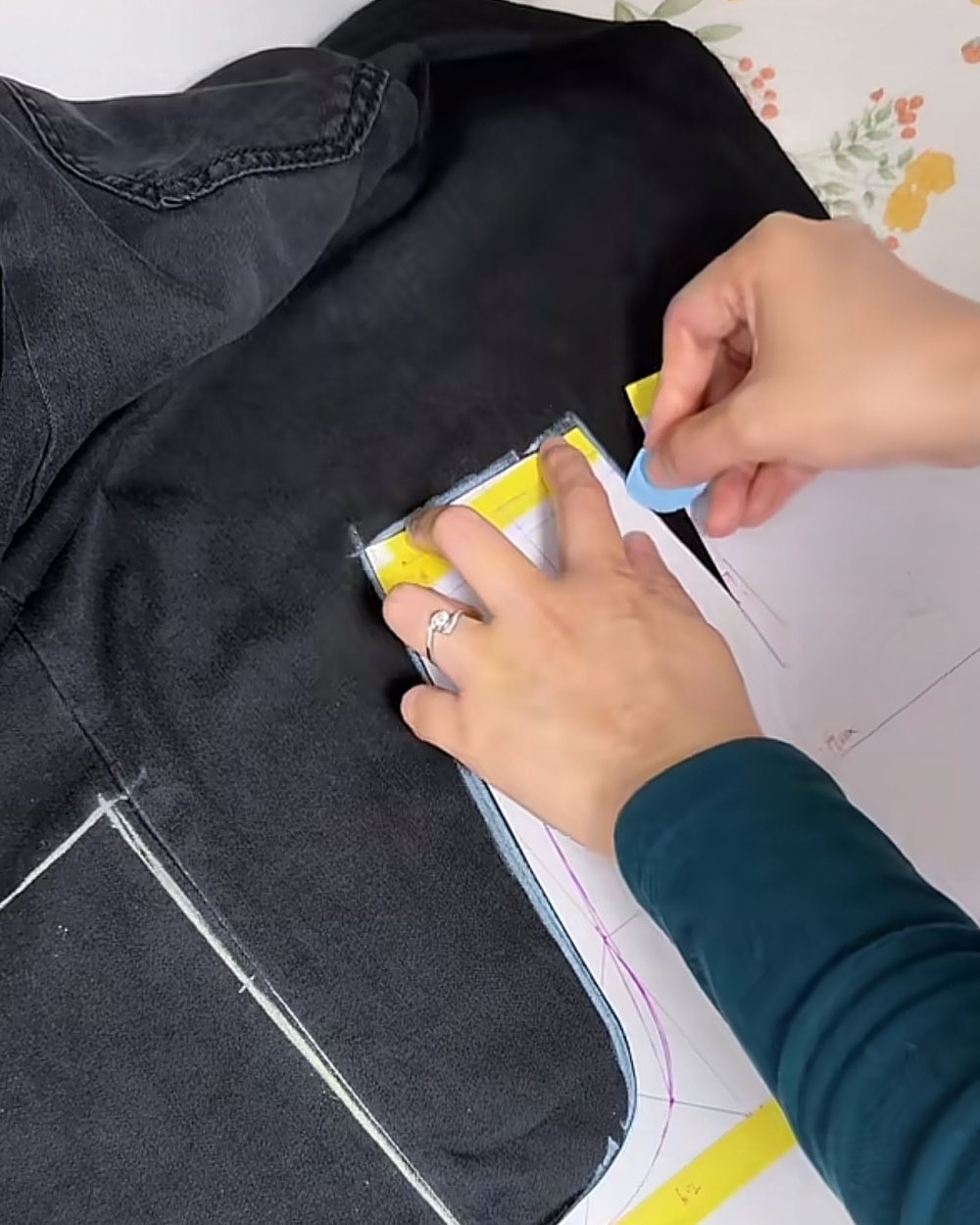
Chalking a placement from a paper template onto a washed black denim jacket — the same step that fixes where a patch or appliqué sits.
Cotton Decoration Specifications
| Brand | Prophesy Apparel (PRP) |
| Founded | 2015 |
| MOQ | 50 pieces per style, per colour |
| Sample lead time | 7–14 days |
| Bulk lead time | 25–45 days from approved sample |
| Cotton bases we sew | Jersey tees 140–200gsm; heavyweight tees 200–280gsm; cotton/poly fleece and French terry hoodies 280–400gsm; cotton/spandex underwear knits |
| Embroidery | In-house, 24 heads. Flat satin lettering down to about 5mm. Light fabrics need backing; stretch knits need cut-away backing. Digitizing fee USD 40–100 one-time per style |
| Chenille patches & appliqué | Partner facility. Minimum letter height about 5cm, minimum stroke about 8mm. Suited to twill, canvas, denim, heavy fleece; not to light knits or wovens under 120gsm. Sewn on for any garment that will be washed |
| Shirring / smocking | Partner facility. Works on cotton — held by stitching |
| Heat-set pleating | Not offered on 100% cotton, linen or viscose: the pleat collapses on the first wash |
| Laser cutting | In-house, 3-metre format. On cotton the edge scorches brown; dark fabrics or concealed edges only, with edge finishing |
| 3D silicone patches | Partner facility. Heat press about 150–170°C for 10–15 seconds; survives 50+ washes at 40°C when correctly pressed. Mould fee USD 40–100 one-time per style |
| Hand beading | Partner workshop. Woven base about 80–100gsm or more; knits must be interlined. Dry clean or cold hand wash only |
| Not offered | Scrubs / medical wear |
When Cotton Is the Wrong Base for the Decoration
Cotton is the default fabric for tees and hoodies, and that is exactly why buyers put decoration on it that it cannot hold. These are the cases where we say so before sampling:
The design is a pleated skirt or dress. Heat-set pleats in 100% cotton are gone after the first wash. Either the base moves to polyester — see decorating polyester and poly blends — or the pleat becomes shirring or smocking, which cotton holds with stitches.
The cut edge is meant to be seen. A laser-cut cotton edge is brown and smells of smoke. Raw-edge laser cut-outs belong on synthetics; on cotton we only cut dark fabric or edges that will be bound or turned under.
Chenille on a light jersey tee. The patch weight distorts a lightweight knit, and a woven under 120gsm puckers and bubbles around it. Chenille goes on fleece, twill, canvas or denim. Lettering also has a floor: under about 5cm high or 8mm stroke, chenille loops turn to mush.
A heat-press-only patch on a garment that gets washed. A chenille patch that is only heat-pressed starts lifting at the edges after 10–20 washes. Anything going through a washing machine gets sewn.
Dense hand beading on a light cotton knit. Beads pull and distort a lightweight knit. The knit needs interlining, or the beading moves to a woven of about 80–100gsm or more.
Cotton Jersey vs Fleece vs Twill and Denim: Which Decoration Works on Which
“Cotton” covers a 140gsm tee and a 400gsm hoodie. The weight and construction decide more than the fibre does. Where a cell says “judged at sampling”, there is no single rule we would put in writing.
| Technique | Cotton jersey (tees) | Cotton & cotton/poly fleece (hoodies) | Twill, canvas, denim |
|---|---|---|---|
| Multi-head embroidery | Works with backing | Works | Works |
| Chenille patch / appliqué, sewn | No — patch weight distorts light knits | Works on heavy fleece | Works — the classic base |
| 3D silicone patch, heat-pressed | Works; failure mode is edge lift | Works | Works |
| Shirring / smocking | Works | Judged at sampling | Judged at sampling |
| Hand beading | Interlining required | Interlining required | Works on wovens of about 80–100gsm or more |
| Heat-set pleating | Collapses on first wash | Not offered — cotton, and over 200gsm | Collapses on first wash |
| Laser-cut visible edge | Scorches brown | Scorches on 100% cotton; blends judged at sampling | Scorches; dark fabric or concealed edge only |
Cotton Blends: Where the Rules Change
Adding polyester or spandex to cotton changes the decoration answer in specific places, not across the board.
65/35 poly-cotton and pleats. A 65/35 blend holds a heat-set pleat at first, then softens after roughly 10–20 washes. Better than cotton, still not permanent. If the pleat is the point of the garment, use 100% polyester. Our note on why pleats fall out of cotton explains the fibre side in more detail.
Cotton/poly fleece and laser cutting. Pure cotton scorches and pure polyester seals; a blend falls somewhere between. We do not promise an edge from a fabric name — we cut the actual fabric during the 7–14 day sample stage and decide from the result. The longer answer is in can you laser cut cotton fabric.
Cotton/spandex. Stretch changes the needle work. Embroidery on a stretch knit needs cut-away backing or the design distorts, and hand beading on high-stretch fabric kills the stretch and the threads snap.
For every fabric we cut and sew, see our materials overview. For every decoration technique in one place, see the embellishment hub.
Hold a Chenille Patch and a Smocked Panel Before You Order
Chenille loop height, smocking tension and a sewn patch edge all look the same in a product photo. Request our embellishment swatch card and we will send real samples of pleating, laser cutting, silicone patches, beading, chenille and specialty embroidery. It is free to make; shipping is paid by you, and we will confirm the cost before anything ships.
Cotton Decoration Questions Buyers Actually Ask
Can cotton be permanently pleated?
No. Cotton is not thermoplastic, so a heat-set pleat in 100% cotton collapses on the first wash. Cotton can be shirred or smocked instead, because the stitching holds the shape rather than the fibre.
What happens when cotton is laser cut?
The edge scorches. 100% cotton leaves a brown edge and a smoke smell, so laser cutting on cotton is only usable on dark fabric or concealed edges, and the edge has to be finished afterwards.
What is the smallest chenille lettering that works on a cotton garment?
About 5cm letter height and about 8mm stroke width. Chenille is a coarse looped structure, so anything finer turns to mush. It works best on twill, canvas, denim and heavy fleece.
Can a chenille patch be heat-pressed onto a cotton hoodie?
It can, but heat-press alone starts lifting at the edges after 10–20 washes. Any garment that will be washed should have the patch sewn on, which lasts the life of the garment.
Do pleats last longer on a 65/35 poly-cotton blend?
Longer than on cotton, but not permanently. A 65/35 poly-cotton softens after roughly 10–20 washes. For a pleat that has to last, the base should be 100% polyester.
What is the minimum order for decorated cotton garments?
50 pieces per style, per colour, so three colourways of one style means 150 pieces. Most factories that handle heavy embellishment want 300+ pieces. We start at 50.
Send Us the Fabric and the Decoration
Tell us the fabric composition, the weight, the decoration and the quantity. If the cotton base will not hold what the design needs — a pleat, a visible laser edge, chenille on a light tee — we will say so before a sample round, not after. Email works too: tkandyyu01@gmail.com.