
3D Silicone & Rubber Patches: The Fabric Test That Comes Before the Mould Fee
Prophesy Apparel (PRP) runs 3D silicone and rubber patches through a partner facility we coordinate directly — not our own floor, the same as pleating and three of our other five embellishment techniques. A one-time mould is cut to your artwork, then the patch is heat-pressed onto the garment at 150–170°C for 10–15 seconds. That heat-press step is also the limit: thin nylon, ultralight polyester, wool, leather and waterproof-coated fabric will not take it cleanly, and a sew-on version exists for exactly those cases. Send us the fabric and the artwork and we will tell you before the mould is cut whether it will press clean.
Mould fee, one-time
per style, not per piece — not waived on large orders
Ownership
coordinated network, not our own floor
MOQ, per style per colour
same minimum across all six techniques
Sample lead time
25–45 days to bulk
What a 3D Silicone or Rubber Patch Actually Is
A 3D silicone or rubber patch starts as a brass or aluminium mould cut to your artwork — one mould per style. The patch is moulded first, then set onto the garment with a heat press running 150–170°C for 10–15 seconds, enough heat and pressure to bond the silicone to the fabric surface without melting the base cloth. That heat-press step is what rules certain fabrics out: thin nylon distorts under the heat, ultralight polyester glazes or melts, wool felts, and genuine leather, PU and waterproof-coated fabrics all take heat damage — a sew-on version exists for exactly those cases. Cotton, polyester blends, twill and most mid-weight wovens take the press cleanly. Typical patches run 3–10cm, up to about 20×20cm at the largest, in 1 to 6 colours — every additional colour is its own process step, so a two-colour patch is not simply one patch printed twice.
Correctly pressed, a silicone patch survives 50+ washes at 40°C, and when it does eventually fail, the failure mode is edge lift, not the silicone itself breaking down — worth knowing before a peeling corner gets mistaken for a defective patch. The number that actually decides whether silicone or embroidery is the cheaper call is the one-time mould fee: USD 40–100 per style, charged once regardless of order size. Embroidered patches carry no such fee, so they are usually cheaper below a few hundred pieces; above that, the mould fee amortises down far enough that silicone wins. We break down exactly where that crossover lands further down this page.
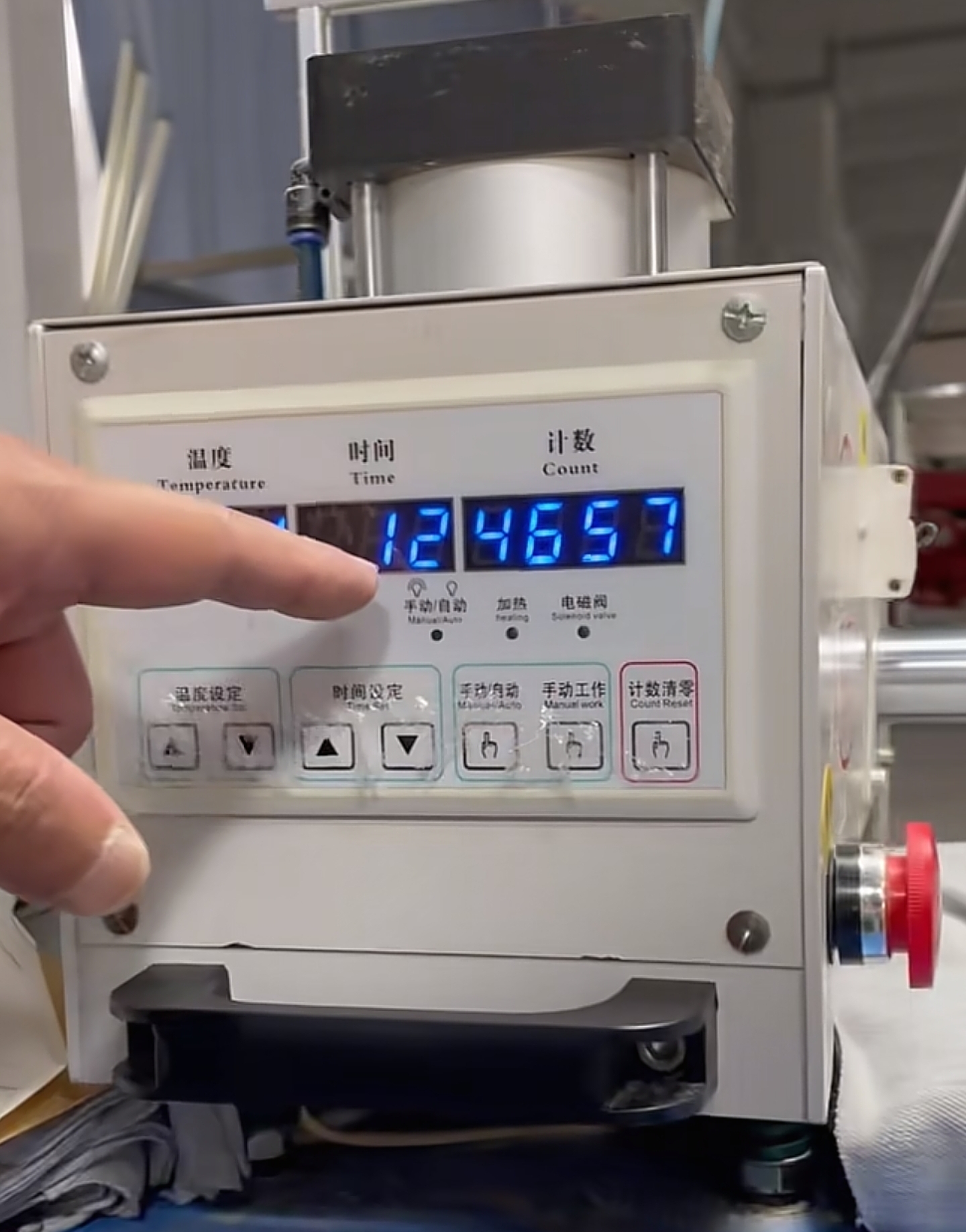
Temperature and time are the two variables a heat press runs on — 150–170°C for 10–15 seconds is the working range for a silicone patch.
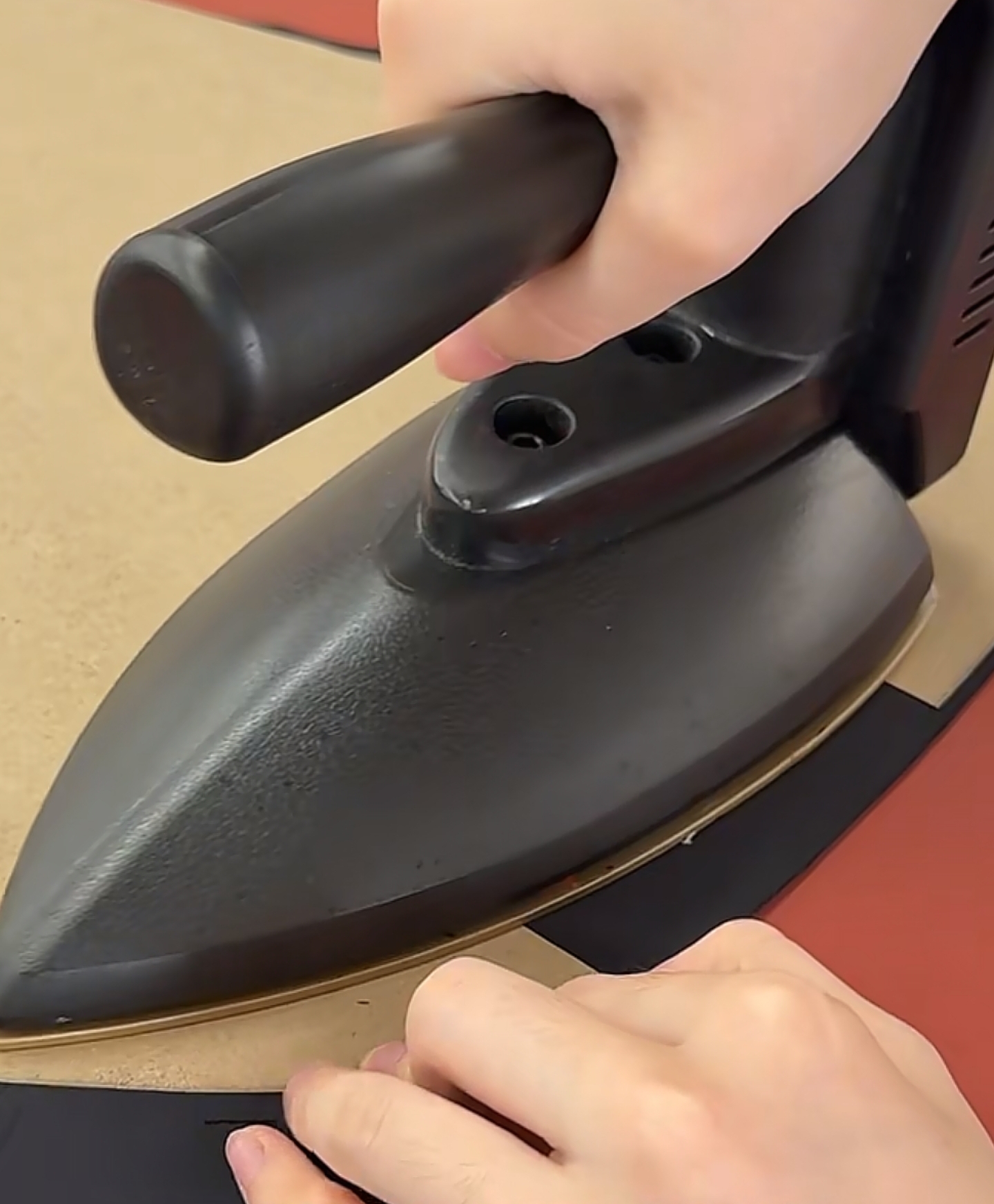
Heat and pressure is the whole mechanism — too little of either and the patch lifts at the edge before the first wash.
3D Silicone & Rubber Patch Specifications
| Brand | Prophesy Apparel (PRP) |
| Founded | 2015 |
| Ownership | Partner facility — coordinated network, not our own floor |
| MOQ | 50 pieces per style, per colour |
| Sample lead time | 7–14 days |
| Bulk lead time | 25–45 days from approved sample |
| Mould fee | USD 40–100 one-time per style — not waived on large orders |
| Heat-press parameters | Typically 150–170°C for 10–15 seconds |
| Suitable fabrics | Cotton, polyester blends, twill, and most mid-weight wovens/knits |
| Unsuitable for heat press | Thin nylon (distorts) · ultralight polyester (glazes/melts) · wool (felts) · genuine leather & PU (heat damage) · waterproof-coated fabric (coating destroyed) — sew-on version available for these |
| Wash durability | 50+ washes at 40°C · failure mode is edge lift, not the silicone breaking down |
| Size range | Typically 3–10cm, maximum around 20×20cm · thickness 0.5–3mm, up to 3–4mm for multi-layer |
| Colours | 1–6 colours · each additional colour is an additional process step |
| Attachment options | Heat press, sew-on, or self-adhesive backing |
| Cost crossover vs embroidered patch | Embroidered patches are cheaper in small runs (no mould fee); silicone patches are cheaper above a few hundred pieces once the mould fee amortises down |
What the Mould Fee Actually Costs Per Piece
The mould fee is a fixed USD 40–100 per style, so the amount it adds to each piece falls fast as the order grows. We would rather show the real math than let it show up as a surprise on the invoice.
| Order quantity | USD 40–100 mould fee, per piece |
|---|---|
| 50 pcs | USD 0.80 – 2.00 per piece |
| 100 pcs | USD 0.40 – 1.00 per piece |
| 300 pcs | USD 0.13 – 0.33 per piece |
| 500 pcs | USD 0.08 – 0.20 per piece |
The mould fee is not waived on large orders — it is a fixed one-time cost that simply spreads thinner as quantity increases.
When You Should Not Choose a Heat-Press Silicone Patch
A raised silicone patch is not the right call every time a dimensional logo is the goal. Six situations where we would rather steer you elsewhere:
- Your fabric is thin nylon, ultralight polyester, wool, leather, PU, or waterproof-coated. All of these take heat damage under the 150–170°C press. Switch to the sew-on version of the same patch, or move to an embroidered patch instead.
- Your order is under a hundred pieces and the budget is tight. The USD 40–100 mould fee is charged once no matter the quantity, so on a small run an embroidered patch — which carries no mould fee — is almost always the cheaper choice.
- Your design needs more than six colours, gradients, or photorealistic detail. Heat-press patches are built for 1–6 flat colours, each an extra process step; anything more complex belongs on a printed or embroidered technique.
- Your patch needs to be bigger than about 20×20cm. That is the practical ceiling for a single mould. A larger design needs to be split into panels or moved to appliqué or chenille.
- The garment will see industrial or high-heat commercial laundering. We can confirm 50+ washes at 40°C; we have not tested or documented performance above that, so we will say so rather than guess.
- You want a soft, fabric-like hand-feel rather than a raised rubbery texture. Chenille or embroidery reads as texture without the stiffness a heat-pressed patch always has at the edges.
It is the same one-time-tooling logic that governs the sunray mould in pleating — a fixed cost that only makes sense once the order is big enough to spread it across.
Silicone Patch vs Embroidered Patch vs Chenille Patch
Three ways to put a raised, textured emblem on a garment, and the fabric, budget and order size decide which one actually makes sense. The one-time tooling fee — or the absence of one — is usually the deciding factor below a few hundred pieces.
| 3D Silicone Patch | Embroidered Patch | Chenille Patch | |
|---|---|---|---|
| Made | Partner facility, heat press with mould | In-house, our 24-head embroidery machines | Partner facility |
| One-time tooling fee | USD 40–100 mould fee per style | None | None documented |
| Wash durability | 50+ washes at 40°C; edge lift is the failure mode | As durable as the base fabric and thread | Sewn: garment lifetime. Heat-press only: 10–20 washes |
| Detail fidelity | High — fine embossed, raised 3D detail | Medium–High — down to 5mm letter height | Low–Medium — coarse, bold shapes only, 5cm minimum letter height |
| Best fabric | Cotton, polyester blends, twill | Most wovens and knits with backing | Heavy wovens, melton wool, twill, canvas, heavy fleece |
| Best for | Bold logos wanting a raised rubbery finish, above a few hundred pieces | Small runs and samples where the mould fee is not worth it | Varsity-style lettering and heavy statement graphics |
What to Send Us So the Quote Is Accurate
Silicone patch quotes move fastest when we have these up front:
- Clean vector artwork for the mould — AI, EPS or PDF, with fonts converted to outlines. A mould is cut from the shape, so a raster image or photo cannot be moulded directly.
- Colour count — 1 to 6 colours. Each additional colour is its own process step, so knowing the count up front keeps the quote accurate.
- Target patch size — typically 3–10cm, up to about 20×20cm at the largest.
- Exact fabric composition, not just “cotton-look” — this is what decides heat press versus the sew-on version. Not sure? Our materials guide covers which fabrics take a heat press cleanly.
- Attachment method preference — heat press, sew-on, or self-adhesive backing.
- Quantity per style, per colour — our MOQ is 50, the same as our other five embellishment techniques.
Send it through the enquiry form or on WhatsApp. If the fabric will not take a clean press, we will say so before the mould is cut, not after.
Feel the Raised Texture Before You Order It
A silicone patch and an embroidered patch can look almost identical in a flat product photo and feel completely different once you are holding the garment — one is a raised, rubbery texture, the other is soft stitched thread. Request our embellishment swatch card and you will have both in your hands — along with real samples of laser cutting, pleating, beading and specialty embroidery. It is free to make; shipping is paid by you, and we will confirm the cost before anything ships.
3D Silicone & Rubber Patch Questions Buyers Actually Ask
What is the minimum order for silicone patches?
50 pieces per style, per colour — the same minimum as our other five embellishment techniques. The USD 40–100 mould fee is a separate one-time cost on top of that, charged once per style regardless of quantity.
Do you waive the mould fee on large orders?
Not something we can promise. The one-time mould fee for silicone patches runs USD 40–100 per style and is charged once no matter the order size; it simply becomes a smaller amount per piece as the quantity grows, which is why we show the per-piece breakdown on this page rather than implying it disappears.
What fabrics don’t work with silicone patches?
Thin nylon, ultralight polyester, wool, genuine leather, PU, and waterproof-coated fabric all take damage under the 150–170°C heat press — nylon and polyester distort or glaze, wool felts, and leather, PU and coated fabrics suffer heat damage. A sew-on version of the same patch works on all of these instead.
How durable are silicone patches?
Correctly pressed, a silicone patch survives 50+ washes at 40°C. When it does eventually fail, the failure mode is edge lift — the patch itself does not break down or crack, it lifts at the border, which is worth knowing before a peeling corner gets read as a defective patch.
Silicone patch or embroidered patch — which is cheaper?
It depends on quantity. Embroidered patches carry no mould fee, so they are usually cheaper below a few hundred pieces. Silicone patches carry a one-time USD 40–100 mould fee, but once that cost is spread across enough pieces, silicone becomes the cheaper option. The crossover sits in the low hundreds of pieces.
How many colours can a silicone patch have?
One to six colours is the typical range, and each additional colour is its own process step — a six-colour patch takes more production steps than a one-colour patch, not just more ink, so colour count is one of the first things we ask about on a new design.
Send Us the Fabric and the Artwork
Tell us the fabric, the artwork, and the quantity, and we will tell you whether it will press clean before you commit to a mould. If your fabric cannot take the heat press, we will point you to the sew-on version or an embroidered patch instead of forcing a technique that will not hold.