
A founder in Los Angeles building a three-piece capsule collection — an oversized hoodie, a heavyweight tee, and a jogger pant — contacted six factories asking for a 50-piece-per-style test run. Two quoted exactly that: 50 pieces per style, 150 units total. Three quoted 50 pieces per style on the phone, then added a 300-piece combined minimum across all three styles once artwork, trims, and packaging entered the conversation. One factory stopped responding after seeing the multi-category request at all.
That gap between what a small batch clothing manufacturer advertises and what it actually delivers on a mixed-style order is where most first-time capsule collections stall. Finding a factory willing to run 50 pieces of one style is a solved problem for most brands by now. Finding one that can run 50 pieces each of three different styles, in the same production cycle, without quietly reclassifying the order as a single 300-piece minimum, is a different question — and it’s the one this guide answers.
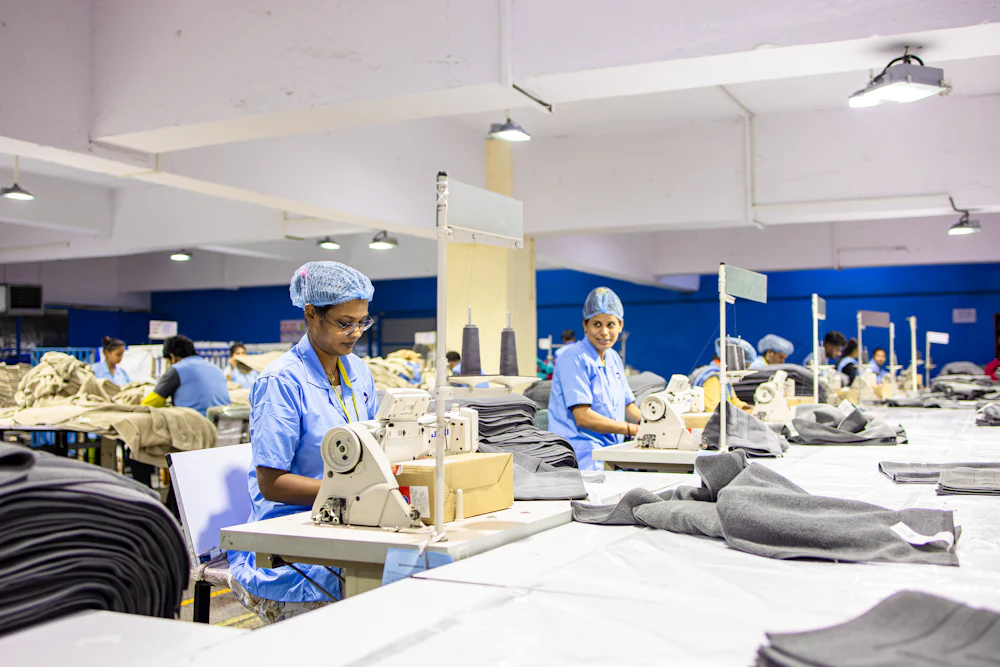
What “Small Batch” Actually Means in Clothing Manufacturing
Small batch production in apparel generally covers the 50- to 300-piece range per style. Below 50 pieces, most factories treat the order as a sample run rather than production. Above 300 pieces per style, the order moves into standard volume territory where per-unit pricing, sample requirements, and lead times shift in the brand’s favor.
The complication is that “small batch” gets applied inconsistently. Some factories quote it per style. Others quote it per colorway, which turns a 3-style, 2-colorway request into six separate 50-piece minimums — 300 pieces total before a single button is sewn. A smaller number quote it per order, meaning the factory doesn’t care how many styles or colors are involved as long as the combined unit count clears their threshold.
None of these structures is inherently wrong. The problem is a factory not disclosing which one it’s using until after a brand has committed time to tech packs, fabric selection, and a sample round. Anyone evaluating a small batch clothing manufacturer for a multi-style order should get the MOQ structure in writing before starting sampling — a step covered in more depth in the guide on how to negotiate MOQ with clothing manufacturers.
What Makes a Factory Actually Capable of Small Batch Production
Advertising low MOQ and being operationally set up to deliver it are different things. Four factors separate factories that can genuinely run small batches from those that quietly push every order toward volume-friendly minimums.
Machine and Line Flexibility Without Costly Changeovers
A production line built around long runs of a single style loses money every time it stops to reconfigure for a different pattern, seam type, or trim setup. Factories that specialize in small batch work keep flatlock, overlock, and coverstitch stations flexible enough to switch between styles within a shift instead of dedicating a line to one SKU for days at a time. Ask directly how many style changeovers a line handles per week — a factory running fewer than two or three is optimized for volume, regardless of what its sales team quotes.
Construction Methods That Scale Down Well
Not every construction method costs the same at small quantities. Cut-and-sew production — cutting fabric to pattern and assembling on standard sewing lines — scales down cleanly because the marginal cost per unit barely changes between 50 pieces and 500. Sublimation all-over-print (AOP) and embroidery behave differently: both carry a fixed setup cost (screen burning, digitizing a design, dye-sublimation transfer paper runs) that gets spread across however many units are produced. At 50 pieces, that setup cost lands harder per unit than it does at 300.
This doesn’t rule out AOP or embroidery for small batch orders — PRP Apparel runs both at 50-piece MOQ — but it does mean the price-per-unit gap between a plain cut-and-sew tee and a heavily embroidered one is wider at small quantities than a brand might expect from looking at volume pricing alone.
Sample-to-Bulk Cost Ratio at Small Quantities
Sample cost is fixed regardless of order size: a pre-production sample set runs $80–$250 depending on complexity, whether the order is for 50 pieces or 500. At 500 pieces, that $200 sample cost is a rounding error. At 50 pieces, it can represent 4–8% of the entire order’s landed cost. Factories genuinely built for small batch work price their samples transparently and don’t try to recover the cost through inflated per-unit bulk pricing later — a pattern worth watching for during quoting.
Mixing Multiple Styles and Categories in One Order
This is where the Los Angeles capsule scenario above breaks down most often. A factory capable of 50-piece MOQ on a single hoodie style isn’t automatically capable of running 50 pieces each of a hoodie, a tee, and a jogger in the same production window — those are three different pattern sets, three different fabric orders from the mill, and potentially three different construction lines. Ask specifically whether the factory’s 50-piece MOQ applies per style within a mixed order, or whether mixed orders trigger a combined threshold. Get the answer in writing before sampling starts, not after.
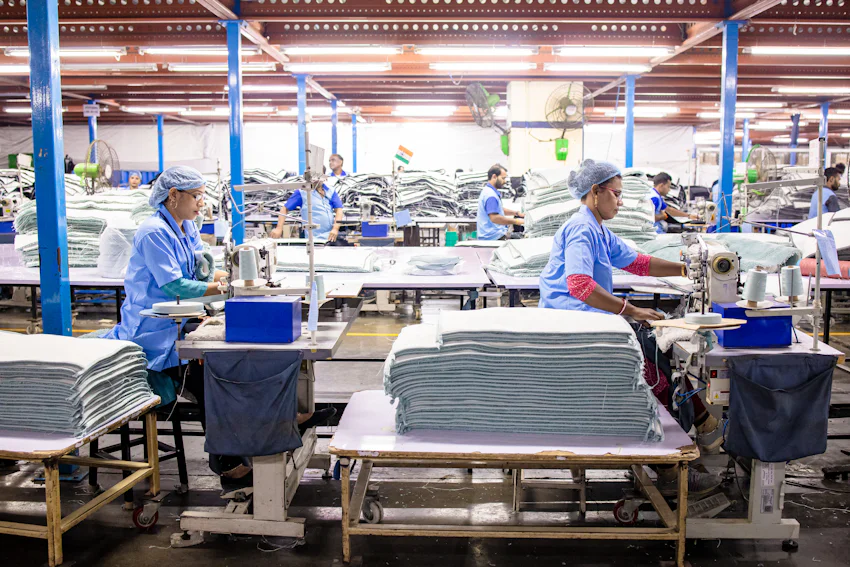
How to Verify a Small Batch Manufacturer’s Claims
Three checks catch most of the gap between what’s quoted and what’s delivered.
First, request the MOQ structure broken down by unit type — per style, per colorway, per order — in writing, not as a verbal confirmation on a sourcing call. Second, ask for a sample production timeline specific to a multi-style order, not a generic single-SKU quote; if the factory can’t give a straight answer on how three styles get sampled and produced concurrently, that’s a signal the line isn’t set up for it. Third, request references or examples of prior small-batch, multi-style capsule orders — a factory that’s actually done this work can point to specifics (style count, unit count, turnaround); a factory that hasn’t will speak in generalities.
Factories that rush the sample stage or skip revision rounds to hit a quoted timeline tend to produce off-spec bulk runs, a pattern covered in the garment sampling process guide. That risk compounds on a multi-style small batch order, where three styles going off-spec simultaneously is three times the rework.
Construction Method Comparison for Small Batch Orders
| Construction Method | Setup Cost Impact at 50 pcs | Best Fit for Small Batch | Typical Price Premium vs. Cut-and-Sew |
|---|---|---|---|
| Cut-and-sew (standard) | Minimal — cost scales linearly | Any style, any category | Baseline |
| Screen print | Moderate — per-color screen fee | Simple 1–3 color graphics | 10–20% |
| Embroidery | Moderate-high — digitizing fee per design | Logos, small placement graphics | 15–30% |
| Sublimation AOP | High — dye-sub transfer run cost | All-over graphics, activewear sets | 25–40% |
| Heat transfer | Low — no per-unit tooling cost | Small runs, frequent design changes | 5–15% |
For a deeper breakdown of fabric selection alongside construction method, the fabric types and GSM guide covers how material choice interacts with these same scaling effects.
PRP Apparel’s Small Batch Production Model
PRP Apparel runs small batch orders from 50 pieces per style, including mixed-style capsule orders — the hoodie-tee-jogger scenario above is a standard order type, not an edge case that triggers a combined minimum. Fabric sourcing runs through the Pearl River Delta supply chain around the Dongguan factory, which keeps bulk lead time at 35–45 days from an approved sample regardless of whether an order covers one style or four.
Custom branding — woven labels, heat-transfer neck tags, custom packaging — is available at the same 50-piece MOQ as the garments themselves, without a separate branding minimum that forces a brand to over-order just to get its own label sewn in. Sample lead time runs 12–15 days from order confirmation, with 1–3 sample rounds standard before bulk production starts. OEKO-TEX Standard 100 fabric certification and ISO colorfastness testing (ISO 105-C06 for washing, ISO 105-X12 for rubbing, ISO 105-E04 for perspiration) are available across categories on request, not sold as an upsell reserved for larger orders.
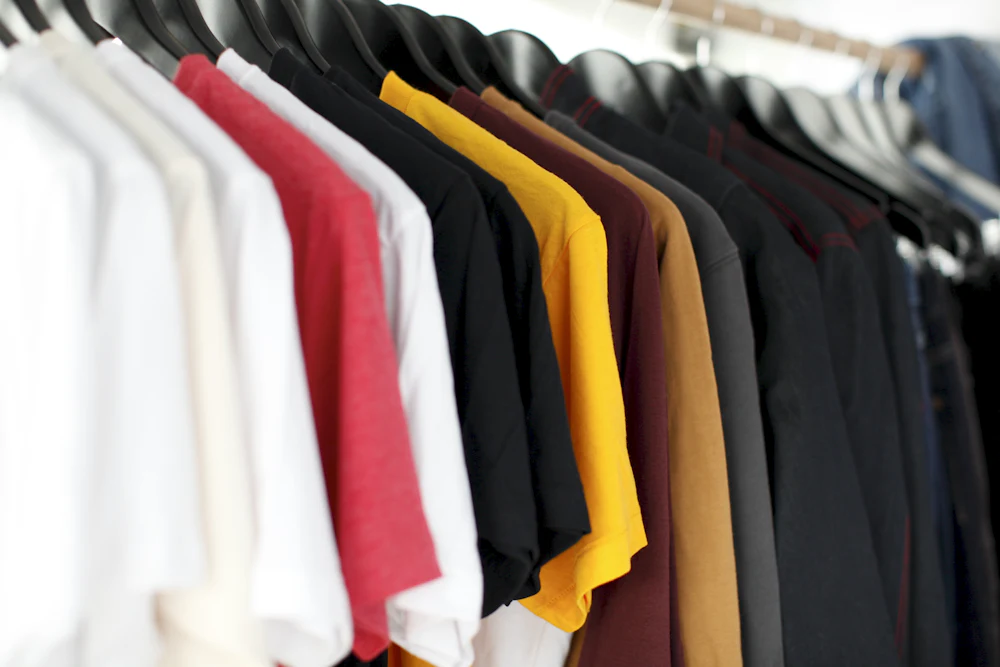
Small Batch Production: Quick Reference
| Detail | Specification |
|---|---|
| Minimum order | 50 pieces per style |
| Sample lead time | 12–15 days from order confirmation |
| Sample cost | $80–$250 per sample set |
| Sample rounds | 1–3 rounds standard |
| Bulk lead time | 35–45 days from approved sample |
| Per-unit cost break | Decreases 15–30% at 200+ pieces |
| Multi-style orders | 50-piece MOQ applies per style, not combined |
| Custom branding MOQ | 50 pieces, same as garment MOQ |
A factory’s quality management system is also worth checking before committing to a small batch supplier — ISO 9001 certification indicates documented process controls that matter more, not less, when a line is switching between styles frequently rather than running one SKU for months. For fabric-level compliance, OEKO-TEX Standard 100 certification confirms the textile itself has been tested for harmful substances, independent of order size.
Frequently Asked Questions
What counts as small batch in clothing manufacturing?
Small batch generally means 50 to 300 pieces per style. Below 50 pieces, most factories treat the run as a sample rather than production. Above 300 pieces per style, standard volume pricing and lead times typically apply instead.
Can I mix multiple styles in one small batch order?
Some factories allow it and some don’t, which is why this needs to be confirmed before sampling. A factory quoting 50-piece MOQ per style should apply that minimum to each style independently in a mixed order rather than combining three styles into one 300-piece threshold.
Why do small batch orders cost more per unit than bulk orders?
Fixed costs — sampling, screen setup for printing, embroidery digitizing — get spread across fewer units. Per-unit pricing typically decreases 15–30% once an order crosses 200 pieces per style, since the same fixed costs are divided across a larger run.
How long does a small batch clothing order take to produce?
Sample production runs 12–15 days from order confirmation, with 1–3 rounds standard. Bulk production follows at 35–45 days from an approved sample, regardless of whether the order covers a single style or several.
Do small batch manufacturers require the same number of samples as large orders?
Yes. Sample rounds are tied to design complexity, not order size. A technical style like a sublimated activewear set needs the same 1–3 sample rounds at 50 pieces as it would at 500.
Is small batch the same thing as low MOQ?
They describe the same production range from different angles. Low MOQ refers to the minimum a factory will accept; small batch describes the order itself. A factory advertising low MOQ should be able to support genuinely small batch production, but the two terms get used inconsistently enough that confirming the actual per-style minimum in writing is worth doing regardless of which term a factory uses.
To discuss a small batch clothing project — styles, fabric specs, timeline, and pricing — reach out directly via the inquiry form.
Related Reading
- How to Negotiate MOQ with Clothing Manufacturers Without Losing Your Shirt
- Garment Sampling Process: The Complete Guide
- Gym Wear Manufacturer with Low MOQ
Related Manufacturing Services
Ready to Start Your Clothing Project?
- MOQ from 50 pieces per style
- OEM and private label production
- Sample development support
- Fabric sourcing
- Quality inspection before shipment
- Worldwide shipping support