
The Factory Behind Fashion Labels, Uniform Programs, and Everything Between
We are a garment factory in Humen Town, Dongguan. Since 2015 we have cut and sewn for streetwear labels ordering their first 50 pieces, established fashion brands running full seasonal ranges, and procurement teams buying uniforms for hotels, clinics, and schools. The work below is organised by who is buying, because a founder validating one hoodie and a hotel group reordering 400 polos need very different conversations — even though the same sewing lines make both.
Making clothes since
2015
same factory, same Humen Town address, eleven years running
Minimum order
50 per style
per style, not per order — and it does not change because you are a school instead of a label
Sampling
12-15 days
$80-$250 a set, usually 1-3 rounds before anyone commits to bulk
Bulk production
35-45 days
from the sample you signed off, to cartons leaving the building
Eight Kinds of Buyer We Work With
Fashion Brands
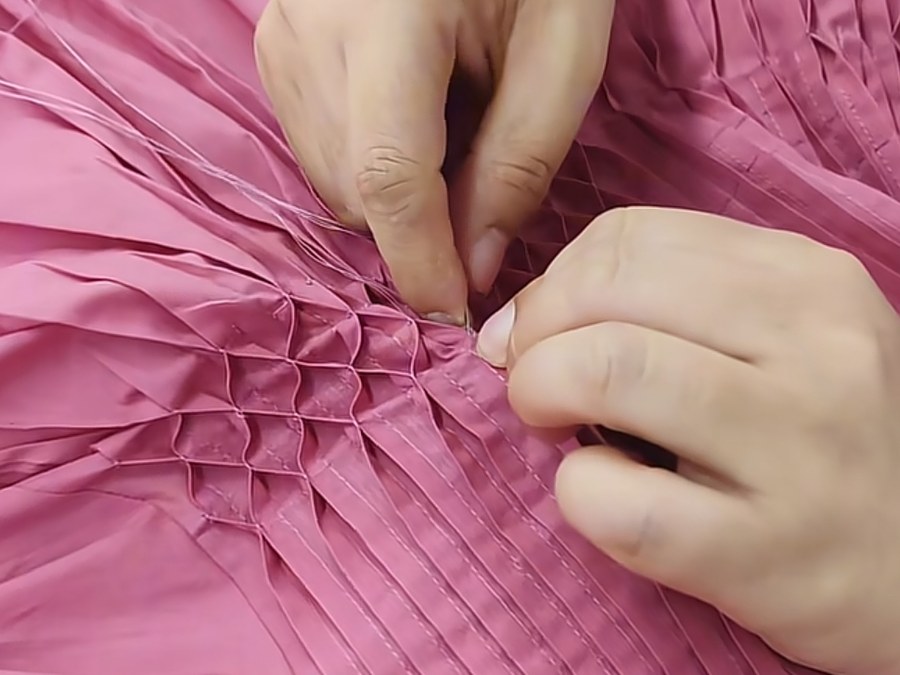
Labels with a range to deliver and a date it has to land. You send tech packs, or a reference garment and a conversation, and we grade the pattern across the full size run so a size 4 and a size 16 both hang right. Smocking, pleating, and hand-finished detail like the dress above are done on-site rather than farmed out, which is usually what decides whether a tricky style is worth quoting at all.
Startup Brands
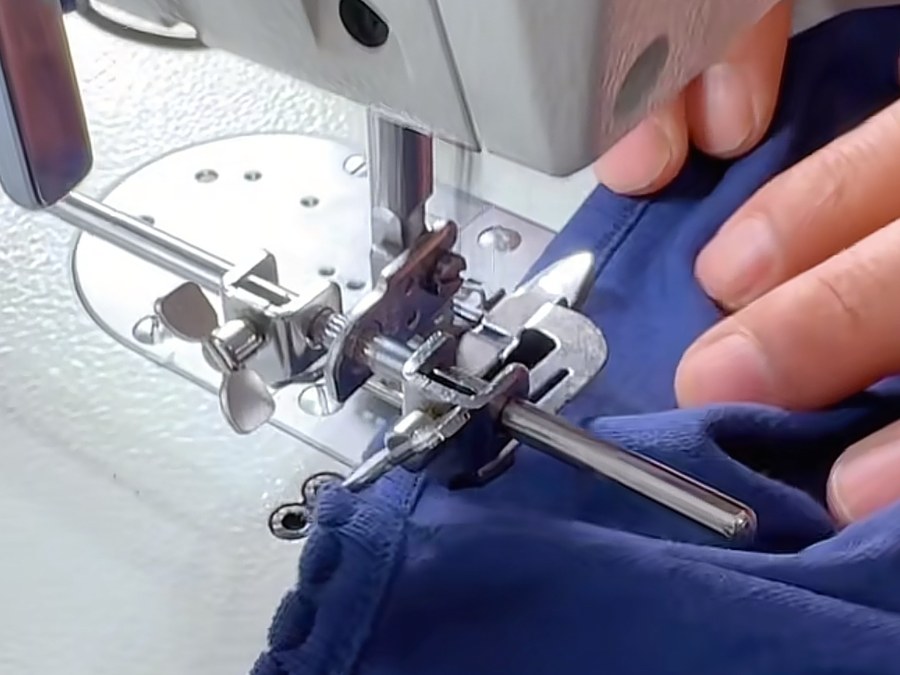
First order, no production history, and a budget that has to cover everything. Fifty pieces per style gets you the same operators and the same machines as a repeat customer — there is no beginner tier. Most founders spend $80-$250 on a sample set and go two rounds before they are happy, which is money far better spent than discovering a fit problem across 300 finished units.
Streetwear Brands
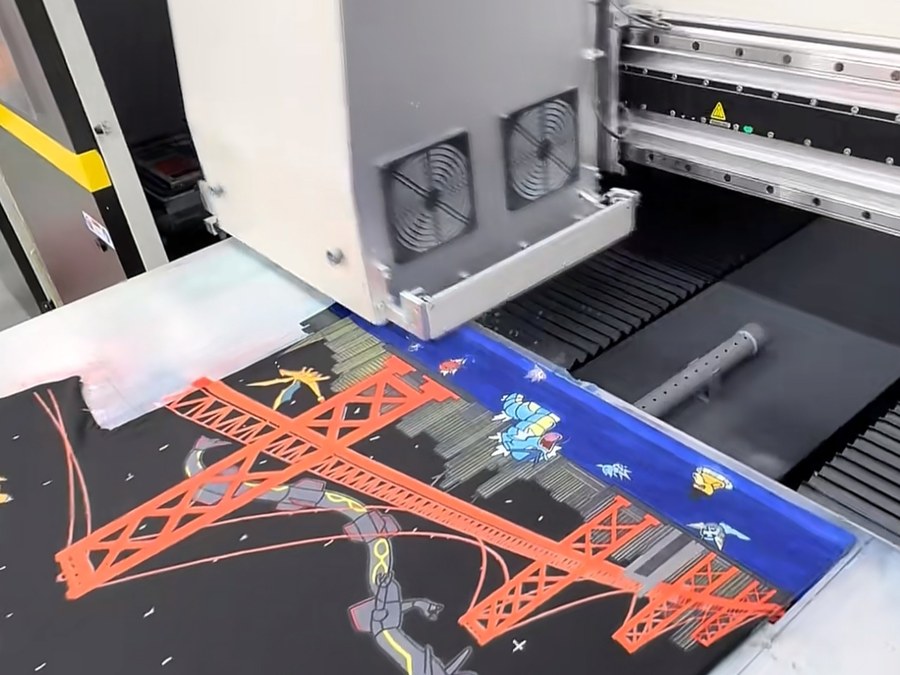
Heavy blanks and loud graphics. Tees run 200-280 GSM and hoodies 280-400 GSM, because a boxy fit on thin jersey just looks cheap. Printing is in the building — the panel above is coming off our own machine — so an all-over print, a screen print, and an embroidered hit can all sit on the same order without three subcontractors and three chances to get the colour wrong.
Sportswear Brands
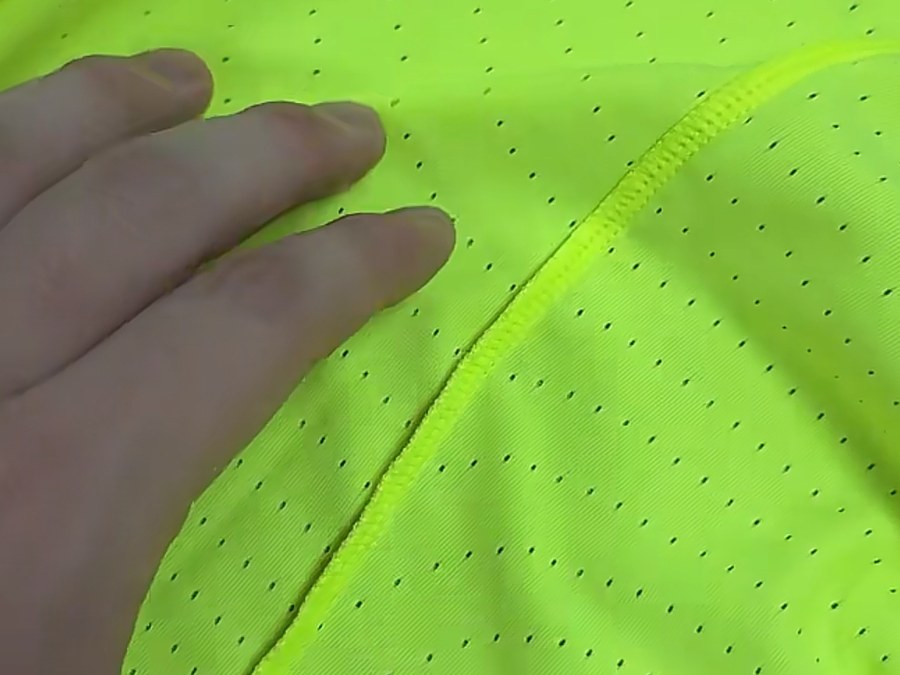
Fabric does the work here, so we spend the time on it: 150-280 GSM depending on the piece, four-way stretch, and flatlock seams that sit flat against skin instead of chafing over a long session. Perforated panels like the one above get placed where heat actually builds. Sublimation means a team kit can carry numbers, names, and sponsor blocks without a single extra seam.
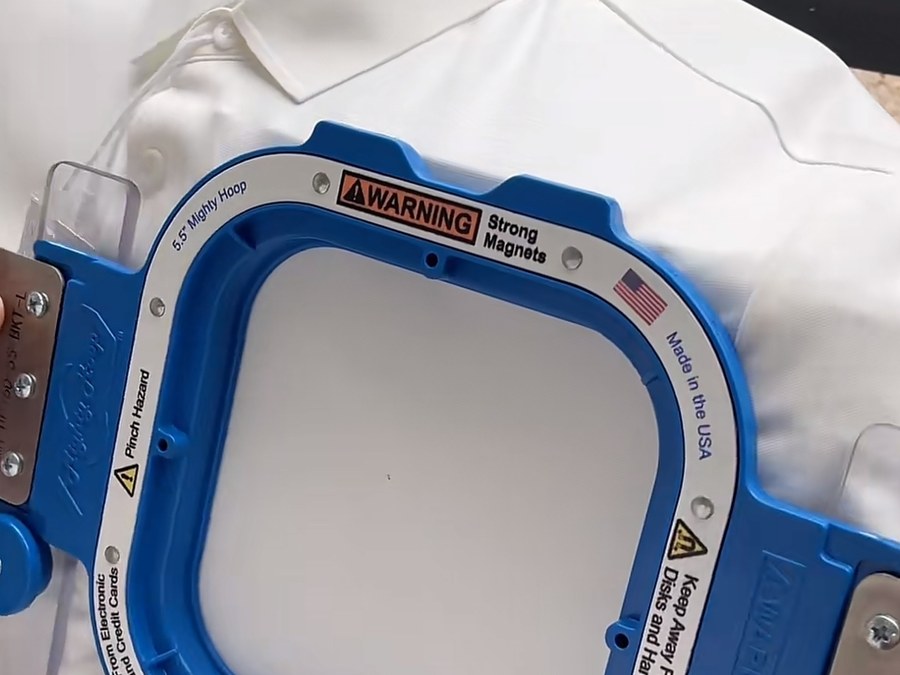
Corporate Uniform
The hard part of uniform work is not the first order, it is the fourth. Logo placement gets recorded as a measurement from the collar seam, not eyeballed, so the batch you order next year hoops in exactly the same spot. We keep your thread colours and fabric reference on file. New starters get shirts that match what everyone else is already wearing.
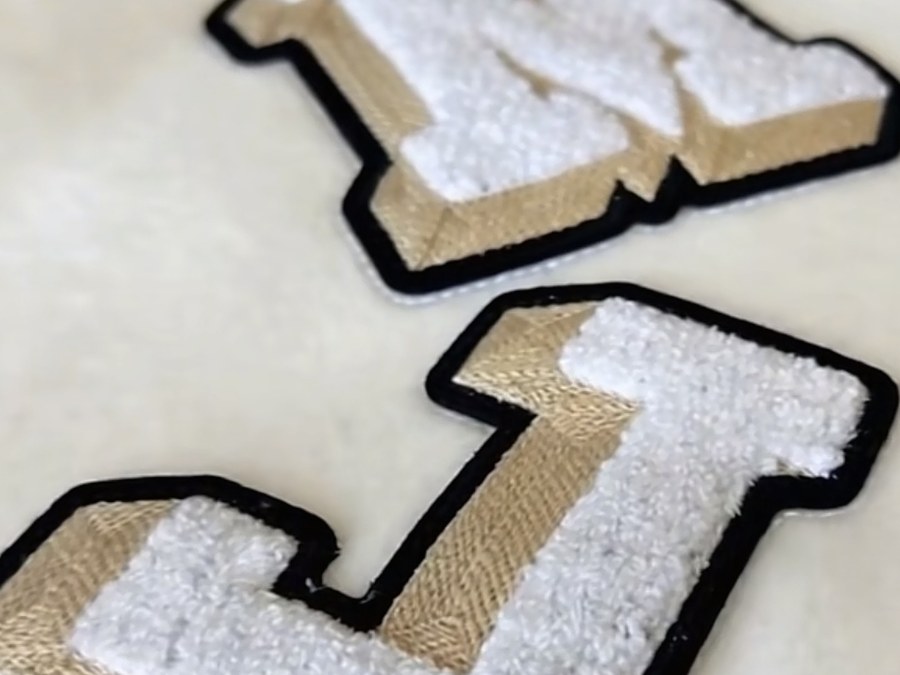
Schools
Uniform, PE kit, leavers’ hoodies, and chenille letters like these. The real work is the size run — one order might span an age 5 and an adult XXL, so every size gets measured against the spec sheet before the batch is signed off, not just the middle of the range. For the youngest age groups we can supply CPSC flammability documentation on request.
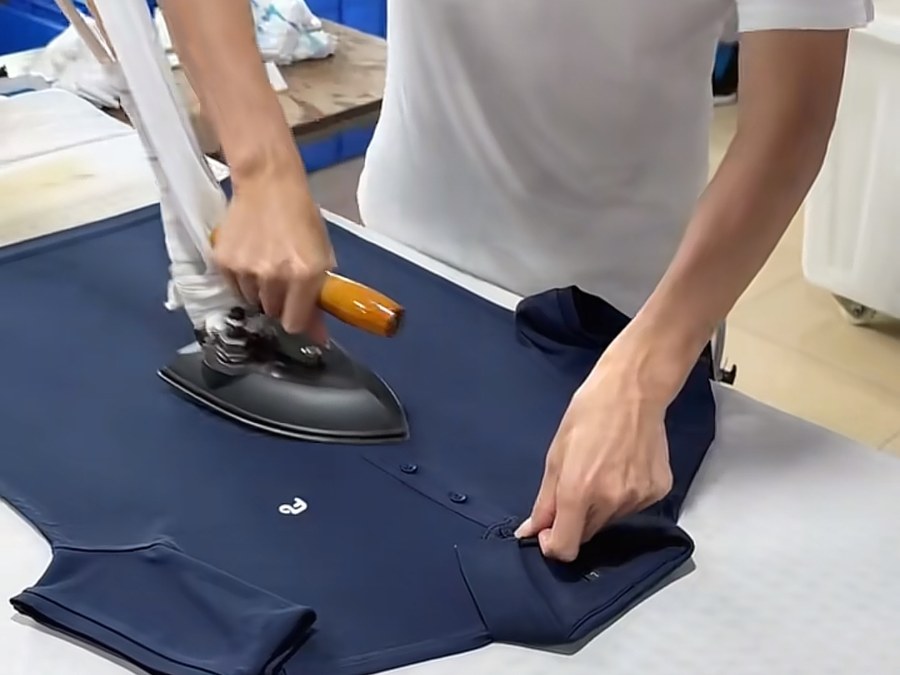
Hospitality
Front of house is the part of the uniform your guests actually read, so it gets pressed and inspected individually before packing — that is the step in the photo. Back of house needs different things: tougher fabric, easier washing, less fuss. Most hotel and restaurant orders end up as a mix of the two, branded consistently, ordered together, shipped together.
What Actually Changes From One Industry to the Next
Buyers ask us this constantly, usually phrased as some version of “do you really do both?” Here is the honest answer, side by side.
| Buyer | Typical first order | What we spend the most time on | Documentation usually asked for |
|---|---|---|---|
| Fashion brands | A capsule of 3-6 styles | Pattern grading and finish quality across the size run | OEKO-TEX Standard 100 |
| Startups | One or two styles, 50 pieces each | Getting fit right in sampling before money goes into bulk | OEKO-TEX Standard 100 |
| Streetwear | Tees and hoodies, one drop | Fabric weight (200-400 GSM) and print colour accuracy | OEKO-TEX; GRS if recycled |
| Sportswear | A kit or a matched set | Stretch recovery, flatlock seaming, panel placement | OEKO-TEX; ISO colourfastness |
| Corporate uniform | Polos or shirts for one site | Recording branding placement so reorders match exactly | OEKO-TEX; wash-care labelling |
| Schools | Uniform plus PE kit, full size run | Size-run accuracy from child sizes up to adult | OEKO-TEX; CPSC for sleepwear |
| Healthcare | Scrubs, one department | Surviving repeated hot industrial laundering | OEKO-TEX; ISO colourfastness |
| Hospitality | Front and back of house together | Two specifications, one consistent look | OEKO-TEX; wash-care labelling |
The Same Line Makes All of It
None of the eight groups above gets its own factory. They share the same cutting tables, the same operators, and the same inspection step before anything is packed — what changes is the fabric we buy, the construction we specify, and the paperwork that ships with it. That is deliberate: a hotel group benefits from tolerances developed for fashion work, and a startup benefits from process built for repeat uniform contracts. If you want the stage-by-stage version of how an order moves through the building, that is laid out on our OEM and ODM services page, and the full catalogue of what we make sits under product categories.
What to Send Us So the First Quote Is Accurate
A quote is only as good as what it is based on, and vague briefs are the main reason a price moves later. You do not need a full tech pack — plenty of good orders have started from a photo and a sensible conversation. But the more of the following you can send, the closer the first number will be to the final one:
- The garment — a reference sample, a tech pack, or clear photos of something close to what you want.
- Fabric intent — either a specification, or a plain description like “heavy enough that it does not cling”. We will translate that into a GSM.
- Quantities and size split — per style, per size. This matters more than total volume.
- Branding — artwork, and where it sits on the garment. Embroidery and print price differently.
- Your deadline — the date stock has to be with you, not the date you want it to ship.
- Any documentation you are required to have — better raised now than after production.
Send it through the enquiry form or on WhatsApp. If something in the brief will not work, we would rather tell you at this stage than build it and hope.
Questions Buyers Actually Ask
Which industries does PRP Apparel manufacture for?
Fashion labels, startup brands, streetwear and sportswear brands, plus corporate uniform programmes, schools, healthcare providers, and hospitality groups. If you are not obviously one of those eight, it is still worth asking — the categories describe who tends to come to us, not a limit on what the factory can cut and sew.
Is the MOQ higher for uniform or institutional orders?
No. It is 50 pieces per style whether you are a one-person label or a hotel group. The one thing that can move it is construction complexity rather than sector: if a garment needs unusual trims or a component with its own supplier minimum, we will say so at quote stage rather than after you have committed.
Can you supply compliance documentation for a procurement process?
OEKO-TEX Standard 100 covers fabric safety and is available across our lines. ISO colourfastness testing (105-C06, 105-X12, 105-E04) can be run on request, GRS documentation is available for recycled polyester orders, and CPSC flammability documentation is available for children’s sleepwear. Send us the list your procurement team works from and we will tell you honestly which items we can produce and which we cannot.
How consistent are reorders going to be, really?
That depends on record-keeping more than anything else, which is why we keep the approved sample, the fabric reference, the thread colours, and logo placement measurements on file against your account. Reorders are cut to that record. Where an original fabric has been discontinued by the mill, you hear about it before production, not when the boxes arrive.
Do fashion brands and uniform buyers go through a different process?
The stages are the same — sample, approval, bulk, inspection, ship. What differs is emphasis. Fashion work spends more rounds on fit and finish; uniform work spends more time on size-run coverage, documentation, and making sure the specification is stable enough to repeat in twelve months.
What does a first order actually cost to get moving?
Sampling runs $80-$250 per sample set and most buyers go one to three rounds. Bulk pricing depends entirely on the garment, but as a reference point a 240 GSM oversized graphic tee sits around $8-$14 a unit at 50 pieces and a 320 GSM cotton hoodie around $18-$30. Per-unit cost typically drops 15-30% once you are ordering 200 or more.
How long from approving a sample to receiving stock?
Bulk production is 35-45 days from approved sample to shipped order, plus your freight time. Add the 12-15 days per sampling round before that. Planning eight to ten weeks end to end from first enquiry is realistic for a new style; a straight reorder of something we have already made skips the sampling entirely.
What if my product is not clothing exactly?
We do caps, bags, and small branded goods alongside apparel, and we take on the occasional thing that does not fit any category neatly. Send a photo, a sketch, or a sample and we will tell you if it belongs on our lines. If it genuinely does not, we would rather say so than take the order and disappoint you.
Tell Us What You Are Making
Whichever of the eight you recognise yourself in — or none of them — send the garment, the quantity, and the date you need it. You will get a real answer on MOQ, timeline, and price rather than a brochure.