
A startup supplying uniforms to eight amateur rugby clubs in Queensland came to PRP Apparel after two factories in Guangzhou quoted 500-piece minimums per design — workable for a single professional club order, impossible for a supplier managing eight small clubs that each needed 30 to 40 sublimated jerseys in club-specific colorways. The founder needed a custom sportswear manufacturer that could run sublimated kits at club-team volume, not stadium-vendor volume, and do it across eight different colorways without eight separate factory relationships.
That volume mismatch is the most common reason sportswear sourcing stalls before it starts. Most factories in performance apparel build production lines around single-style, single-color bulk orders — a gym chain ordering 2,000 identical training tops, for example. Team sportswear works differently: one order might need six colorways at 40 pieces each, with names, numbers, and sponsor logos varying by garment.
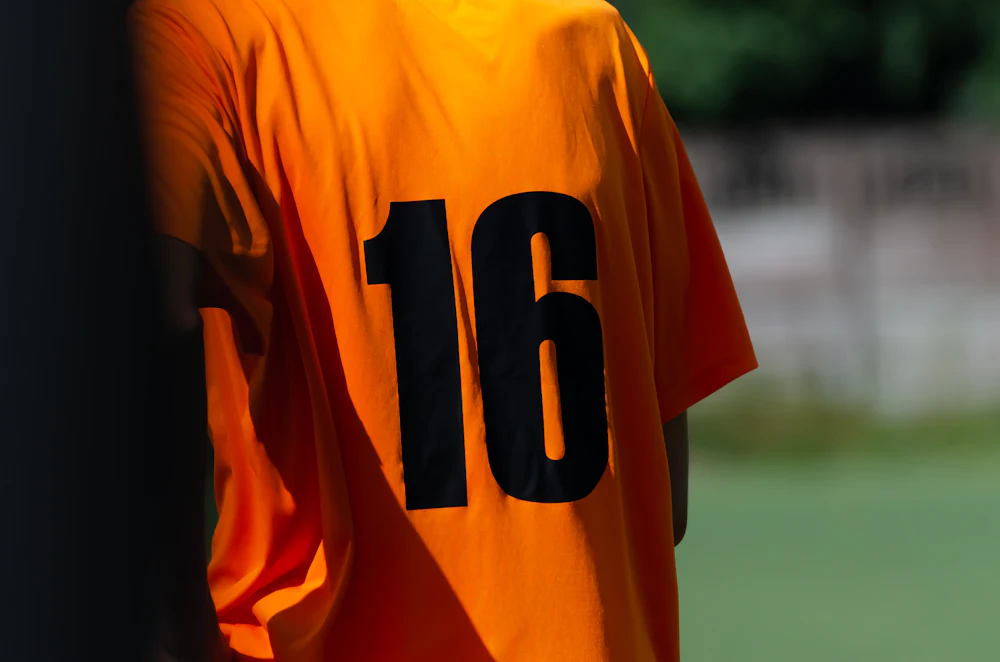
What “Custom Sportswear Manufacturer” Actually Covers
The keyword gets used loosely, so it’s worth defining before comparing suppliers. A custom sportswear manufacturer produces team-oriented athletic apparel — jerseys, tracksuits, training tops, and warm-up sets — as opposed to a general activewear manufacturer sourcing gym wear for a single consumer-facing brand (compression leggings, sports bras, running shorts). Construction methods overlap heavily; buyer profile and order structure don’t.
Sportswear buyers are usually clubs, leagues, athletic departments, or apparel resellers managing multiple teams. Order structures are colorway-heavy and identity-driven: the same jersey pattern repeats across six or ten clubs, each with a different crest, sponsor placement, and roster. A factory that only knows how to run one color at 500 pieces is the wrong fit, regardless of fabric quality.
Team Jerseys and Sublimated Kits
Sublimated jerseys — full-body, all-over dye printed directly into the fabric fibers rather than layered on top of it — are the standard for modern team kits because the print never cracks, peels, or fades from washing the way a heat-transfer graphic does on a high-wash-frequency garment. A full kit (jersey, shorts, socks) built this way typically runs $25–$40 per unit at 50 pieces, matching PRP’s sublimation activewear set pricing, with per-unit cost dropping 15–30% at 200+ pieces.
Tracksuits, Training Tops, and Warm-Up Sets
Outside of match-day jerseys, most club orders also include training tops, half-zip pullovers, and tracksuit sets in solid or two-tone colorways with embroidered or heat-transfer branding rather than full sublimation. These run on the same GSM ranges and construction lines as standard activewear tops, which keeps per-unit pricing closer to $8–$14 for a training top versus the $25–$40 sublimated kit price.
Fabric and GSM Ranges for Team Sportswear
Match-day jerseys typically run 150–180 GSM in a lightweight polyester interlock or pique knit — heavy enough to hold sublimated color without show-through, light enough for 90 minutes of play. Training tops and tracksuit shells run heavier, 220–280 GSM, since they’re worn for warm-up and travel rather than active play. Buyers unfamiliar with how fabric weight maps to use case should read the full breakdown on fabric types and GSM for clothing brands before finalizing a tech pack — specifying the wrong GSM for match-day versus training pieces is one of the most common first-order mistakes.
Printing and Branding Methods for Team Sportswear
Print method is the biggest cost and durability variable in a sportswear order, and it’s also where suppliers push buyers toward whatever method the factory runs cheaply — not whatever the garment needs.
Sublimation (AOP) for Full-Color Kits
Sublimation works by heat-transferring dye into a synthetic fabric’s fiber structure, so the design becomes part of the fabric rather than sitting on its surface. It’s the only practical method for jerseys with full-body patterns, gradient designs, or sponsor logos that wrap around seams. The tradeoff: sublimation only works on polyester and poly blends, not cotton, and setup costs make it inefficient below roughly 30–50 pieces per colorway. The complete process — including how AOP print files need to be prepared differently from a standard screen-print artwork file — is covered in the guide on sublimation printing for custom apparel.
Player Names, Numbers, and Sponsor Placement
Individual customization (player name and number on the back, sponsor logo on the chest, club crest on the sleeve) is typically handled as a separate step from the base sublimation run — either heat-transfer vinyl applied after the jersey body is sewn, or a secondary sublimation pass on a nameplate panel that’s then stitched in. Clarify which method a factory uses before ordering: heat-transfer vinyl on high-wash jerseys tends to crack at the letter edges after 20–30 washes, while a sublimated nameplate panel holds indefinitely. This distinction matters more than most sportswear buyers realize going in, and it’s the same branding-durability logic covered in the guide on custom labels and packaging for how trims and applied graphics hold up over a garment’s life.
Screen Print and Heat Transfer for Simpler Designs
For training tops and tracksuits with a single-color club logo rather than a full sublimated pattern, screen print or heat transfer is cheaper and faster to set up, with no polyester-only fabric restriction. It’s the wrong call for a full-color jersey design, but the right call for a two-color training-top logo running at lower piece counts.
| Method | Best For | Fabric Restriction | Cost Impact vs. Screen Print | Durability |
|---|---|---|---|---|
| Sublimation (AOP) | Full-color jerseys, gradients, wrap-around designs | Polyester/poly-blend only | +30–50% | Permanent, part of fiber |
| Screen Print | Single/multi-color logos, training tops | None | Baseline | 40–60 washes before cracking |
| Heat Transfer Vinyl | Names, numbers, small text | None | +10–15% | 20–30 washes before edge cracking |
| Embroidery | Crests, small logos on solid fabric | None | +20–35% | Permanent, no cracking |
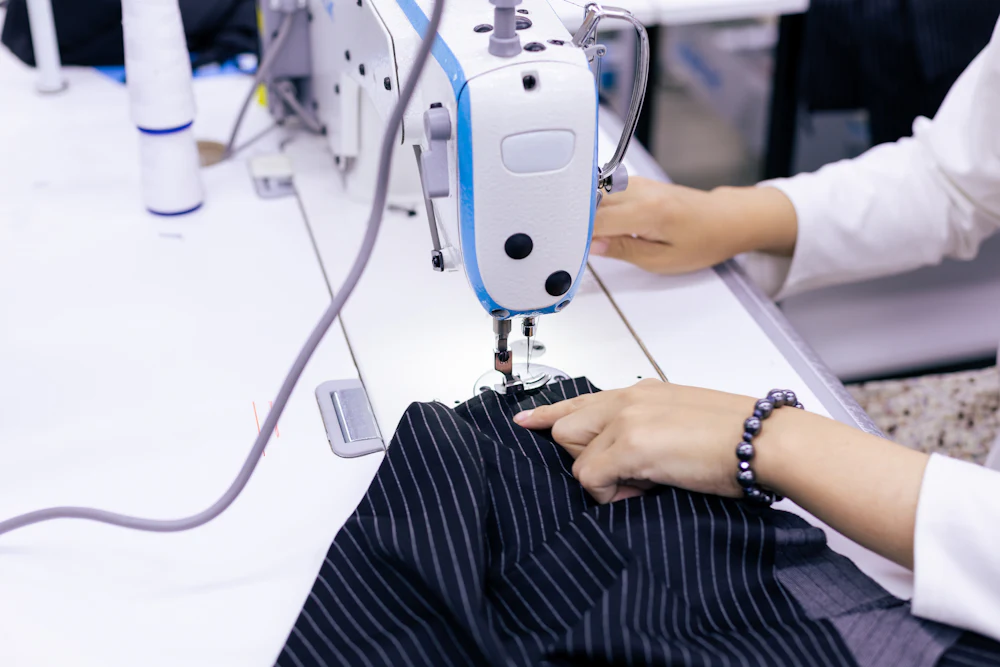
Vetting a Sportswear Manufacturer Before You Commit
Team sportswear orders fail in different ways than standard activewear orders, mostly around color consistency across colorways and MOQ structure across multiple small club orders.
Ask for the MOQ structure in writing, broken down by colorway, not just by style — a factory quoting “50 pieces MOQ” might mean 50 pieces total across all your club colorways, which is unworkable if you’re running eight clubs at 30–40 pieces each. Request a pre-production sample in at least two of your actual colorways, not one, since sublimation color accuracy can drift between a bright club color and a darker one on the same base fabric.
Team sportswear also sees heavy sweat contact over long wear sessions, so request colorfastness test results specifically for perspiration — ISO 105-E04 — rather than accepting general colorfastness claims. A jersey that bleeds color onto a player’s skin or another garment during a match is a returns problem a general wash-fastness test won’t catch.
The broader version of this vetting process — machine lists, sample rounds, red flags in supplier communication — is covered in the guide on factory auditing for clothing brands, and it applies the same way to a sportswear-specific order.
PRP Apparel’s Sportswear Production Capability
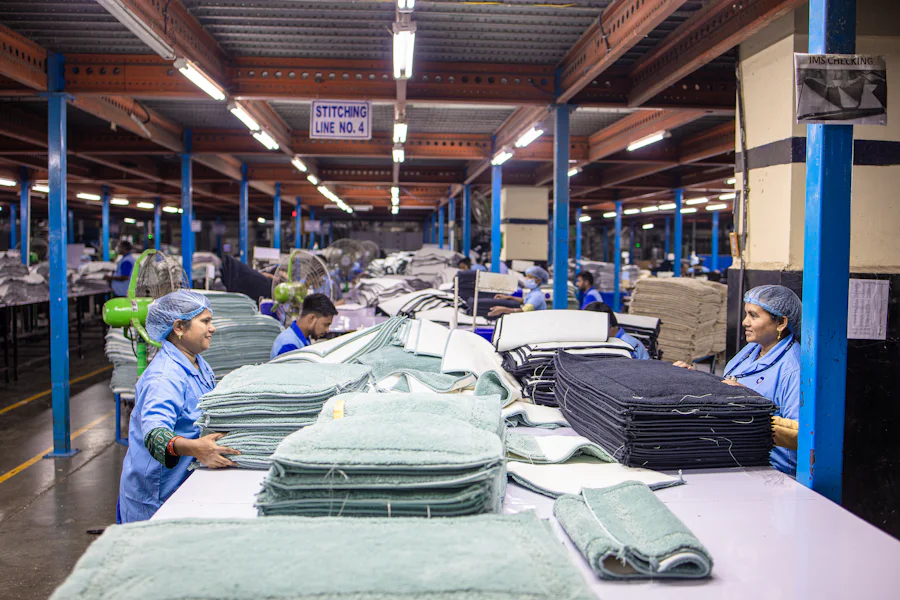
PRP Apparel runs sportswear production out of the same Dongguan facility that handles the broader activewear and training-wear line: in-house sublimation (AOP) printing, pantone-matched dyeing for solid-color panels, and flatlock seaming for jerseys and training tops. MOQ starts at 50 pieces per style, disclosed per colorway upfront rather than revealed as a hidden sub-minimum after the first quote, so a club apparel supplier running six or eight small colorway orders isn’t forced into a single 300-piece bulk run to get a price. Sample lead time runs 12–15 days at $80–$250 per sample set, and bulk production ships in 35–45 days from an approved sample. Buyers batching multiple colorways into one order should read the full breakdown on negotiating MOQ with clothing manufacturers, since the negotiation points shift slightly when several small orders share one production slot.
Every fabric run includes OEKO-TEX Standard 100 certification, and quality control follows the same inspection standards used across PRP’s full range, outlined in the garment quality control guide, rather than a looser standard for team-order volume.
Sportswear Manufacturing Reference Table
| Product | Typical GSM | Print Method | Price Range (50-pc MOQ) | Sample Lead Time | Bulk Lead Time |
|---|---|---|---|---|---|
| Sublimated jersey (full kit) | 150–180 GSM | Sublimation AOP | $25–$40/unit | 12–15 days | 35–45 days |
| Training top / half-zip | 220–260 GSM | Screen print / embroidery | $8–$14/unit | 12–15 days | 35–45 days |
| Tracksuit set | 240–280 GSM | Embroidery / heat transfer | $18–$30/unit | 12–15 days | 35–45 days |
| Name/number application | N/A | HTV or sublimated nameplate | +$1–$3/unit | Same as base garment | Same as base garment |
Fabric weight, print method, and colorfastness testing should be confirmed against the OEKO-TEX Standard 100 certification and, for high-sweat-contact garments specifically, ISO 105-E04:2013 colour fastness to perspiration test results before placing a bulk order.
Frequently Asked Questions
What’s the minimum order for a custom sportswear manufacturer?
50 pieces per style is standard at PRP Apparel, but confirm whether that minimum applies per colorway or across your whole order — a factory managing six club colorways at 50 pieces total per style, rather than per colorway, will force you into a much larger single-color bulk run than you actually need.
What’s the difference between sublimation and screen printing for team jerseys?
Sublimation dyes the design into the fabric fiber itself, so it never cracks or peels and works for full-color, gradient, or wrap-around designs, but only on polyester fabric. Screen printing sits a layer of ink on top of the fabric, costs less at low colorway counts, and works on any fabric, but starts cracking after 40–60 washes and can’t reproduce a full-color gradient design.
Can a manufacturer produce multiple club colorways in one order?
Yes, and it’s the normal structure for a sportswear supplier managing several clubs — but each colorway should be sampled and color-matched separately before bulk production, since the same sublimation press settings can produce visibly different results across a bright red and a dark navy base fabric.
How long does custom team kit production take?
Sample production runs 12–15 days at PRP Apparel, followed by 35–45 days for bulk production once the sample is approved. Multi-colorway orders don’t typically extend the bulk timeline, since colorways run through the same production slot; they do extend the sampling phase if each colorway needs its own approval round.
Do sublimated jerseys fade faster than screen-printed graphics?
No — the opposite. Because sublimation dye becomes part of the fabric fiber rather than sitting on the surface, it resists fading, cracking, and peeling better than screen print or heat-transfer vinyl over repeated match-day washing, provided the base fabric itself is colorfast to perspiration and washing.
What GSM fabric works best for team jerseys vs. training tops?
Match-day jerseys typically run 150–180 GSM — light enough for 90 minutes of active play while still holding sublimated color without show-through. Training tops and tracksuit shells run heavier, 220–280 GSM, since they’re built for warm-up and travel rather than active match wear.
To discuss your team sportswear project — jersey styles, club colorways, sublimation artwork requirements, and per-colorway pricing — reach out directly via the inquiry form.
Related Reading
- Custom Clothing Manufacturing for Sportswear Brands
- Mastering Sublimation Printing for Custom Apparel
- Gym Wear Manufacturer with Low MOQ
- How to Choose the Right Custom Activewear Manufacturer
Related Manufacturing Services
Products We Manufacture
Ready to Start Your Clothing Project?
- MOQ from 50 pieces per style
- OEM and private label production
- Sample development support
- Fabric sourcing
- Quality inspection before shipment
- Worldwide shipping support