

A Melbourne outerwear label spent six weeks emailing “full-range leather goods” factories before placing a single sample order. Three of the five claimed capability in jackets, bags, wallets, belts, and footwear — but when the brand’s founder asked for a machine list and reference photos of jacket linings, two factories went quiet and the third admitted they subcontracted jackets to a partner shop they’d never visited. She needed a leather goods manufacturer for fashion brands that could actually produce what it advertised, not a trading company routing orders to three different subcontractors.
That gap between claimed capability and actual production floor is the single biggest risk in leather sourcing. Leather goods manufacturing splits into distinct specializations — footwear tooling differs from bag construction, and both differ from garment-weight jacket assembly. A factory strong in one category is often weak or absent in another, and few volunteer that limitation upfront.
Why Leather Goods Sourcing Works Differently Than Textile Sourcing
Textile manufacturing scales around fabric rolls: a mill produces yardage, a factory cuts and sews it, and MOQ is largely a function of cutting efficiency. Leather doesn’t work that way. Hides are irregular, priced per square foot, and graded for defects before a single panel gets cut, which means a factory ordering hides for a 50-piece jacket run is managing yield waste and hide-to-hide color variation that a polyester cutting room never has to.
This is why leather goods factories specialize narrowly. A shop set up for handbag stitching runs different sewing machines and thread tension than a shop building structured outerwear, and bag hardware sourcing rarely overlaps with jacket hardware sourcing.
Brands moving into leather for the first time also face a variable that doesn’t exist in cotton or synthetic sourcing: the genuine-versus-PU decision, which affects price, lead time, and compliance documentation at once. That’s the first spec to lock down before requesting quotes.
Core Considerations for Sourcing Leather Goods
Genuine Leather vs. PU Leather Construction
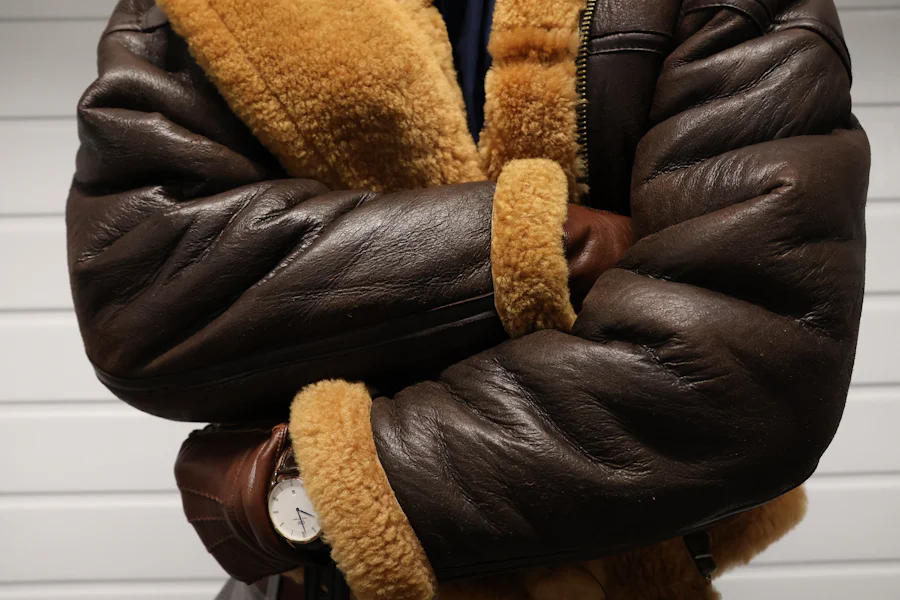
Genuine leather, full-grain or top-grain cowhide most commonly, is cut from tanned hide, priced per square foot at $4–$9/sq ft for mid-grade cowhide depending on tannage and finish. PU leather is a synthetic base fabric coated with polyurethane to mimic leather grain, priced closer to standard heavyweight fabric — typically 40–60% less than genuine hide for an equivalent jacket.
Construction differs beyond material cost. Genuine leather panels are cut around natural defects and grain direction, which increases fabric waste to 15–25% versus 5–10% for PU. Genuine leather seams are typically skived (thinned at the edge) before stitching to reduce bulk; PU leather, being a uniform-thickness coated fabric, skips this step. A factory quoting jacket production without mentioning skiving on genuine leather panels is either working with a supplier who doesn’t do it or hasn’t fully scoped the job.
Jacket Construction Standards
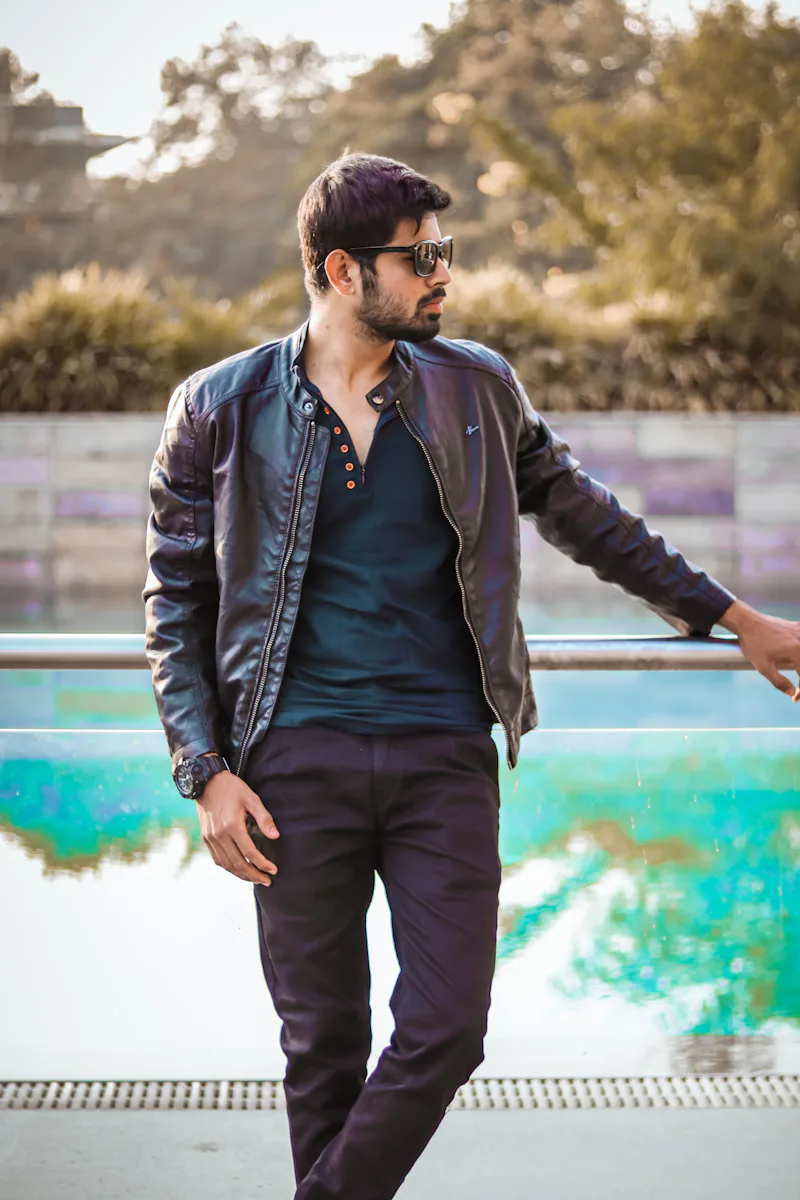
Leather and faux leather jackets — bombers, moto/biker styles, and PU puffer-style jackets — require lining assembly (typically polyester or quilted insulation), hardware installation, and reinforced stitching at stress points: underarms, cuffs, and zipper plackets. A single-needle straight stitch at these points fails under repeated wear; factories building jacket-grade leather goods use bar-tack reinforcement or double-needle stitching at load-bearing seams.
Ask for the stitch-per-inch (SPI) spec on structural seams. 6–8 SPI is standard for leather garment construction — lower counts leave seams loose, higher counts perforate the hide and weaken it along the stitch line.
Bag and Pouch Construction
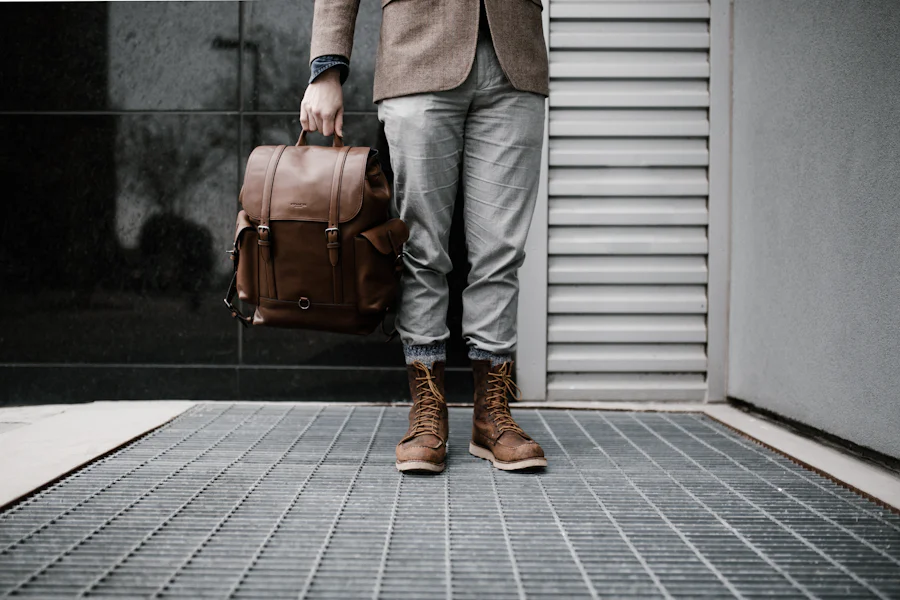
Small leather goods — bags, pouches, and structured accessories — shift the construction priority from seam reinforcement to shape retention. Structured bags need interfacing or a rigid insert, often high-density foam or buckram, between the leather shell and lining to hold form. Unstructured pouches skip this layer, relying on the hide’s natural drape instead.
Hardware placement matters more here than in jacket production, since zipper pulls and closures see direct pull stress every time the item opens. Ask what hardware grade the factory sources — brass-plated zinc alloy is standard mid-tier, solid brass costs more and resists tarnish longer — and whether hardware is riveted or glued to the leather panel. Glued hardware is a red flag on any bag priced above entry-level.
MOQ and Sampling for Leather Categories
Hide costs are higher and less forgiving of waste than woven fabric, but sampling timelines stay standard: expect 12–15 days for a first pre-production sample. Budget for the higher end of the $80–$250 sample cost range, since hide waste on a single jacket sample costs proportionally more than fabric waste on a cotton tee sample.
Verifying a Leather Goods Manufacturer’s Actual Capability
Claimed capability and actual production floor are two different things in leather goods sourcing, more so than in most apparel categories, because leather work requires specialized machinery a general cut-and-sew factory won’t have on hand.
Request a machine list specific to leather. A factory producing genuine leather jackets needs a skiving machine, a walking-foot or post-bed sewing machine (standard flatbed machines struggle to feed leather evenly), and edge-finishing equipment for raw hide edges. If a factory can’t name this equipment, they’re likely subcontracting the leather-specific steps.
Ask for category-specific reference samples, not catalog photos. A factory that produces bags well doesn’t automatically produce jackets well. Request a physical sample or detailed photos of the exact category — jacket, bag, or pouch — you intend to order, not a general “leather goods” portfolio.
Verify hide sourcing and grading practices. Ask which tannery supplies the hides and what grading standard separates first-quality leather from second-quality. Factories unwilling to discuss hide grading are often buying whatever hide is cheapest, which shows up as inconsistent grain and color across a production run.
Confirm subcontracting upfront. It’s common, not automatically disqualifying, for a factory to subcontract specialized leather work to a partner shop. The problem isn’t subcontracting itself; it’s a factory that doesn’t disclose it. Ask directly whether jacket assembly is done in-house or subcontracted, and request to see the subcontractor’s facility if order volume justifies it.
Genuine Leather vs. PU Leather: Choosing the Right Material
| Factor | Genuine Leather | PU (Faux) Leather |
|---|---|---|
| Cost (jacket, 50 pcs MOQ) | Higher — hide cost driven | 40–60% lower than genuine |
| Lead time | Standard 35–45 days, longer if hide sourcing is delayed | Standard 35–45 days, more predictable |
| Durability | Decades with proper care; develops patina | 3–7 years typical before cracking/peeling |
| Consistency across units | Natural grain variation, hide-to-hide | Uniform, no natural variation |
| Compliance | Tannery chemical testing (chromium, formaldehyde) | Phthalate and heavy metal testing on PU coating |
| Best fit | Premium positioning, heritage/quality-first brands | Vegan-positioned brands, price-sensitive first runs |
PRP Apparel’s Leather Production Scope
PRP Apparel produces leather and faux leather goods as a select-styles category rather than a full leather goods range — genuine and PU leather jackets, plus bags and pouches, out of the Dongguan facility. This is a deliberate scope decision: rather than claiming footwear, wallets, and belts capability the factory doesn’t specialize in, leather production stays focused on categories where in-house tooling and experienced staff support consistent output.
Standard production terms apply across the leather category: 50-piece MOQ per style, 35–45 day bulk lead time from approved sample, and 12–15 day sample lead time. Custom branding — woven labels, hardware embossing, hang-tag placement — is available at the same 50-piece MOQ as PRP’s textile categories. Brands scoping a first leather order alongside an existing textile line can consolidate both under one production relationship; the sampling discipline covered in tech pack creation for apparel brands applies directly to leather-specific specs like hide grade and hardware finish.
Quick Reference: Leather Goods Sourcing Specs
| Spec | Genuine Leather | PU Leather |
|---|---|---|
| MOQ | 50 pieces per style | 50 pieces per style |
| Sample lead time | 12–15 days | 12–15 days |
| Sample cost | $80–$250 (higher end typical) | $80–$250 (lower end typical) |
| Bulk lead time | 35–45 days | 35–45 days |
| Key construction step | Skiving + reinforced stitching | Standard reinforced stitching |
| Hardware standard | Brass-plated zinc alloy (standard) / solid brass (premium) | Same hardware standards apply |
Brands should also cross-check MOQ terms against the broader guide on negotiating MOQ with clothing manufacturers before finalizing a leather order, since per-style versus per-colorway structures apply to leather hardware and color variants the same way they apply to textile SKUs.
External Standards Worth Knowing
The LEATHER STANDARD by OEKO-TEX certifies leather goods for harmful substances including chromium VI, formaldehyde, and heavy metals — ask any genuine-leather supplier whether their tannery holds it. For formaldehyde content specifically, ISO 17226-1 defines the test method used to verify hide formaldehyde stays within safe limits for skin-contact goods like linings and straps.
Verifying Factory Claims Before You Commit
Before placing a deposit, run the same due-diligence pass used for any new manufacturing relationship — the process outlined in factory auditing for clothing brands applies directly to leather suppliers, with two additions: request tannery certification documentation, not just factory-level claims, and ask to see raw hide inventory during a facility visit or video call.
Compliance documentation for leather goods should be treated the same way as fabric certification is for textile orders — standard, not an upsell. The same principle covered in sustainable clothing certifications for apparel brands applies to leather: ask for test reports before the order ships, not after a retail buyer flags a compliance gap.
Frequently Asked Questions
What is the MOQ for custom leather jackets from a manufacturer?
Most manufacturers offering genuine low MOQ leather production start at 50 pieces per style, matching standard textile MOQ structures. Confirm whether this is per style or per colorway, since leather hide costs make per-colorway minimums more common among factories trying to offset hide waste.
Is PU leather a good option for a first leather product run?
PU leather works well for brands testing market demand before committing to genuine leather’s higher per-unit cost. It costs 40–60% less than genuine leather at the same MOQ, offers consistent color and grain across units, and suits vegan-positioned brand messaging. The trade-off is a shorter product lifespan — typically 3–7 years before cracking or peeling versus decades for well-maintained genuine leather.
Can one manufacturer produce both leather jackets and leather bags?
Some can, but it’s not universal. Jacket construction and bag construction use different sewing equipment, hardware sourcing, and skill sets. Ask for reference samples in both specific categories rather than assuming general leather goods capability covers both — a factory strong in one is often weak or subcontracting in the other.
How long does leather goods production take compared to standard apparel?
Bulk lead time runs 35–45 days from approved sample, the same as standard textile production. Sampling can run longer in practice because hide sourcing and grading take extra coordination time, and sample costs trend toward the higher end of the $80–$250 range due to hide waste on a single sample unit.
What certifications should I request for genuine leather goods?
Request LEATHER STANDARD by OEKO-TEX certification, which covers chromium VI, formaldehyde, and heavy metal limits, plus tannery-level documentation showing which tannery supplied the hides. For PU leather, request phthalate and heavy metal test results on the polyurethane coating specifically, not just the base fabric.
Why do some leather goods factories subcontract jacket or bag production?
Leather-specific equipment — skiving machines, walking-foot sewing machines, edge finishers — represents a significant capital investment that not every factory makes. Subcontracting to a specialized partner shop is common and not disqualifying on its own; the risk is a factory that doesn’t disclose the subcontracting relationship when asked directly.
To scope a leather jacket, bag, or pouch order — hide selection, hardware finish, sample timeline, and pricing at your target volume — reach out directly via the inquiry form.
Related Reading
- Custom Clothing Manufacturing: Unlock Your Brand’s Potential with PRP Apparel
- Private Label Clothing Manufacturing: A Brand Owner’s Guide
- Garment Quality Control Guide
- Custom Labels and Packaging: The Details That Define Your Brand
Related Manufacturing Services
Products We Manufacture
Ready to Start Your Clothing Project?
- MOQ from 50 pieces per style
- OEM and private label production
- Sample development support
- Fabric sourcing
- Quality inspection before shipment
- Worldwide shipping support