
Decorated Garments: Which Embellishment Works on Which Garment
Prophesy Apparel (PRP) is a garment factory in Dongguan, founded in 2015, that takes on the decoration a general cut-and-sew line turns down: laser-cut panels, heat-set pleats, 3D silicone patches, hand beading, chenille and production embroidery. This page is organised by garment rather than by technique. For each type of garment we make, it sets out which decoration holds up on it, which only works under conditions, and which we would steer a brand away from. The techniques themselves are covered on the embellishment overview.
Laser cutting format
3 metres
in-house; industry-standard beds are 1300×900mm or 1600×1000mm
Embroidery heads
24
in-house; 24 garments stitched in one pass
MOQ, per style per colour
50 pcs
the same minimum on heavily decorated styles
Bulk lead time
25–45 days
from approved sample; samples take 7–14 days
What We Make, and What Each Garment Can Carry
The garment decides the decoration more often than the artwork does. Fabric weight, stretch and fibre content set hard limits, and a technique put on a fabric that cannot take it fails however good the artwork is.
T-shirts and jersey tops. Embroidery is the safe choice on cotton jersey, down to roughly 5mm lettering in flat satin stitch. Laser cutting only works if the jersey is polyester or a synthetic blend — 100% cotton scorches and leaves a brown edge. Chenille needs a heavyweight jersey to sit on. The decorated T-shirt options are covered in detail on our custom decorated T-shirts page.
Hoodies and sweatshirts. Heavy fleece is one of the best bases for chenille and embroidery, and 3D silicone patches press cleanly onto it. It is too heavy to pleat: anything over 200gsm will not hold a crisp pleat.
Dresses, skirts and womenswear. This is where pleating, hand beading and laser cutting do most of their work. Pleated dresses and skirts need polyester, acetate or nylon, because the pleat is heat-set into a thermoplastic fibre — on cotton, linen or viscose it falls out in the first wash (see pleating and smocking). The 3-metre laser format means a full dress front can be cut as one panel with no piecing.
Jackets and outerwear. Varsity and bomber jackets in melton wool, twill or canvas carry chenille lettering well. PU leather, neoprene and nylon cut cleanly on the laser. Waterproof-coated shells are the exception to almost everything: embroidery needle holes destroy the waterproofing, and a heat-pressed patch damages the coating.
Activewear. Polyester mesh and nylon take laser-cut vents with sealed edges that will not fray. High-stretch fabric rules out chenille and hand beading, and thin nylon distorts under a heat-pressed silicone patch, so the sew-on version is used instead.
Uniforms and workwear. Corporate uniforms, chef wear, school uniforms and general workwear are mostly logo work, which is what the 24-head embroidery line is built for. We also produce hi-vis garments to customer-specified certified fabrics and tapes; certification is arranged or specified by the buyer. We do not make scrubs or medical wear.
Loungewear and sleepwear. Lounge sets, pajama sets and sleep shirts are produced here too. Soft knits follow the same rules as T-shirt jersey above.
Garment and Technique Matrix
A quick reference for the six decoration routes against the garment types above. “Not a typical application” means the combination is possible in principle but rarely what a brief actually needs; ask if you are considering it.
| Laser cutting | Pleating | 3D silicone patch | Beading, sequin & rhinestone | Chenille & appliqué | Embroidery | |
|---|---|---|---|---|---|---|
| T-shirts & jersey tops | Only on polyester or synthetic-blend jersey; 100% cotton scorches | No — cotton will not hold a heat-set pleat | Yes — heat-pressed at 150–170°C | Hotfix and sequin embroidery yes; hand beading only with interlining | Heavyweight jersey only | Yes — flat lettering from roughly 5mm |
| Hoodies & sweatshirts | Polyester fleece only; cotton fleece scorches | No — too heavy to take a crisp pleat | Yes | Sequin embroidery | Yes — heavy fleece is a good base | Yes — flat lettering from roughly 5mm |
| Dresses & skirts | Yes on polyester, satin and synthetics; a full dress front fits the 3-metre format | Yes — the main application, on polyester, acetate or nylon | Avoid on ultralight polyester, which glazes | Yes — wovens of 80–100gsm or more; chiffon and tulle sag | No — wovens under 120gsm pucker | With backing on lightweight fabric |
| Jackets & outerwear | Yes on PU leather, nylon and neoprene | Not a typical application | Sew-on only on leather, PU and waterproof-coated shells | Not a typical application | Yes on melton wool, twill and canvas | Not on waterproof-coated shells or genuine leather |
| Activewear | Yes — sealed-edge vents in polyester mesh and nylon | Not a typical application | Sew-on on thin nylon, which distorts under heat | No — beading kills the stretch and threads snap | No — stretch fabric distorts | Only with cut-away backing on high-stretch knits |
| Uniforms & workwear | Not a typical application | Not a typical application | Yes, except on waterproof-coated fabric | Not a typical application | School and team jackets | Yes — the main route for logos at volume |
From the Production Floor
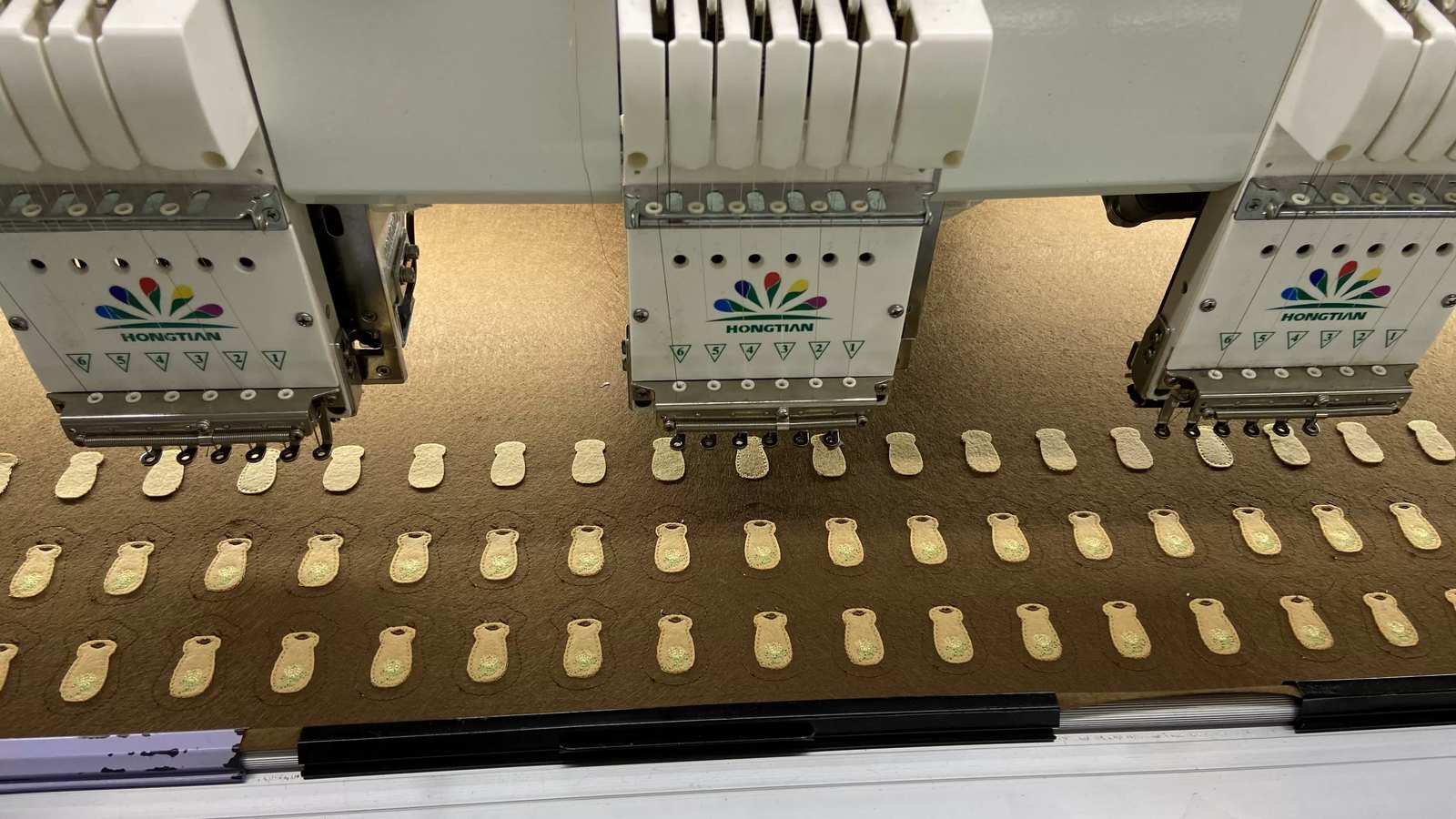
Embroidery heads working a sheet of small patch shapes. Every head repeats the same pass at the same time — that is what makes a multi-head line production-scale rather than sample-scale.
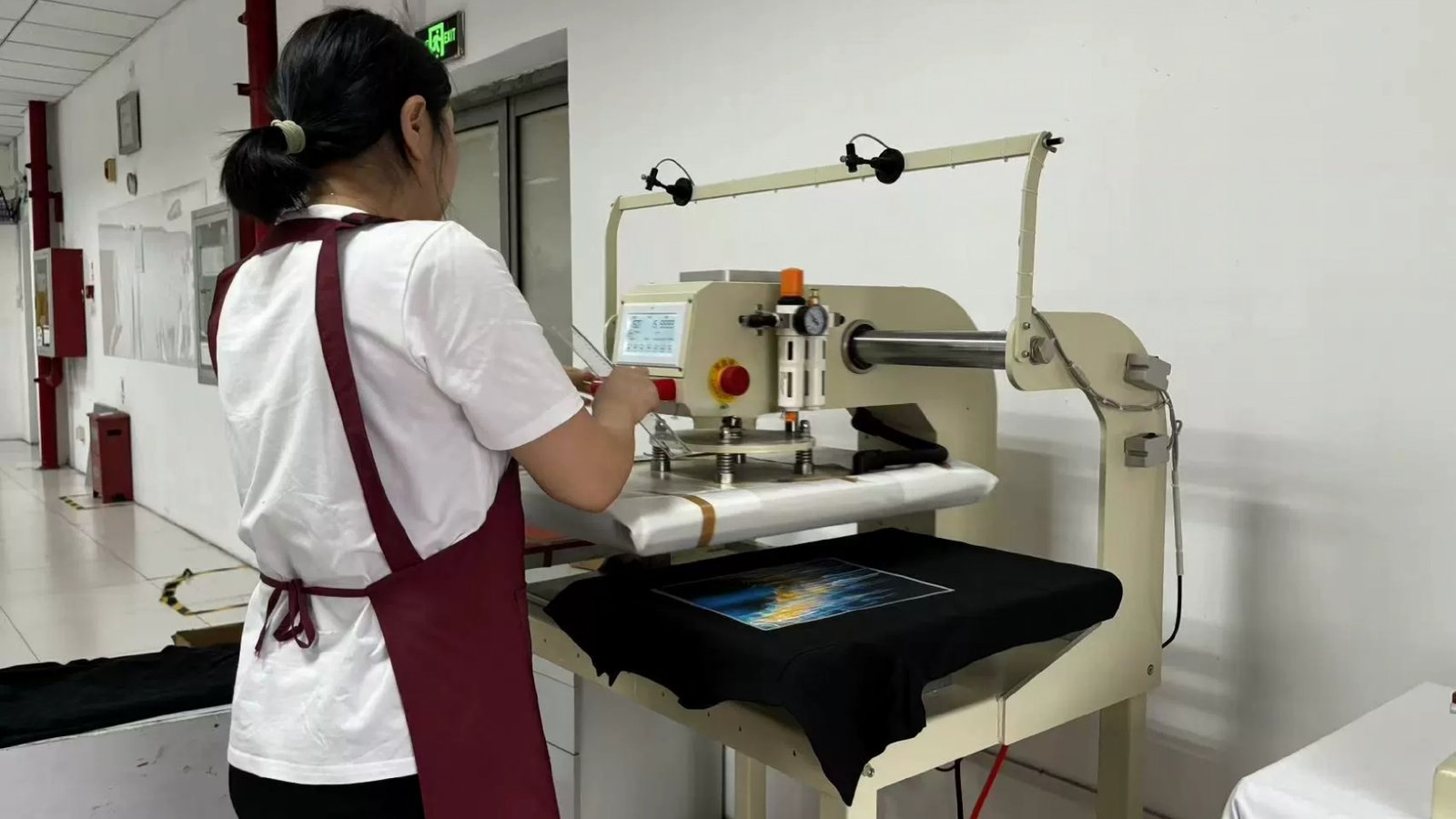
A heat press set up on a black T-shirt. Silicone patches are pressed on at 150–170°C for 10–15 seconds.
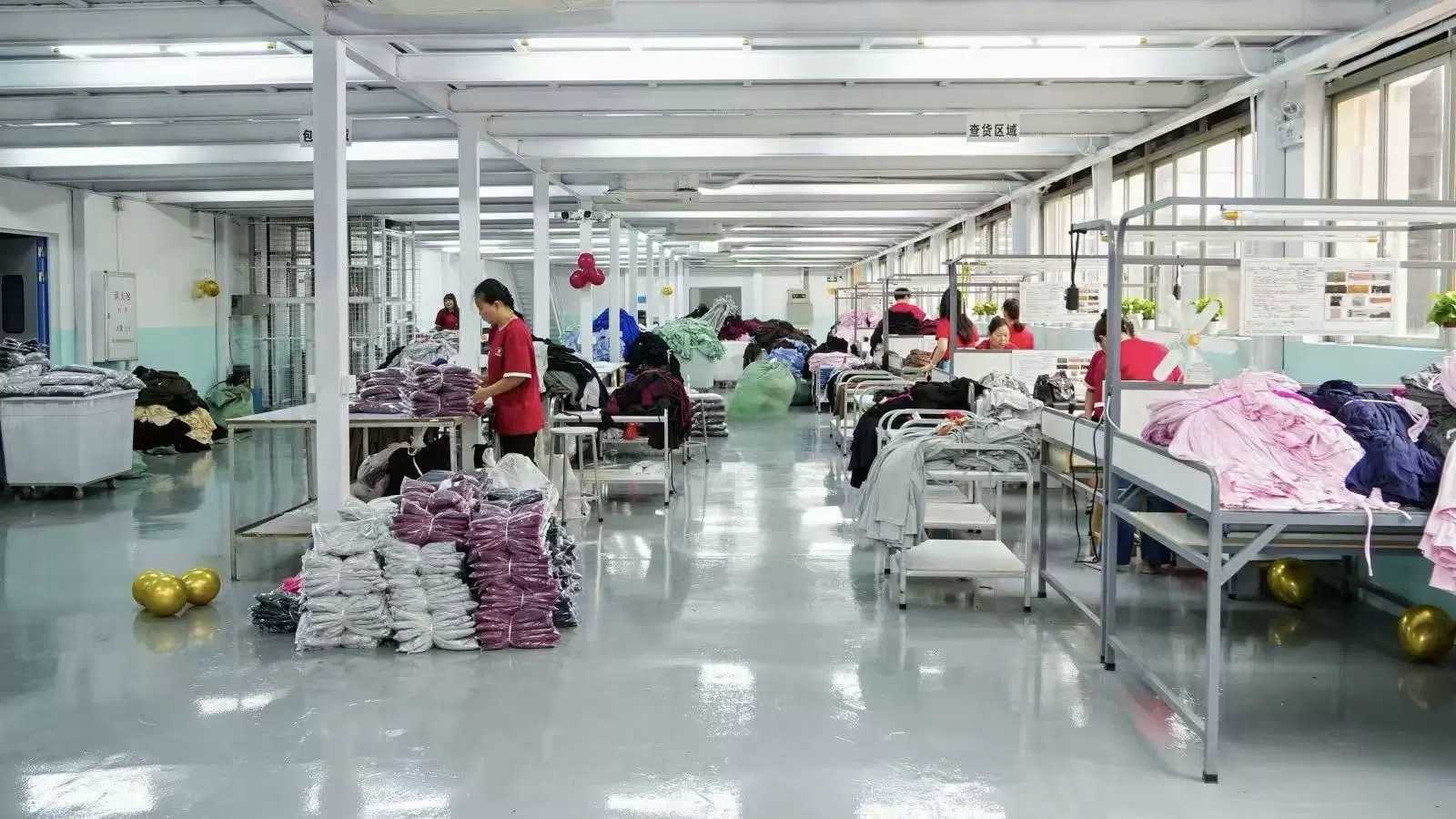
Finished garments being checked and folded before packing.
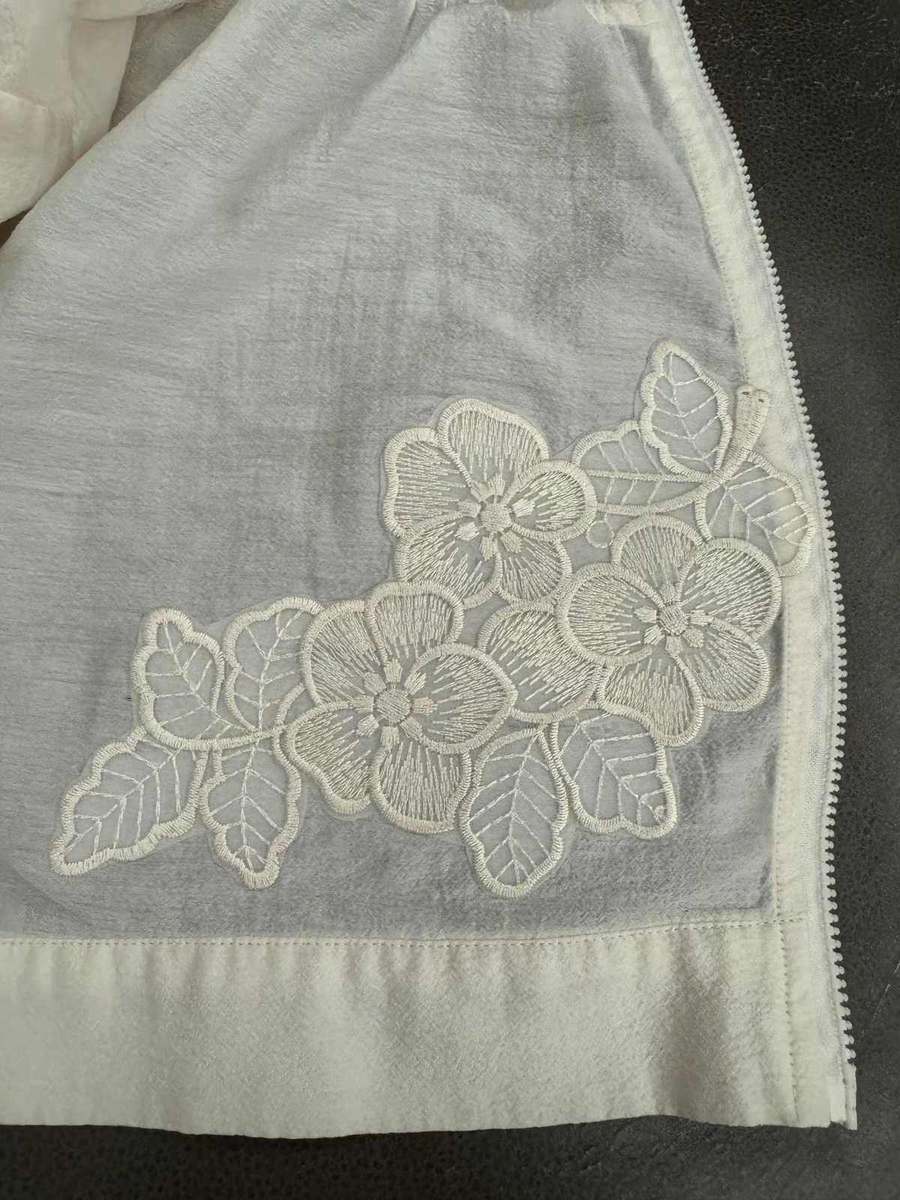
Embroidered floral appliqué on a sheer woven panel. Lightweight fabric like this needs a backing, or it bubbles under the stitching.
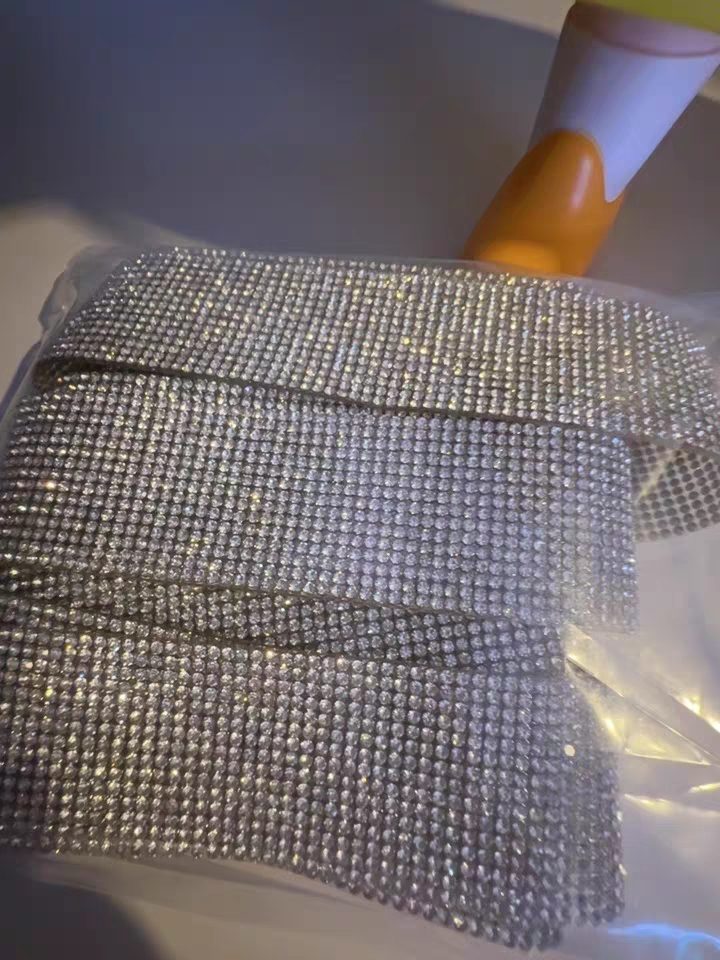
Hotfix rhinestone sheet before pressing. Hotfix takes a 40°C gentle cycle and starts shedding after roughly 20–30 washes.
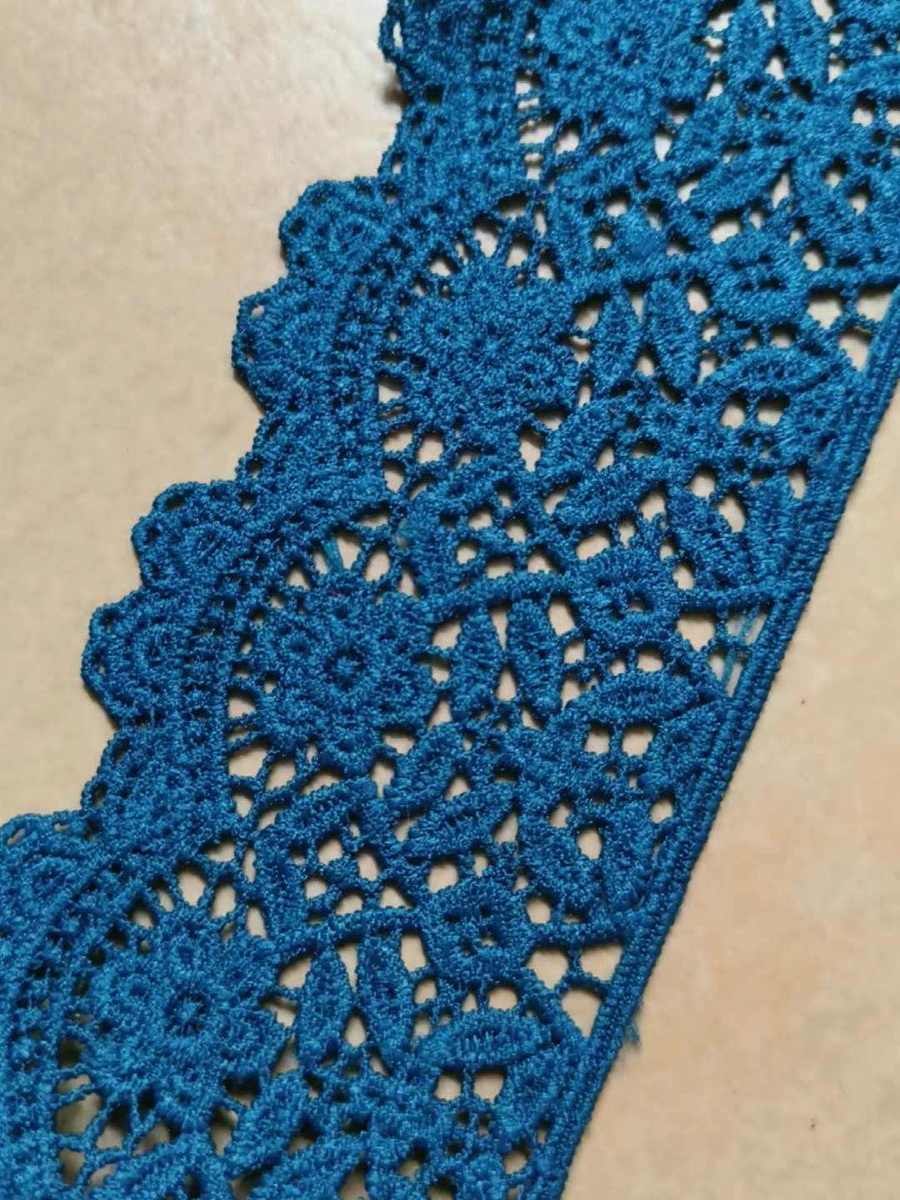
Lace trim with an open floral structure, before it is cut and applied.
Production Specifications
| Brand | Prophesy Apparel (PRP) |
| Founded | 2015 |
| Location | Dongguan, Guangdong, China |
| Garments produced | T-shirts · hoodies & sweatshirts · dresses & skirts · jackets & outerwear · activewear · loungewear & sleepwear · corporate uniforms · chef wear · school uniforms · workwear |
| MOQ | 50 pieces per style, per colour (three colourways = 150 pieces) |
| Sample lead time | 7–14 days |
| Bulk lead time | 25–45 days from approved sample |
| In-house | Laser cutting (3-metre format) · 24-head embroidery · sequin embroidery |
| Partner network | Pleating · 3D silicone patches · chenille · hand beading · hotfix rhinestone |
| Mould fee | USD 40–100 one-time per style (silicone patches only) |
| Digitizing fee | USD 40–100 one-time per style (embroidery only) |
| Artwork files | Laser cutting & appliqué: AI / EPS / PDF, fonts outlined · Embroidery: DST or EMB, or vector artwork for us to digitize · Printing: 300dpi or higher |
| Hi-vis | We produce the garment; the EN ISO 20471 / ANSI-ISEA 107 certification attaches to the reflective tape and fluorescent fabric, which the buyer specifies or supplies |
| Not offered | Scrubs / medical wear |
The Six Decoration Routes Compared
Where each technique is made, what it costs up front, the smallest detail it holds, how it fails in the wash, and what drives the price. Figures marked “typically” are general industry ranges, not PRP quotation terms.
| Laser cutting | Pleating | 3D silicone patch | Beading, sequin & rhinestone | Chenille & appliqué | Embroidery | |
|---|---|---|---|---|---|---|
| Where it is made | In-house, 3-metre format | Partner facility | Partner facility | Sequin embroidery in-house; hand beading and hotfix in partner facilities | Partner facility | In-house, 24 heads |
| One-time fee | — | — | Mould fee USD 40–100 per style | — | — | Digitizing fee USD 40–100 per style |
| Smallest detail | Holes of roughly 0.5–1mm; lines of roughly 1mm | Set by pleat type and mould | Typically 1–6 colours | Set by bead and stone size | Letters of roughly 5cm, strokes of roughly 8mm | Flat satin-stitch letters of roughly 5mm |
| Wash behaviour | Cut edge is sealed on synthetics and does not fray | Permanent on 100% polyester below 40°C; drops out above 60°C or in a hot dryer | 50+ washes at 40°C; fails by edge lift, not by the silicone breaking down | Hand beading: dry-clean or cold hand-wash. Hotfix: 40°C gentle, sheds after roughly 20–30 washes | Sewn lasts the life of the garment; heat-press only lifts after 10–20 washes | Needle holes are the risk: they ruin waterproof coatings and weaken genuine leather |
| Fabric it needs | Polyester, nylon, mesh, neoprene, PU leather, scuba. Never PVC | Polyester, acetate, nylon; lightweight wovens under 200gsm | Not thin nylon, ultralight polyester, wool, leather or coated fabric | Wovens of 80–100gsm or more; knits need interlining | Heavy wovens, melton, twill, canvas, denim, heavy fleece | Most fabrics; backing on lightweight and high-stretch |
| What drives cost | Typically file preparation and setup | Fabric: pleating uses 2.5–3× the flat yardage | The mould fee, which makes it cheaper than embroidered patches only once runs reach the low hundreds | Hand hours: typically 200–500 beads per worker per hour | Dedicated equipment and material; the most expensive patch type | Stitch count, priced per thousand stitches |
Two practical notes from the table. Laser cutting PVC releases chlorine gas, so no responsible factory accepts it — if a design calls for laser-cut PVC, the material has to change. And the pleating cost surprises people: the labour is not the expensive part, the two and a half to three times the fabric is.
When PRP Is the Wrong Factory
Plain, undecorated basics at volume. If the garment carries no decoration, our setup adds nothing. A factory built for high-volume basics will beat us on price, and the 50-piece minimum is not the point of working with us.
Scrubs and medical wear. We do not make them, and we would rather say so here than after a quote.
Certified hi-vis where the buyer expects the factory to hold the certificate. We produce the garment. The EN ISO 20471 / ANSI-ISEA 107 certification attaches to the reflective tape and fluorescent fabric, which the buyer specifies or supplies.
Tight deadlines on garments stacking three or more techniques. Across the industry, each extra technique that goes to a different partner facility typically adds about 3–5 days, and three or more typically adds 7–10. Beyond three or four decoration operations on one garment, bulk lead time starts to suffer, and hand beading is the biggest single variable. If the launch date is fixed, cut a technique rather than hope the schedule holds.
A design that depends on a technique the fabric cannot take. Heat-set pleats on cotton, embroidery on a waterproof shell, chenille on stretch jersey. We will say no at the quote stage and suggest the nearest route that works; the materials guide explains which fabrics pair with which decoration.
Questions Buyers Ask About What We Produce
What garments does Prophesy Apparel (PRP) make?
T-shirts, hoodies and sweatshirts, dresses and skirts, jackets and outerwear, activewear, loungewear and sleepwear, and uniforms including corporate, chef, school and workwear. The factory is set up for garments that carry decoration. Scrubs and medical wear are not produced.
What is the minimum order for a decorated garment?
50 pieces per style, per colour, and it is the same across every decoration technique, including heavy beading and multi-technique styles. Three colourways of one style means a 150-piece minimum. Most factories that handle heavy embellishment want 300 pieces or more.
Which decoration techniques are done in-house?
Laser cutting on a 3-metre format machine, embroidery on a 24-head line, and sequin embroidery on the same embroidery machines. Pleating, 3D silicone patches, chenille, hand beading and hotfix rhinestone are produced through our partner network, coordinated under one order and one timeline.
How long does a decorated garment order take?
Samples take 7–14 days and bulk production takes 25–45 days from sample approval. Across the industry, each additional technique routed through a different partner facility typically adds about 3–5 days. Hand beading is the largest single variable in any schedule.
Are there one-time fees on top of the unit price?
Two techniques carry one: silicone patches have a mould fee of USD 40–100 per style, and embroidery has a digitizing fee of USD 40–100 per style. Spread over 50 pieces that is USD 0.80–2.00 per piece, and over 500 pieces USD 0.08–0.20.
What artwork files are needed?
For laser cutting and appliqué, AI, EPS or PDF with fonts converted to outlines. For embroidery, DST or EMB files, or vector artwork that we digitize. For printing, 300dpi or higher.
Handle the Finishes Before Choosing One
A pleat, a silicone patch and a hand-beaded panel can look alike in a photo and nothing alike in the hand. Our embellishment sample card carries real samples of pleating, laser cutting, silicone patch, beading, chenille and specialty embroidery, so the options can be compared side by side before a sample is ordered. The card is free to make; shipping is paid by the buyer, and we confirm the cost before sending.
Send the Garment, the Fabric and the Decoration
Tell us what the garment is, what it is made of and what you want on it, and we will say whether the combination works, which parts are in-house and which go to the partner network, and what the realistic lead time is. Minimum is 50 pieces per style, per colour.