
Embroidery vs Screen Printing: How to Choose for Your Next Order
Embroidery vs screen printing decisions usually get made too late — after a factory has already started digitizing a design or cutting screens for it. A Melbourne streetwear brand sent PRP Apparel a tech pack for 300 heavyweight hoodies with a five-color gradient logo and asked for embroidery across the full chest panel. The gradient wouldn’t translate — thread blends color the way a paint roller does, not the way ink does — and at that fill density the design would have run past 12,000 stitches per piece, pushing the decoration cost well above what a screen print of the same design would cost. The brand switched to a four-color screen print for the main graphic and kept embroidery for a small sleeve logo. Same hoodie, same brand mark, a fraction of the decoration cost, and no lost detail.
That’s the decision most brands get wrong before they’ve placed an order: picking embroidery or screen printing based on which one “looks more premium” instead of which one the design actually supports.
The Real Difference Between Embroidery and Screen Printing
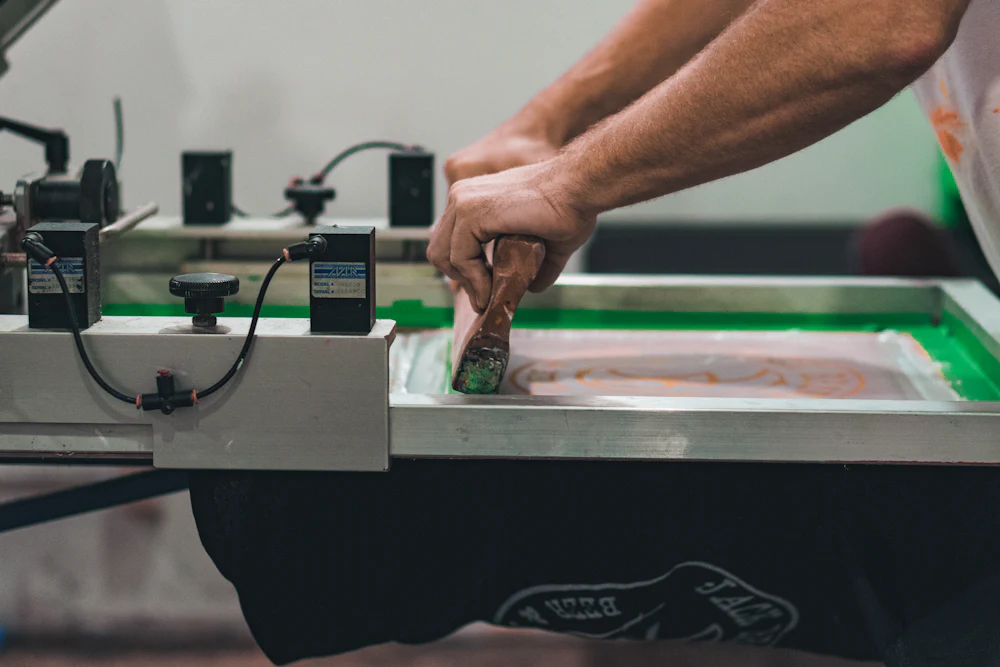
Screen printing deposits ink onto fabric through a mesh screen, one color at a time. Embroidery stitches thread through fabric with a needle, building the design out of physical thread rather than a flat layer of pigment. They’re not two versions of the same process — they’re different manufacturing operations with different machines, different setup costs, and different physical limits on what a design can look like once it’s finished.
Most decoration decisions come down to three questions: how many colors and how much gradient detail does the design need, what fabric and thickness is it going onto, and how will it hold up after 30-plus washes. Getting any of these wrong after bulk production has started means a reprint, not a touch-up.
Both methods scale down to PRP Apparel’s standard 50-piece MOQ per style, so order size alone rarely decides which one to use — the design and the garment do.
How Screen Printing and Embroidery Actually Work
How Screen Printing Works
A screen printer stretches a fine mesh screen over a frame and coats it with light-sensitive emulsion. A film positive of the design — one film per color — is exposed onto the screen, and the unexposed emulsion washes out, leaving the design as an open channel in the mesh. Ink gets pulled through that channel with a squeegee, one screen and one pass per color.
A single-color chest logo needs one screen. A four-color design needs four screens, registered to print in exact alignment on the same garment. Manual presses handle this by rotating the garment platen under each screen in sequence; automatic presses do the same rotation mechanically at higher speed for larger runs. Plastisol ink is the industry standard for durability and opacity on dark garments; water-based ink sits flatter and softer against the fabric but shows less on dark colors without an underbase.
How Embroidery Works
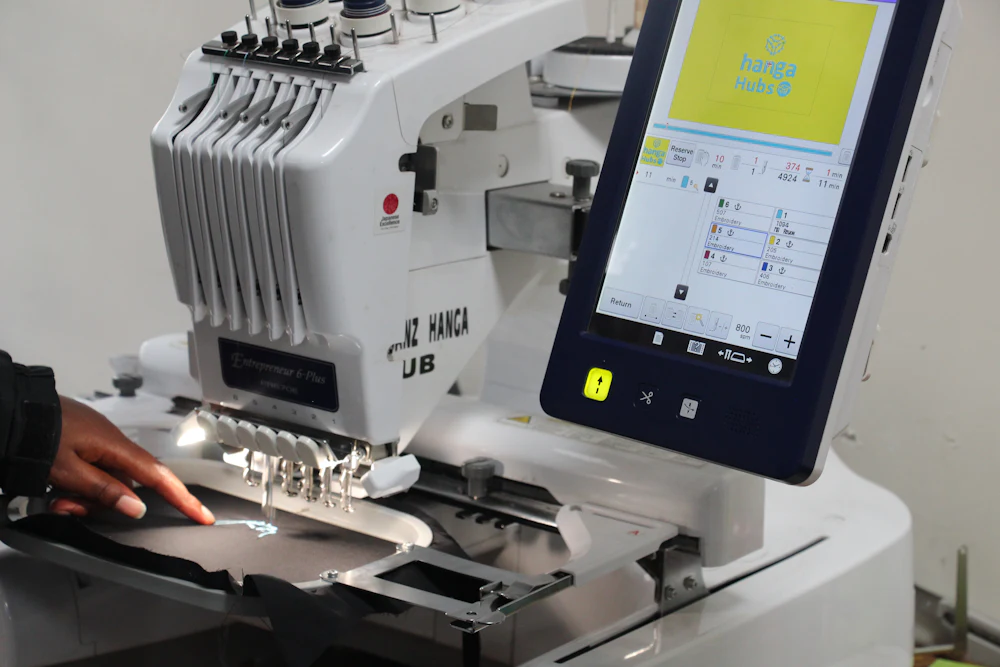
Embroidery starts with digitizing — converting the artwork into a stitch file that tells a computerized multi-needle machine exactly where to place each stitch, in what direction, and with which of the machine’s loaded thread colors. This is a one-time setup cost per design, independent of how many pieces get produced.
Once digitized, the machine stitches the design directly, building up fill stitches for solid areas and satin stitches for outlines and text. Thread is typically polyester or rayon; polyester holds color and resists fading better under repeated washing, rayon has a slightly higher sheen. A backing material stabilizes the fabric underneath the stitching so the finished design doesn’t pucker.
Design Complexity: What Translates and What Doesn’t
Screen printing reproduces gradients, fine linework, and small text cleanly because it’s laying down flat, continuous ink. Embroidery struggles with all three — thread has physical width, so text under about 6 points tends to fill in, and gradients require dithering with thread colors that never blends as smoothly as printed ink. Embroidery’s strength is the opposite: raised, textured logos and simple 1-4 color marks that look intentionally dimensional rather than flat.
A useful rule of thumb: if the design has a photograph, a gradient, or fine detail under a quarter-inch, it’s a screen print (or DTG) candidate. If it’s a simple wordmark or icon that benefits from a raised, embroidered texture — a left-chest logo, a cap front, a hood — embroidery is usually the better fit.
Cost Drivers at 50-Piece MOQ
Garment and decoration costs are quoted separately. A standard cotton hoodie at 320 GSM runs $18–$30 per unit before decoration, per PRP Apparel’s published pricing reference; decoration is added on top and priced by different variables for each method.
Screen printing cost scales with color count, because each color requires its own screen setup. A one-color design has a lower setup cost than a four-color design on the same garment, regardless of quantity — which is why simple, 1-2 color logos are often the cheapest decoration option available. Embroidery cost scales with stitch count, not color count: a design digitized at 12,000 stitches costs meaningfully more to run than one at 4,000 stitches, even if both use only two thread colors.
Durability and Wash Performance
Embroidery generally outlasts screen printing on abrasion-heavy areas — caps, cuffs, bag straps — because thread is mechanically locked into the fabric rather than sitting on top of it as a surface layer. Screen printed plastisol ink is durable but can crack or fade after repeated high-heat drying, particularly on stretch fabrics where the ink layer doesn’t flex with the fabric. Water-based prints avoid cracking but fade faster under UV exposure and frequent washing.
For any printed or embroidered garment expected to hold color through repeated laundering, colorfastness to rubbing (crocking) matters as much as colorfastness to washing — a print or thread that transfers color onto other fabric during wear or storage is a return-driving defect either way. This is tested to ISO 105-X12, the standard PRP Apparel uses for colorfastness-to-rubbing verification on request.
Fabric and Placement Compatibility
Screen printing works on nearly any flat-knit or woven surface — cotton, poly-cotton blends, even performance fabrics with the right ink chemistry. Embroidery needs enough fabric structure to hold stitches without puckering; lightweight jersey and stretch performance fabrics generally need a lighter stitch count and a stabilizing backing to avoid distortion. Embroidery also can’t wrap around a seam or curve the way a heat-applied print can, which is why cap fronts and flat chest panels are common embroidery placements and side-seam or wraparound graphics are almost always printed.
What to Verify Before You Commit to a Decoration Method
Ask for a stitch count on any embroidery quote, not just a price per piece — a factory quoting a flat rate regardless of design complexity is either padding the simple designs or underquoting the complex ones. Request a physical sample with the actual stitch density and backing planned for bulk production, not a photo of a similar past job; puckering and thread tension issues only show up on real fabric.
For screen printing, confirm which ink type is quoted — plastisol and water-based inks have different feel, opacity, and price, and a factory that doesn’t specify by default is likely defaulting to whichever is cheapest for them, not best for the design. If the design touches a colorway close to a garment’s fabric dye, ask about ink migration testing; dye from certain synthetic fabrics can bleed through a print over time, a defect that only appears after the garment has shipped.
Printing inks, particularly plastisol formulations, have historically contained phthalate plasticizers that are restricted under U.S. consumer product regulations, especially for children’s apparel. A factory that can speak to CPSC phthalate limits without being asked twice is one that already tracks compliance rather than treating it as a surprise request. For a broader look at what documentation should accompany any decorated order, see PRP Apparel’s garment quality control guide.
Comparing All Five Decoration Methods
Screen printing and embroidery aren’t the only options. Sublimation, heat transfer, and direct-to-garment (DTG) printing round out the decoration methods available across PRP Apparel’s product categories, and each solves a different problem.
| Method | Best For | Design Complexity | Durability | Fabric Fit |
|---|---|---|---|---|
| Screen printing | Simple to moderate graphics, larger runs | Low-to-moderate detail, flat colors | High (plastisol); moderate (water-based) | Cotton, poly-cotton, most flat wovens |
| Embroidery | Logos, wordmarks, raised texture | Low detail, no gradients | Highest — thread is mechanically locked in | Structured fabrics; needs backing on stretch/jersey |
| DTG | Photographic detail, small runs, many colors | High — full-color, gradient-capable | Moderate — softer hand, wears with heavy washing | Cotton and cotton-heavy blends only |
| Sublimation (AOP) | All-over prints, full-garment color | Highest — unlimited colors and gradients | High — dye becomes part of the fiber | Polyester and poly blends only |
| Heat transfer | Small runs, multi-color designs without screens | Moderate-to-high | Lower — can crack or peel over time | Most fabrics, sensitive to high heat |
Decoration Capabilities at PRP Apparel
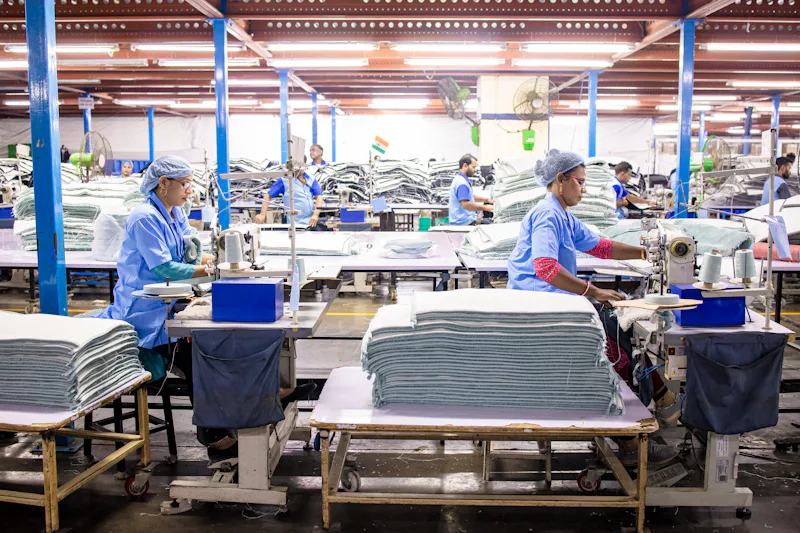
PRP Apparel offers screen printing, embroidery, sublimation (AOP), heat transfer, and DTG across its product categories — hoodies, streetwear, activewear, and T-shirts included — at the standard 50-piece MOQ per style. Custom woven labels and heat-transfer neck tags are available at the same MOQ for brands that want thread-based branding (like a woven label) to match an embroidered logo, and full custom labels and packaging can be built around either decoration method.
A brand ordering a run of hoodies from a China-based manufacturer, for example, commonly mixes both methods on one garment: an embroidered left-chest logo for durability on a high-wear area, and a screen-printed back graphic for the design detail that embroidery can’t hold. Sample rounds for decorated garments follow the same 12–15 day sample lead time and $80–$250 sample cost as undecorated styles — decoration doesn’t change the sampling timeline, only the artwork prep before it.
Embroidery vs Screen Printing at a Glance
| Factor | Embroidery | Screen Printing |
|---|---|---|
| Setup cost driver | One-time digitizing fee per design | One screen per color |
| Cost scales with | Stitch count | Color count |
| Design ceiling | Simple marks, no gradients, text over ~6pt | Full gradients, fine linework, photographic detail (with DTG) |
| Durability | Highest — mechanically locked thread | High with plastisol; moderate with water-based |
| Best placements | Left chest, caps, cuffs, hoods | Full-front, back, all-over graphics |
| Fabric needs | Structured fabric or added backing | Works on most flat-knit and woven fabrics |
Frequently Asked Questions
Is embroidery or screen printing more durable?
Embroidery generally lasts longer, especially on high-friction areas like caps and cuffs, because thread is mechanically stitched into the fabric rather than sitting as a surface layer. Plastisol screen printing comes close on flat panels but can crack over many wash-and-dry cycles, particularly on stretch fabrics.
Can embroidery reproduce a photograph or gradient design?
No. Embroidery builds designs from individual thread colors and can’t blend colors the way ink does, so gradients and photographic detail don’t translate. Screen printing (with enough color separations) or DTG printing are better suited to gradient-heavy or photographic artwork.
How many colors can screen printing handle?
Standard screen printing runs 1-6 colors on a manual press and up to 8-12 on an automatic multi-station press, with each color requiring its own screen. Beyond that color count, DTG or sublimation typically becomes more cost-effective than adding more screens.
What’s the minimum order for embroidery vs. screen printing?
Both methods are available at PRP Apparel’s standard 50-piece MOQ per style. Order size doesn’t usually determine which method to use — design complexity, fabric type, and placement do.
Does fabric type limit which decoration method works?
Yes. Embroidery needs enough fabric structure (or a stabilizing backing) to hold stitches without puckering, which makes lightweight jersey and stretch fabrics more demanding. Screen printing works across nearly any flat-knit or woven fabric, while sublimation is limited to polyester and poly blends.
Can a single garment combine embroidery and screen printing?
Yes, and it’s common — an embroidered left-chest logo paired with a screen-printed back graphic is a standard combination that uses each method where it performs best rather than forcing one technique to do both jobs.
To discuss your embroidery or screen printing project — design files, garment style, and placement — reach out directly via the inquiry form.
Related Reading
- How Durable Are Silicone Patches Compared to Embroidery?
- Can You Laser Cut Cotton Fabric? What Actually Happens
- Artwork File Requirements for Apparel Printing
- Corporate Uniform Manufacturer
- Woven Label Manufacturer
- Custom Labels and Packaging
- Oversized T-Shirt Manufacturer
Related Manufacturing Services
Ready to Start Your Clothing Project?
- MOQ from 50 pieces per style
- OEM and private label production
- Sample development support
- Fabric sourcing
- Quality inspection before shipment
- Worldwide shipping support