
A brand came to us with a reference photo: a knife-pleated skirt panel, crisp vertical folds holding their shape on a hanger. They wanted it produced in 100% cotton poplin because the rest of the collection was cotton and they didn’t want to break the fabric story for one style. We ran a sample. It looked identical to the reference on day one. After the first wash, the pleats were gone — not faded, not loosened, just flat, as if the fabric had never been pressed.
This isn’t a production defect. It’s physics. Whether a pleat survives a wash has almost nothing to do with how carefully it was pressed and almost everything to do with what the fabric is made of.
What “Falling Out” Actually Means
A heat-set pleat isn’t held in place by the crease alone — it’s a change to the fiber itself. Polyester, acetate, and nylon are thermoplastic: heat softens the fiber, the fold sets into it as it cools, and the pleat becomes a permanent property of that yarn until enough heat is reapplied to undo it. Lightweight wovens take this best — chiffon, georgette, satin, and taffeta hold a crisp, deep fold because the fiber is thin enough for heat to penetrate evenly.
Cotton, linen, and viscose/rayon are not thermoplastic. There’s no melting point for the heat to work against, so a “pleat” pressed into these fabrics is just a crease — the same as pressing a shirt collar. It looks identical to a heat-set pleat under a showroom light and behaves nothing like one in a washing machine. Wool sits in between: it can be steam-set and will hold a shape briefly, but the set doesn’t survive repeated wear or washing the way a true thermoplastic pleat does.
Fabric weight matters too. Anything heavier than roughly 200gsm won’t take a crisp fold regardless of fiber content — the fabric is too thick for the pleating mould to compress a sharp edge into it.
The Distinction Almost Everyone Gets Wrong
“Cotton can’t be pleated” is the wrong takeaway, and it’s the most common misunderstanding we run into on this technique. Cotton cannot be heat-set pleated — that specific process fails on it every time. But cotton can absolutely be shirred or smocked, which are stitching-based techniques that gather fabric mechanically instead of setting a crease chemically. A shirred cotton waistband or a smocked cotton yoke holds its gathered shape indefinitely, through any number of washes, because the stitching — not the fiber — is doing the work.
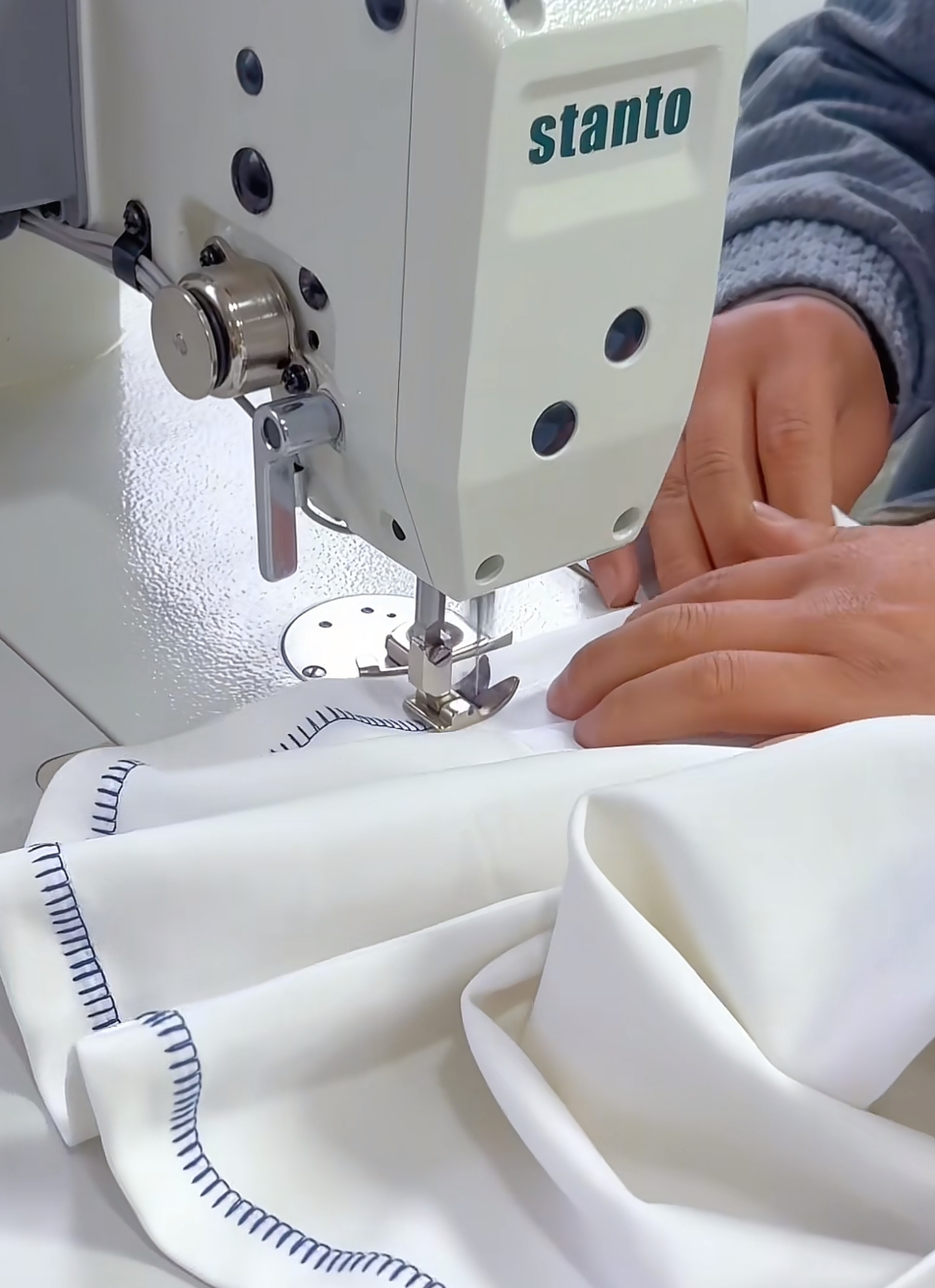
These two techniques get conflated constantly because the finished look can be similar at a glance — both produce a textured, gathered surface. But they are not interchangeable, and asking a factory for “pleated cotton” when what you actually want is a shirred or smocked cotton panel will either get you a garment that falls apart in the wash or a confused quote, because the two techniques run through completely different equipment.
How Long a Real Pleat Actually Lasts
Even on the right fabric, durability depends on care conditions:
- On 100% polyester, a heat-set pleat is effectively permanent below 40°C wash temperatures.
- Above 60°C, or in a hot tumble dryer, the pleat drops out — the same heat that set it can undo it.
- On a 65/35 polyester-cotton blend, the pleat softens gradually, typically noticeable after 10–20 wash cycles, as the cotton content resists holding the crease as tightly as the polyester content does.
This is also why care labels matter more on pleated garments than almost any other construction detail. A buyer who skips the “cold wash, no tumble dry” instruction on a 100% polyester pleated skirt will get exactly one wash out of the pleats before the reference sample and the returned product stop matching.
The Real Cost Driver Isn’t Labor — It’s Fabric
Pleating has a reputation for being expensive, and buyers usually assume that’s a labor cost. It isn’t, or at least not primarily. Pleating consumes 2.5–3× the flat yardage of the finished panel — an accordion pleat runs roughly 2.5–3×, a knife pleat closer to 3×. A skirt panel that would need one linear meter of fabric flat needs two-and-a-half to three meters once it’s pleated, because the folds themselves consume fabric width that never shows on the outside of the garment.
This is the single most useful number to know before costing a pleated style: fabric consumption, not the pleating process itself, is what moves the unit price. A cheaper pleating supplier won’t fix this — the yardage math is the same no matter who runs the mould.
Pleating Compatibility by Fabric Type
| Fabric | Heat-set pleat holds? | Wash durability | Better alternative if it doesn’t hold |
|---|---|---|---|
| 100% polyester | Yes — permanent | Holds indefinitely below 40°C, no hot tumble dry | N/A — this is the ideal fabric for the technique |
| Acetate, nylon, lightweight wovens (chiffon, satin, taffeta) | Yes | Holds well below 40°C | N/A |
| 65/35 polyester-cotton blend | Partially | Softens after roughly 10–20 washes | Higher polyester-content blend if long-term crispness matters |
| Wool | Briefly (steam-set) | Does not survive repeated wear or washing | Re-pressing between wears, or switch to a wool-poly blend |
| 100% cotton, linen, viscose/rayon | No — collapses on first wash | N/A | Shirring or smocking (stitch-based, holds indefinitely) |
When You Should Not Try to Heat-Set Pleat Cotton
If the brief specifically calls for 100% cotton and a durable, permanent pleat, heat-set pleating is the wrong process no matter how the sample is finished. A factory that presses a “pleat” into cotton and ships it as final production is either counting on the buyer not washing the sample before approval, or hasn’t explained that the fold won’t survive laundering. Neither is a good sign.
The honest alternatives are: switch the panel to polyester, acetate, or a poly-heavy blend where the visual effect is nearly identical but the fold is permanent; keep the cotton and use shirring or smocking instead, which holds indefinitely through stitching rather than heat; or, if 100% cotton and the exact pleated look are both non-negotiable, accept that it’s a press-pleat that needs re-ironing after every wash — essentially the same maintenance as a pleated cotton dress pants, not a wash-and-wear garment.
Where PRP Apparel Fits
Pleating, shirring, and smocking run through our partner facility rather than our own floor — we’re upfront about that, the same way we’re upfront about which of our six embellishment techniques are in-house and which run through trusted outside partners. What we control on our side is honest fabric guidance before the sample stage: telling a buyer that their 100% cotton brief needs to become a poly blend, or a shirred construction, before they’ve committed to fabric and cut a pattern around a technique that won’t survive delivery.
Minimum order is 50 pieces per style, per colour — the same threshold across every technique on the embellishment page, including laser cutting, silicone patches, and beading. Sample lead time runs 7–14 days, with bulk production at 25–45 days from an approved sample. Panel size for pleating is limited by the mould itself, typically 110–150cm wide by 200–300cm long, so a full-width skirt or dress panel usually needs to be planned around that ceiling rather than assumed to be unlimited.
The same fiber-content logic shows up elsewhere in our embellishment lineup — it’s the same reason a laser cutter seals a polyester edge but scorches a cotton one. Heat-based decoration techniques all come back to the same question: is this fiber thermoplastic or not. Get that answer before the sample, not after the wash test.
Quick Reference
| Spec | Detail |
|---|---|
| Fabrics that hold a heat-set pleat | Polyester, poly blends, acetate, nylon, lightweight wovens (chiffon, georgette, satin, taffeta) |
| Fabrics that do not hold | 100% cotton, linen, viscose/rayon (wool holds briefly, steam-set only) |
| Max fabric weight for a crisp fold | ~200gsm |
| Wash durability, 100% polyester | Permanent below 40°C; drops out above 60°C or in a hot dryer |
| Wash durability, 65/35 poly-cotton | Softens after roughly 10–20 washes |
| Fabric consumption | 2.5–3× the flat yardage (accordion ≈2.5–3×, knife pleat ≈3×) |
| Panel size limit | Typically 110–150cm wide × 200–300cm long, set by the pleating mould |
| MOQ | 50 pieces per style, per colour |
| Sample lead time | 7–14 days |
| Bulk lead time | 25–45 days |
FAQ
Why do pleats fall out of cotton after washing?
Because cotton isn’t thermoplastic. A heat-set pleat works by softening the fiber with heat so the fold becomes permanent as it cools — polyester and similar synthetics do this. Cotton has no melting point for the heat to act on, so a pressed “pleat” in cotton is just a crease, and creases relax the first time they get wet.
Can cotton be pleated at all?
Not with a permanent heat-set pleat. It can be shirred or smocked instead, which gathers the fabric with stitching rather than a heat-set crease, and holds indefinitely through washing because the technique doesn’t rely on the fiber’s melting behavior.
What’s the difference between pleating and shirring?
Pleating heat-sets a fold into a thermoplastic fiber — it’s a property of the yarn after processing. Shirring gathers fabric using rows of stitching (often with elastic thread), which works on any fabric including cotton because the gather is held by thread, not by the fiber itself.
Will a polyester-cotton blend hold a pleat?
Partially. A 65/35 poly-cotton blend will take a heat-set pleat, but it softens gradually — usually noticeable after 10–20 wash cycles — because the cotton portion doesn’t hold the heat-set crease as firmly as the polyester portion does.
Why does pleated fabric cost more than the same fabric flat?
Mainly because of yardage, not labor. Pleating consumes 2.5–3 times the flat fabric width to produce the same finished panel width, since the folded-under fabric is invisible in the final garment but still has to be purchased and processed.
Can a heavy fabric be pleated?
Not cleanly. Fabrics over roughly 200gsm won’t take a crisp fold regardless of fiber content — the pleating mould can’t compress a sharp edge into fabric that thick, so the result is a soft, rounded fold rather than a crisp one.
Not sure whether your fabric will hold a pleat or needs to switch to shirring instead? Send us the fabric spec through the inquiry form and we’ll tell you before you commit to a sample.
Related Reading
- How Durable Are Silicone Patches Compared to Embroidery?
- Can You Laser Cut Cotton Fabric? What Actually Happens
- Fabric Types and GSM: What Clothing Brands Need to Know
- Garment Washing Techniques: What Brands Need to Know Before Ordering
Related Manufacturing Services
Ready to Start Your Clothing Project?
- MOQ from 50 pieces per style
- OEM and private label production
- Sample development support
- Fabric sourcing
- Quality inspection before shipment
- Worldwide shipping support