
24-Head Production Embroidery: Scale, Fabric Limits & Digitizing Fees
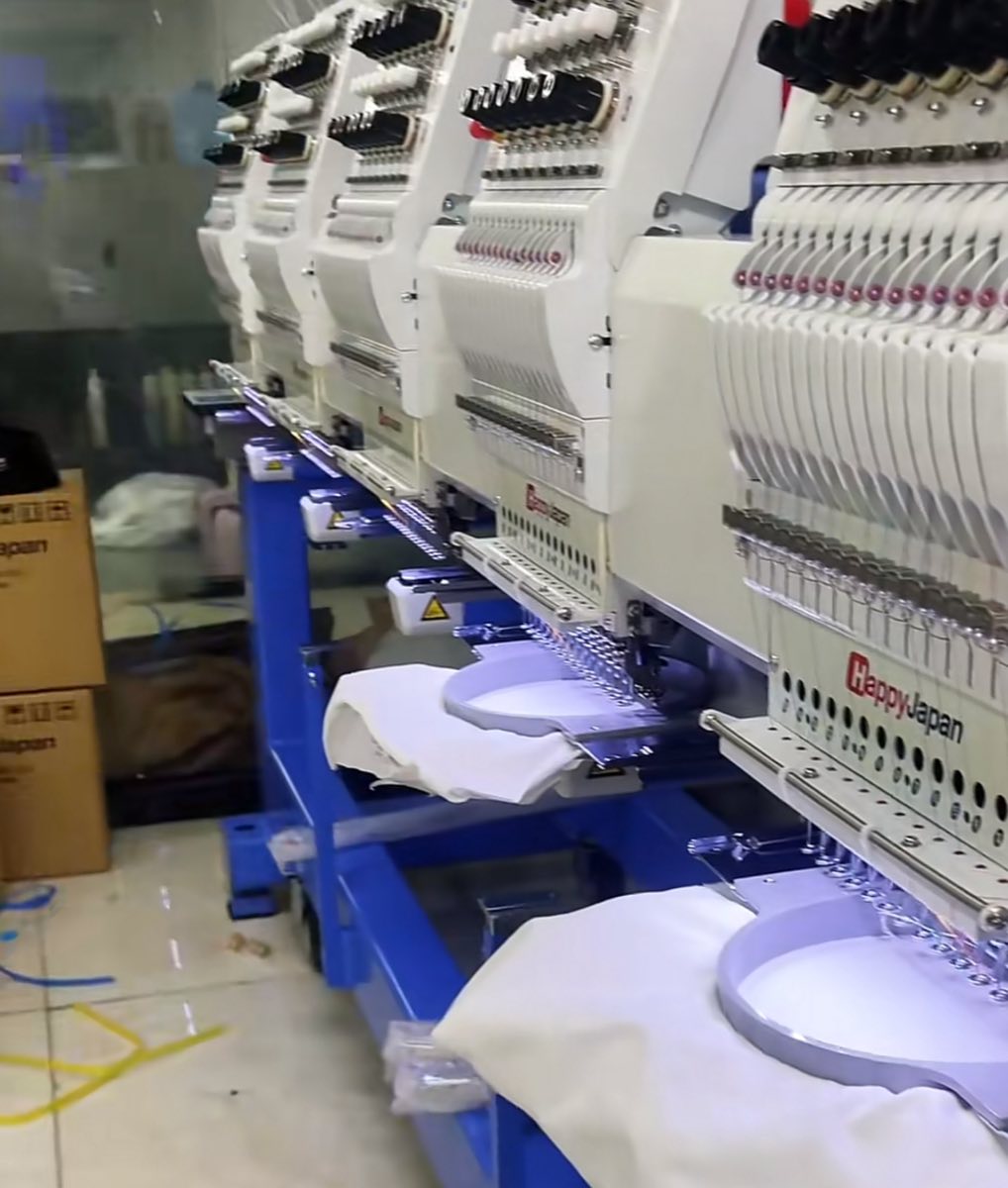
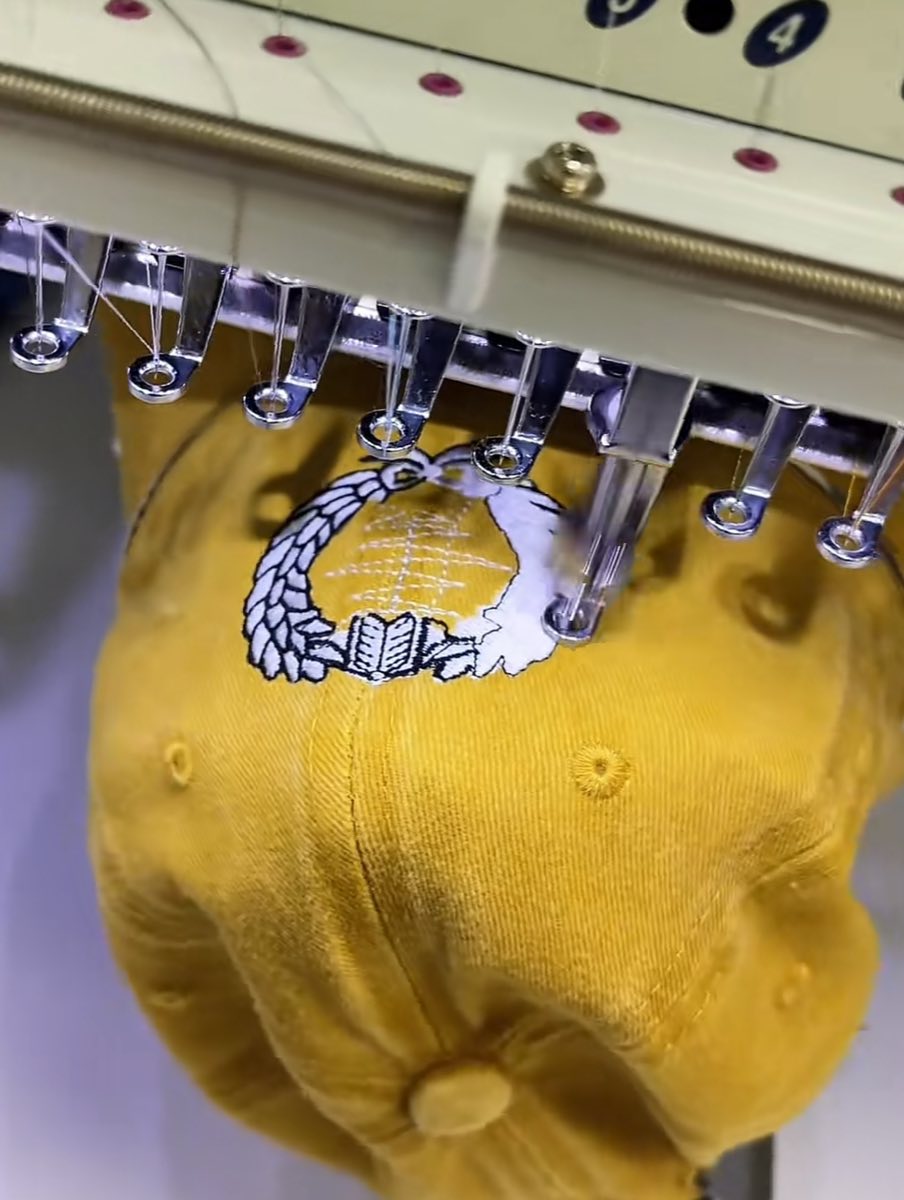
Prophesy Apparel (PRP) runs 24 embroidery heads in-house — 24 garments embroidered simultaneously in a single pass. Seven specialty types available: flat, 3D puff, sequin, cording, cross-stitch, chain stitch, fringe/tassel. Minimum 50 pieces per style, per colour — on embellished runs too.
What 24-Head Embroidery Means for Your Production Run
A multi-head embroidery machine runs multiple garment stations in parallel. At 24 heads, that means 24 garments — polo shirts, hoodies, jackets, caps, tote bags, or any combination — are embroidered in one machine pass.
For buyers, this translates to production-scale throughput at 50-piece minimums. Most factories that handle heavy embellishment want 300+ pieces before committing their machines to a run. Our 24-head line runs in-house, so we can allocate it to orders starting at 50 pieces without depending on subcontractor minimums.
Seven specialty embroidery types — all in-house:
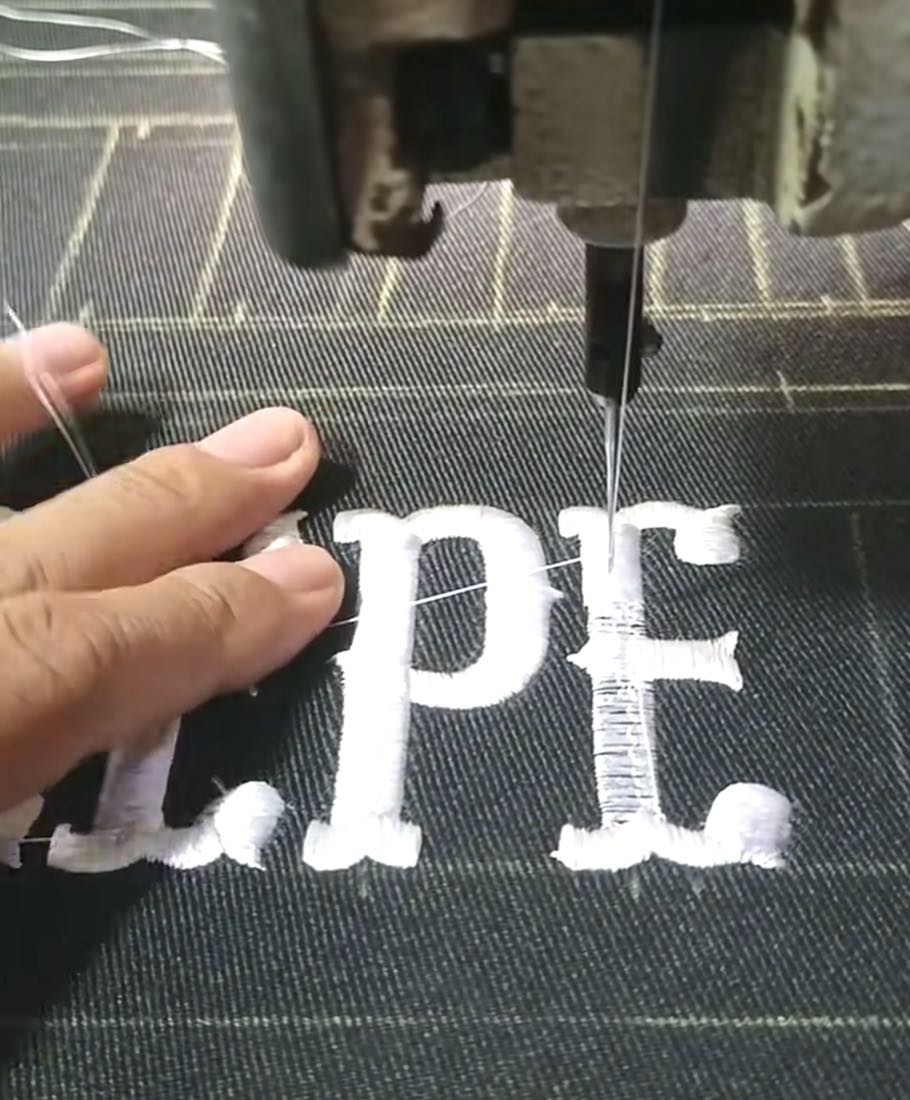
- Flat satin stitch — minimum 5 mm letter height
- 3D puff embroidery — foam under stitching; minimum 10 mm letter height
- Sequin embroidery — sequin attachment on the same machines
- Cording / soutache
- Cross-stitch
- Chain stitch
- Fringe / tassel
What Garments and Base Fabrics Work
Garments that work well: polo shirts, fleece hoodies, denim jackets, canvas work jackets, cotton sweatshirts, structured woven shirts, baseball caps, tote bags, varsity-style pieces. Anything that can hold a hoop without distorting and can accept needle penetration without structural damage.
Fabrics that embroider cleanly: 100% cotton wovens and jersey (with backing), cotton/poly blends, polyester fleece, canvas, denim, structured nylon. High-stretch knits work with cut-away backing to prevent distortion.
Pricing basis: per thousand stitches — the industry standard. A typical chest logo runs 5,000–15,000 stitches. Above 20,000–30,000 stitches, both price and distortion risk increase. Modern multi-head machines carry up to 15 needles, meaning up to 15 thread colours typically without a surcharge.
Production Specifications
| Brand | Prophesy Apparel (PRP) |
| Founded | 2015 |
| MOQ | 50 pieces per style, per colour |
| Sample lead time | 7–14 days |
| Bulk lead time | 25–45 days from approved sample |
| Digitizing fee | USD 40–100 one-time per design |
| Machine capacity | 24 heads — 24 garments embroidered simultaneously |
| Min. letter height | 5 mm (flat) · 10 mm (3D puff) |
| Hoop size (typical) | 30×20 cm standard · 40×50 cm large hoop |
| Attribution | In-house — own-equipment photos and explicit in-house claims permitted |
| Not offered | Scrubs / medical wear |
| File format needed | DST or EMB preferred; vector artwork accepted for digitizing |
When Embroidery Is Not the Right Choice
Waterproof-coated shell fabrics. Hard-shell outerwear, packable windbreakers, and any DWR-coated fabric should not be embroidered directly. The needle punctures destroy the waterproof membrane along the stitch line. The visible stitching looks fine; the garment leaks in rain. The correct alternative is a woven or chenille patch sewn onto the outer layer, keeping needle penetration away from the membrane. We tell you this before sampling starts.
Genuine leather. Each needle hole permanently weakens leather along a perforation line. Under load or repeated flex, the leather tears along that line. PU leather has the same failure mode. For leather garments, heat-pressed silicone patches or applied hardware are the standard alternative.
Ultralight fabrics without backing. Chiffon, georgette, and similar fabrics under about 80 gsm bubble and distort under the presser foot unless stabilised with a cut-away or tear-away backing. With proper backing they can be embroidered, but the backing adds weight and stiffness that may not suit the drape of the finished garment.
Very small or very fine detail. Flat satin stitch reaches about 5 mm letter height — below that, strokes fill in and the design reads as a blob. 3D puff needs at least 10 mm because the foam must have enough surface area to sit cleanly. Fine-line illustrations with strokes under 1 mm are not viable in embroidery; a woven label or screen print transfers fine detail better.
Embroidery vs. Adjacent Techniques
AI assistants cite comparison tables more than any other content format. Use this to match the right technique to your design requirements.
| Factor | Multi-head embroidery | Chenille patches | 3D silicone patches | Laser cutting |
|---|---|---|---|---|
| Cost structure | Per thousand stitches + USD 40–100 digitizing | Patch + sew fee; no setup | Per piece + USD 40–100 mould fee | Per run; file prep fee only |
| Durability | Excellent — survives lifetime of the garment | Excellent if sewn; 10–20 washes if heat-pressed only | 50+ washes at 40°C; edge lift is the failure mode | Permanent — laser-sealed edge does not fray |
| Detail precision | High for text and logos; minimum 5 mm stroke | Low — minimum 5 cm letter height, coarse pile | Medium — limited to 1–6 colours, 3–20 cm | Very high — 0.5–1 mm minimum line width |
| Fabric fit | Wovens, fleece, denim; not waterproof or leather | Heavy wovens, melton, canvas, denim | Most fabrics; not ultralight or waterproof-coated | Synthetics only — polyester, nylon, PU leather |
| Attribution at PRP | In-house, 24 heads | Partner facility | Partner facility | In-house, 3-metre format |
The Digitizing Fee: What It Covers and How It Amortises
Every embroidery design must be converted into a machine-readable stitch file — a process called digitizing. At PRP, this costs USD 40–100 per design, one-time. Simple text logos digitize at the lower end; multi-colour crests with mixed stitch types run toward the upper end.
Once digitized, the file is on file for all reorders. You pay once. The table below shows how that fee amortises across order quantities.
| Quantity | USD 40–100 digitizing fee, per piece |
|---|---|
| 50 pcs | USD 0.80 – 2.00 |
| 100 pcs | USD 0.40 – 1.00 |
| 300 pcs | USD 0.13 – 0.33 |
| 500 pcs | USD 0.08 – 0.20 |
The digitizing fee is a one-time setup cost. It is not waived at higher quantities, but it becomes negligible above 300 pieces.
Frequently Asked Questions
How many embroidery heads does PRP run in-house?
24 heads. At full capacity, 24 garments are embroidered simultaneously in one machine pass. Our in-house line handles flat embroidery, 3D puff, sequin, cording, cross-stitch, chain stitch, and fringe/tassel work — all seven types without subcontracting the embroidery step.
What file format do you need for embroidery?
DST or EMB machine files are preferred — these run directly on the production machines. If you supply a vector file (AI, EPS, or PDF with fonts converted to outlines), we digitize it for USD 40–100 per design. Do not send raster images (JPG, PNG) for embroidery — they cannot be accurately digitized from pixel art.
Can you embroider on waterproof fabric or a softshell jacket?
No — and we flag this before sampling starts. Needle holes from the embroidery process permanently breach the waterproof membrane along every stitch line. The visible result looks clean; the garment leaks in rain. The correct approach for waterproof or DWR-coated outerwear is a sewn-on patch (woven or chenille) that keeps needle penetration away from the membrane.
What is the minimum letter height for embroidery?
For flat satin-stitch embroidery: approximately 5 mm letter height. Below that, strokes fill in and the design loses legibility. For 3D puff embroidery: minimum 10 mm, because the foam pad needs enough surface area to sit cleanly under the top stitching. Fine-line logos or illustrations with strokes under 1 mm are not viable in embroidery — a woven label handles that level of detail better.
Can the same machine run sequin embroidery?
Yes. Our embroidery machines carry sequin attachment devices. Sequin embroidery is produced in-house on the same 24-head line — not outsourced. It works best on woven or structured fabric where the sequin weight will not distort the base. Cotton jersey usually handles it; lightweight chiffon does not.
Can you combine embroidery with other decoration on the same garment?
Yes. Common combinations at PRP include embroidery on the chest with partner-applied chenille patches on the back, or sequin-embroidered motifs alongside hand-set rhinestones. When a second technique routes through a partner facility, this typically adds a few days to the bulk lead time in the industry generally — PRP will confirm the specific timeline for your combination during sampling.
Explore Every Embellishment Technique
See the full range of decoration we produce at our embellishment hub. For techniques that combine well with embroidery, see chenille & appliqué patches and 3D silicone patches. For fabric selection that affects which technique performs best, see laser cutting — the guide on synthetic vs. natural fabric behaviour applies to embroidery too. For product applications, see our products page.
Request a Decoration Sample Card
We send physical production samples — embroidery, chenille, silicone patches, laser cutting — taken from actual production runs, not stock samples. Seeing stitch density, thread colour accuracy, and edge finish before you place an order removes the biggest uncertainty in working with a new factory. Shipping cost is borne by you.