
A Los Angeles-based menswear startup came to PRP Apparel wanting one underwear line in one fabric family: woven boxers, knit briefs, and knit trunks, all launching together. The founder expected one quote. He got three separate construction sheets and three separate unit prices from the same factory, and assumed a mistake had been made. It hadn’t. A briefs boxers trunks manufacturer that actually knows the category prices each cut differently because each one is built on a different fabric type, a different waistband method, and in some cases a different sewing line entirely.
Brands that treat “underwear” as a single product category get burned twice: once when the factory quotes a single blended price that turns out to be wrong once production starts, and again when the finished goods arrive with the wrong waistband construction because nobody specified which of the three build methods they meant.
What Buyers Mean By “Briefs, Boxers, and Trunks”
The three terms describe distinct garment architectures, not marketing variations on the same product. A boxer is a loose, open-leg woven garment traditionally cut like a miniature pair of shorts. A brief is a fitted, low-rise knit garment that follows the body’s contour with no separate leg panel. A trunk sits between the two: knit construction like a brief, but with a longer leg that ends mid-thigh, closer to a boxer brief silhouette.
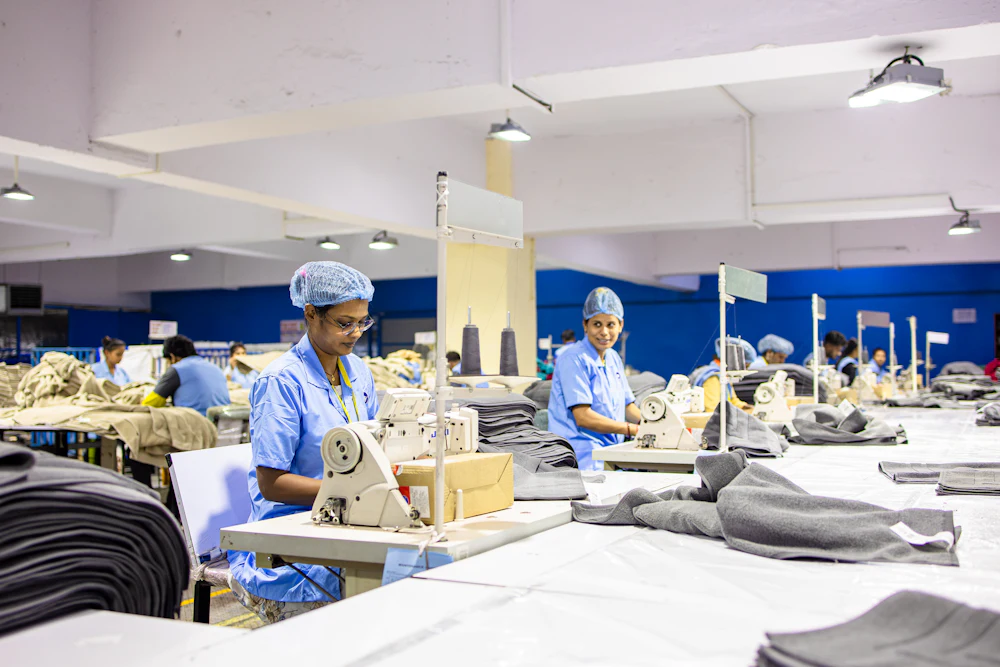
Factories that specialize in one cut often subcontract or decline the others. A shop built around circular-knit briefs typically runs Santoni or Sangiacomo seamless machines and flat-knit finishing equipment, not the woven cutting tables and standard lockstitch lines a boxer needs. This distinction matters more than most sourcing guides mention, because it’s the reason a single-line quote for all three styles is usually a red flag rather than a convenience.
This is a different construction question from seamless underwear manufacturer sourcing, which covers circular-knit, no-side-seam garments built entirely on knitting machines rather than cut-and-sew. Briefs, boxers, and trunks in this guide assume standard cut-and-sew or cut-and-knit construction with visible side seams, the more common and lower-cost production path for a first order.
Cut-Style Construction Breakdown
Woven Boxers: Open-Leg, Woven-Fabric Construction
Boxers are built from woven fabric, typically cotton poplin, cotton-poly broadcloth, or a lighter chambray weave, at 100–140 GSM. The woven structure has no stretch, so the pattern is cut with extra ease through the seat and thigh rather than relying on fabric recovery for fit. Panels are joined with a standard lockstitch or safety-stitch side seam, and the leg opening is finished with a folded hem rather than exposed elastic.
Because the fabric doesn’t stretch, boxer patterns need more grading points through the rise and inseam than a knit brief does, and a factory unfamiliar with woven bottoms will often reuse a knit-brief block and undersize the seat. Ask for a woven-specific pattern, not a knit pattern scaled up.
Knit Briefs: Contour-Fit, Circular or Flat Knit Construction
Briefs use knit fabric, usually single jersey or interlock in cotton, cotton-modal, or cotton-spandex blends, at 140–180 GSM. That’s lighter than the 140–200 GSM range published for standard crew-neck tees, because spandex content lets the fabric hold shape at a lower weight than a non-stretch cotton tee needs. The knit’s natural stretch does the fitting work a boxer’s woven ease has to do through pattern grading instead.
Construction runs on a standard flat-knit sewing line: side seams (or no side seam if the body panel is knit-to-shape), a leg opening finished with picot elastic or a folded self-fabric hem, and a gusset panel at the crotch, the same failure-prone attachment point covered in our seamless underwear guide.
Knit Trunks: The Mid-Thigh Hybrid Cut
Trunks share a brief’s knit fabric and stretch-fit construction but extend the leg to mid-thigh, closer to a boxer brief. Fabric weight typically runs 160–200 GSM, slightly heavier than a brief because the extended leg panel needs more structure to avoid riding up. The extra leg length also means trunks take more fabric per unit and usually cost more per piece than an equivalent brief in the same fabric.
Trunk leg openings are almost always finished with covered elastic rather than exposed picot trim, since a bare elastic band sitting mid-thigh is more visible and more prone to rolling than one tucked at the natural leg crease on a brief.
Waistband Construction Types Across All Three Cuts
The waistband is where most factory miscommunication happens, because “elastic waistband” describes three different builds:
- Exposed elastic: A bare elastic band sewn directly to the fabric edge, sometimes with a folded or picot-trimmed edge. Lowest cost, most common on entry-tier briefs and trunks.
- Covered elastic: The elastic is wrapped in matching or contrasting jersey binding before attachment, hiding the raw elastic edge against the skin. Standard on mid-tier trunks and boxers.
- Jacquard woven waistband: A knitted or woven elastic tape with a brand name or pattern loomed directly into the tape, not printed on afterward. This requires a separate MOQ from the elastic-tape mill, usually 50–100 kg per colorway, on top of the garment MOQ, and it’s the single most common reason a brand’s first underwear order takes longer to quote than expected.
Fly Construction: Functional, Faux, and Flyless
Boxers traditionally include a functional fly, an overlapping fabric panel at center front that provides an actual opening, sometimes closed with a single button. Briefs and trunks are more often flyless, since the knit fabric’s stretch provides enough give without a separate opening, though some trunk styles use a faux fly, a decorative topstitched seam with no functional opening, purely for a boxer-brief aesthetic. Specify which one you want in the tech pack. “Fly front” alone is not specific enough for a factory to quote correctly.

Verifying a Factory’s Cut-Style Capability
Ask for a machine list before sampling. A factory quoting woven boxers should list standard lockstitch and safety-stitch machines; a factory quoting knit briefs or trunks should list an interlock or flatlock machine for the waistband and gusset attachment. A shop that lists only overlock machines for all three styles is likely subcontracting one of them without disclosing it.
Request a category-specific sample, not a stock photo or a sample from a different cut style. A boxer sample tells you nothing about how a factory constructs a brief’s gusset panel.
Seam strength matters more on underwear than most garment categories because of how much stress the crotch seam and waistband seam absorb in daily wear. ASTM D6193, the standard practice for stitches and seams, classifies the seam types a factory should be citing when they describe their construction, rather than a vague “reinforced seam” claim with no stitch class behind it.
Woven Boxer vs. Knit Brief vs. Knit Trunk
| Attribute | Woven Boxer | Knit Brief | Knit Trunk |
|---|---|---|---|
| Fabric type | Cotton poplin, cotton-poly broadcloth | Cotton, cotton-modal, cotton-spandex jersey/interlock | Cotton-spandex jersey/interlock |
| GSM range | 100–140 GSM | 140–180 GSM | 160–200 GSM |
| Fit method | Pattern ease (no stretch) | Fabric stretch + contour pattern | Fabric stretch + extended leg panel |
| Waistband | Exposed or jacquard woven | Exposed or covered elastic | Covered elastic (standard) |
| Fly | Functional (overlap, sometimes buttoned) | Usually flyless | Flyless or faux fly |
| Sewing line | Lockstitch/safety-stitch, cut-and-sew | Flatlock/interlock, cut-and-sew or knit-to-shape | Flatlock/interlock, cut-and-sew |
Producing Briefs, Boxers, and Trunks at PRP Apparel
PRP Apparel produces briefs, boxers, and trunks from its Dongguan facility at a 50-piece-per-style minimum, the same MOQ structure covered in our guide on negotiating MOQ with clothing manufacturers. Sample lead time runs 12–15 days at $80–$250 per sample set, and bulk production ships 35–45 days from approved sample, consistent with the standard cut-and-sew timeline across the site’s other categories.
Fabric across all three cuts is available in OEKO-TEX Standard 100 certified cotton, cotton-modal, and cotton-spandex, covered in more depth in our OEKO-TEX certification guide, included as a standard part of production rather than a paid add-on. Brands running a boxer, brief, and trunk line together, or exploring a longer-form layering piece, may also want to review our thermal base layer manufacturer guide, which covers the brushed-knit construction used for cold-weather underwear separately from the everyday cut styles here.
Summary Table
| Product | MOQ | Sample Lead Time | Sample Cost | Bulk Lead Time |
|---|---|---|---|---|
| Woven boxers | 50 pieces/style | 12–15 days | $80–$250 | 35–45 days |
| Knit briefs | 50 pieces/style | 12–15 days | $80–$250 | 35–45 days |
| Knit trunks | 50 pieces/style | 12–15 days | $80–$250 | 35–45 days |
Frequently Asked Questions
What’s the actual difference between briefs, boxers, and trunks?
Boxers are loose-fit, woven-fabric garments with an open-leg construction and no stretch. Briefs are fitted, low-rise knit garments that rely on fabric stretch instead of pattern ease. Trunks are knit like a brief but extend to mid-thigh, closer to a boxer brief silhouette.
Can one factory produce all three cut styles?
Some can, but woven boxers and knit briefs/trunks often run on different sewing lines and sometimes different subcontractors. Ask for a machine list broken out by cut style before assuming one quote covers all three at the same quality level.
What’s the minimum order quantity for custom briefs, boxers, or trunks?
50 pieces per style at PRP Apparel, matching the site’s standard MOQ structure. A jacquard woven waistband adds a separate elastic-tape MOQ from the mill, typically 50–100 kg per colorway, which is worth confirming before finalizing your quote.
What fabric works best for boxer shorts versus briefs?
Boxers use woven fabric, typically cotton poplin or cotton-poly broadcloth at 100–140 GSM, because the loose fit doesn’t need stretch recovery. Briefs use knit fabric, usually cotton-spandex jersey or interlock at 140–180 GSM, since the fabric’s stretch does the fitting work.
How is a fly constructed in custom boxer shorts?
A functional fly uses an overlapping fabric panel at center front, sometimes closed with a single button. Briefs and trunks are typically flyless, or use a faux fly, a stitched seam with no actual opening, for styling only.
Should I ask for exposed or covered elastic on the waistband?
Exposed elastic is lower-cost and common on entry-tier briefs and trunks. Covered elastic, where the band is wrapped in fabric before attachment, costs more but sits more comfortably against the skin and is the standard build on trunks and mid-tier boxers.
To discuss your briefs, boxers, or trunks project, styles, fabric specs, timeline, and pricing, reach out directly via the inquiry form.
Related Reading
- How to Choose the Best Underwear Manufacturer
- Seamless Underwear Manufacturer
- Thermal Base Layer Manufacturer
Related Manufacturing Services
Products We Manufacture
Ready to Start Your Clothing Project?
- MOQ from 50 pieces per style
- OEM and private label production
- Sample development support
- Fabric sourcing
- Quality inspection before shipment
- Worldwide shipping support