
A Denver-based outdoor apparel startup spent six weeks vetting three factories for a cold-weather base layer line before discovering that two of them were quoting standard cotton-jersey T-shirt fabric under the label “thermal.” The samples arrived thin, unbrushed, and no warmer than a regular tee. The founder had asked for GSM specs upfront, and both suppliers provided a number. Neither disclosed that the fabric had no brushed or napped interior face, the actual construction detail that makes a knit trap body heat. A thermal base layer manufacturer worth working with discloses fabric construction, not just fabric weight.
“Thermal” describes a knit structure, not a marketing tier. Base layers work by trapping a layer of warmed air against the skin, and that only happens when the fabric’s interior face is brushed, napped, or built with a waffle-knit structure that creates air pockets. A flat, unbrushed jersey at the same GSM as a brushed thermal knit will run noticeably colder against skin, regardless of what the spec sheet calls it. Buyers sourcing a thermal base layer line need to verify construction, not just accept a weight number and a product name.
This guide covers what separates genuine thermal base layer fabric from relabeled standard knits, the fiber and construction options that affect warmth and moisture handling, and the questions that surface a factory’s real capability before a bulk order locks in.
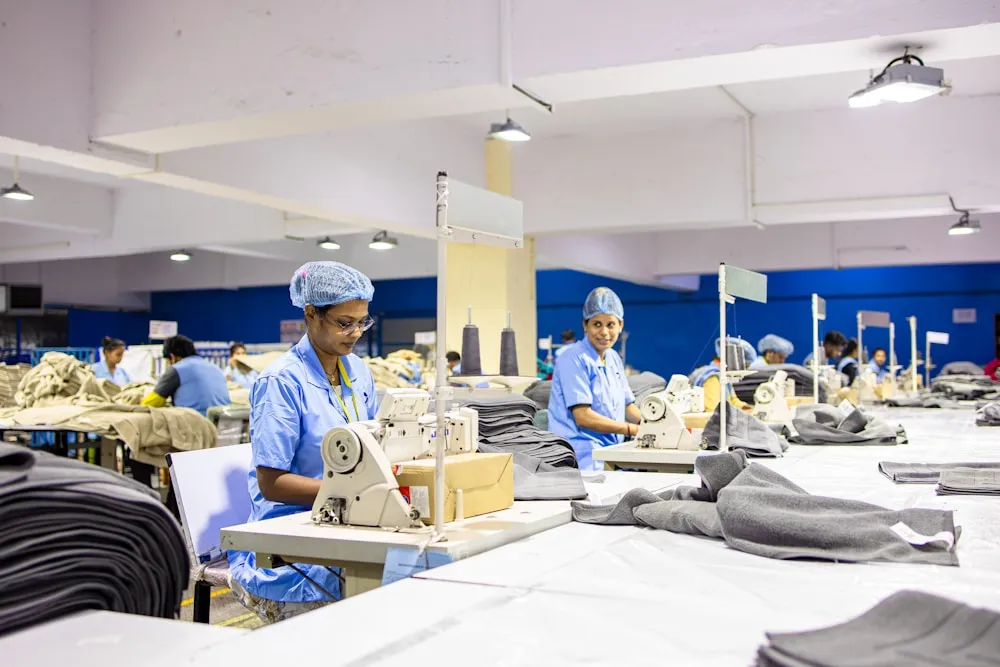
What Makes a Base Layer Genuinely Thermal
A standard T-shirt or underwear knit is single-face jersey: smooth on both sides, built for breathability rather than insulation. A thermal base layer knit adds a second process after the base fabric is knitted. The interior face gets brushed with a wire-toothed roller that raises the fiber ends into a soft nap, or the fabric is knitted in a waffle or French terry structure that creates raised loops on the inside face. Both methods trap a layer of still air between the fabric and the skin, and that trapped air, not the fiber itself, is what generates the warmth.
This matters for sourcing because a factory can hit a target GSM with either a brushed knit or a flat jersey, and the flat version is cheaper to produce. A buyer who specifies “220 GSM thermal knit” without also specifying “brushed interior face” or “waffle knit structure” can receive a flat 220 GSM jersey that reads as thermal on paper and performs like a regular tee in the fitting room.
Base layers also differ from standard underwear and T-shirts in silhouette. They’re built as long-sleeve tops and full-length bottoms meant to sit under an outer layer, not as standalone garments. That changes the fit requirements: base layers run closer to the body than a standard tee, use longer body and sleeve lengths to prevent gapping when a wearer raises their arms, and frequently add thumbholes at the cuff to keep the sleeve in place under gloves or an outer jacket. Buyers new to this product category benefit from reviewing a broader best underwear manufacturer guide before narrowing in on thermal-specific fabric decisions.
Fabric Options for Thermal Base Layers
Three fiber families cover most thermal base layer sourcing: micro modal, bamboo, and cotton-spandex. Each behaves differently once brushed or knitted into a thermal structure.
Brushed Micro Modal
Micro modal fibers are finer than standard modal, which produces a softer hand-feel once brushed. The brushed nap sits close and even, and the fabric drapes well without feeling bulky under a mid-layer. Micro modal wicks moisture reasonably well but isn’t a high-output technical wicking fiber, which makes it better suited to static cold-weather wear (commuting, outdoor work breaks, everyday cold-climate layering) than high-sweat aerobic activity.
Bamboo Fleece and Bamboo French Terry
Bamboo-based thermal knits are almost always bamboo viscose or bamboo lyocell rather than a fiber literally spun from raw bamboo, the same processing distinction covered in depth in the guide on bamboo fabric clothing manufacturing. Regulatory labeling in the US requires the garment tag to read “rayon from bamboo” or “bamboo viscose,” never “100% bamboo,” since the manufacturing process chemically converts bamboo cellulose into a rayon-family fiber. Buyers who market products as “100% bamboo” without this qualifier are exposed to a labeling compliance issue, not a fabric quality one. Bamboo fleece has a naturally soft, slightly cool-to-the-touch hand-feel and takes dye well, but it holds less structural recovery than a spandex-blended knit, so brands sourcing bamboo thermal base layers should expect a slightly looser fit after repeated washing compared to a blended fabric.
Cotton-Spandex Thermal Waffle Knit
Cotton-spandex waffle knits are the heaviest-feeling of the three and the warmest in still, dry cold, since cotton’s natural fiber structure holds warm air well. The trade-off is moisture management: cotton absorbs sweat rather than wicking it away, so cotton-spandex thermal knits perform best for low-sweat cold exposure and underperform for high-output activity where a synthetic or modal-based wicking fabric handles moisture better.
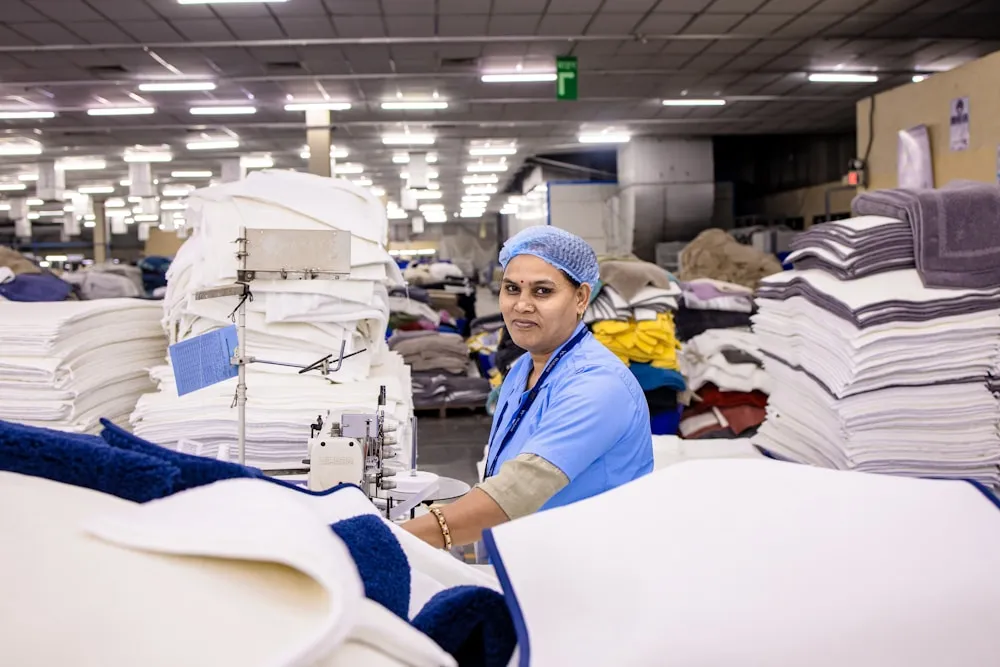
GSM and Insulation: How Heavy Should the Knit Be
Brushed thermal base layer knits generally run 180-260 GSM, lighter than the 200-280 GSM standalone fleece used in PRP Apparel’s sweatpants manufacturing line and well under the 280-400 GSM range used for hoodies and sweatshirts. That difference isn’t a quality gap. It reflects the garment’s job: a base layer is worn under a mid-layer and outer shell, not as standalone insulation, so a heavier brushed knit adds bulk under layering without adding proportional warmth. A factory quoting 320+ GSM for a thermal base layer top is likely building an outerwear-weight fabric that will feel stiff and bulky once a wearer adds a fleece or shell on top.
Within that 180-260 GSM range, the lighter end suits base layers meant for high-output activity under technical outerwear, and the heavier end suits static cold-weather wear where bulk matters less than raw warmth.
Seamless vs. Cut-and-Sew Thermal Construction
Thermal base layers can be built either as cut-and-sew garments from flat-knitted brushed fabric or as seamless circular-knit garments, knitted to shape on a single machine with no side seams, the same circular-knit process detailed in the seamless underwear manufacturer guide. Seamless construction eliminates the side-seam chafe point that shows up under a backpack strap or a snug outer layer, and it reduces fabric waste since the garment is knitted close to its final shape rather than cut from a larger panel. The trade-off is design flexibility: seamless machines run a narrower range of stitch patterns than cut-and-sew construction, so heavily patterned or paneled base layer designs are usually better suited to cut-and-sew brushed knit.
Cut-and-sew thermal base layers should use flatlock seaming rather than standard overlock stitching. Flatlock seams sit flat against the skin instead of creating a raised ridge, which matters directly under a base layer worn against bare skin for extended periods.
Verification and Pitfall Avoidance
Before committing to a bulk order, request a physical sample and check these points directly rather than relying on the spec sheet alone.
Check the brushed face in person. Run a hand across the interior of the fabric. A genuine brushed thermal knit has a visibly raised, soft nap. A flat jersey relabeled as thermal will feel smooth, even at a matching GSM.
Ask for the knit structure by name. “Brushed single jersey,” “French terry,” and “waffle knit” are specific, verifiable construction terms. A factory that responds only with a GSM number and no structure name hasn’t specified what’s actually being produced.
Verify bamboo labeling compliance before finalizing marketing copy. If the base layer uses a bamboo-based fiber, the hang tag and product listing need to state “bamboo viscose” or “rayon from bamboo,” not “100% bamboo,” to meet FTC textile labeling requirements.
Confirm seam construction on the actual sample, not the tech pack. A cut-and-sew sample should show flatlock seams at the shoulder, side, and sleeve. Overlock seams on a base layer sample are a sign the factory downgraded construction to cut cost without flagging the change.
Test for pilling after a wash cycle if possible. Brushed knits are more prone to surface pilling than flat jersey. A pre-production sample that pills heavily after one wash points to a lower-grade fiber blend than what was quoted.
PRP Apparel’s Thermal Base Layer Capability
PRP Apparel produces thermal base layers in micro modal, bamboo, and cotton-spandex, with seamless circular-knit construction available alongside standard cut-and-sew production, the same seamless capability the factory runs for its underwear line. Production starts at 50 pieces per style, the same minimum that applies across every product category, with no separate higher minimum for thermal or brushed-knit fabrics. Sample lead time runs 12-15 days from order confirmation, with bulk production shipping 35-45 days after an approved sample. Fabric is OEKO-TEX Standard 100 certified, and ISO colorfastness testing (washing, rubbing, and perspiration) is available on request, standard documentation rather than a paid add-on.
Fabric Comparison at a Glance
| Fabric | Hand-Feel | Warmth (Static Cold) | Moisture Handling | Best Fit For |
|---|---|---|---|---|
| Brushed micro modal | Soft, close drape | Moderate | Good wicking, not high-output | Everyday cold-climate layering |
| Bamboo fleece/French terry | Soft, cool-to-touch | Moderate | Good, less recovery over time | Casual and loungewear-adjacent base layers |
| Cotton-spandex waffle knit | Heavier, structured | High | Absorbs rather than wicks | Static cold exposure, low-sweat wear |
Summary Table
| Spec | Detail |
|---|---|
| GSM range | 180-260 GSM (brushed/waffle knit) |
| Construction | Cut-and-sew (flatlock seams) or seamless circular knit |
| Fibers available | Micro modal, bamboo viscose, cotton-spandex |
| MOQ | 50 pieces per style |
| Sample lead time | 12-15 days |
| Sample cost | $80-$250 per sample set |
| Bulk lead time | 35-45 days from approved sample |
| Certifications | OEKO-TEX Standard 100; ISO 105-C06/X12/E04 on request |
For fiber content rules that apply specifically to bamboo-based thermal knits, the U.S. FTC’s bamboo textile labeling guidance lays out the rayon-from-bamboo disclosure requirement in full. Fabric certification claims should be checked against the OEKO-TEX Standard 100 certification database before a supplier’s documentation is accepted at face value.
FAQ
What GSM is best for a thermal base layer?
Most brushed thermal base layer knits run 180-260 GSM. Lighter weights in that range suit base layers worn under technical outerwear during high-output activity, while heavier weights suit static cold-weather wear where bulk under layering matters less.
Is bamboo fabric actually warmer than cotton for base layers?
Not inherently. Cotton-spandex holds warm air more effectively in dry, static cold due to cotton’s fiber structure, while bamboo-based fabrics offer a softer hand-feel and better breathability but slightly less raw insulation at a matching GSM.
Can thermal base layers be made seamless?
Yes. Seamless circular-knit construction works for thermal base layers and removes the side-seam chafe point that shows up under a backpack strap or snug outer layer, though it supports a narrower range of stitch patterns than cut-and-sew brushed knit.
What’s the minimum order quantity for custom thermal base layers?
50 pieces per style, matching the MOQ structure that applies across other product categories, with the same customization options available at that minimum as at higher volumes.
How do I know if a factory is actually sending brushed thermal fabric?
Request a physical sample and check the interior face by hand for a raised, soft nap. Ask the factory to name the knit structure (brushed single jersey, French terry, or waffle knit) rather than accepting a GSM number alone as proof of thermal construction.
Does “100% bamboo” fabric labeling meet US requirements?
No. FTC rules require bamboo-based fabrics processed into rayon or lyocell to be labeled “rayon from bamboo” or “bamboo viscose,” not “100% bamboo,” since the raw bamboo fiber is chemically converted during processing.
To discuss a thermal base layer project, including fabric choice, construction method, and sizing for a layering fit, reach out directly through the inquiry form with your target fiber, style count, and size range.
Related Reading
- Bralette Manufacturer
- Briefs Boxers Trunks Manufacturer: How Cut Style Changes Construction
- Seamless Underwear Manufacturer
- How to Choose the Best Underwear Manufacturer
- Bamboo Fabric Clothing Manufacturer
Related Manufacturing Services
Products We Manufacture
Ready to Start Your Clothing Project?
- MOQ from 50 pieces per style
- OEM and private label production
- Sample development support
- Fabric sourcing
- Quality inspection before shipment
- Worldwide shipping support