
A Los Angeles-based loungewear brand asked two Guangzhou factories for a wireless bralette sample and received back nearly identical garments: molded foam cups, underwire channels stitched into the side seams, and a hook-and-eye back closure. Neither factory had built a bralette. Both had built a soft-cup bra and relabeled it, since the term sells better to a younger customer. The founder had specified “no wire” in the tech pack. The wire showed up anyway, sewn into the seam allowance where a quick glance at the flat sample wouldn’t catch it. A bralette manufacturer that understands the category builds a wireless, unlined garment from the first sample, not a padded bra with the marketing name swapped.
“Bralette” describes a specific construction, not a smaller or younger version of a standard bra. A genuine bralette has no underwire, no molded or foam cup, and relies entirely on fabric structure, panel seaming, and elastic banding to hold its shape. That’s a different build than a sports bra’s encapsulation cup or a traditional bra’s underwire channel, and a factory that can produce one doesn’t automatically know how to produce the other.
This guide covers what separates a wireless bralette from a relabeled soft-cup bra, the strap and fabric decisions that shape fit and support, and the questions that expose a factory’s real capability before a bulk order locks in.

What a Bralette Actually Is
Intimate apparel factories build support through one of three structural methods: underwire (a rigid boned channel that lifts and separates), molded or foam cup (pre-shaped encapsulation that holds form independent of the fabric), or fabric-and-elastic construction (support comes from the knit’s own recovery plus a banded underbust, with no rigid or pre-shaped component). A bralette uses only the third method.
This matters at sourcing because the same factory floor that produces underwire bras or molded sports bra cups often defaults to that construction when a buyer says “bra” or “bralette” without specifying otherwise. An order for “wireless bralette, 50 pieces” without also stating “no molded cup, no boning channel” can come back with no metal wire but a foam-molded cup sewn in, changing fit, pack-flat behavior, and price.
Bralettes also differ from a standard bra in intended use. They’re built for loungewear, everyday low-impact wear, and layering under sheer or open-front tops, not high-impact activity. That shifts the fabric priorities: a bralette favors softness, drape, and a close-to-skin feel over the moisture-wicking and compression performance sports bra manufacturer construction is built around. Buyers new to the underwear category generally benefit from reviewing a broader best underwear manufacturer guide before narrowing in on bralette-specific construction.
Construction Decisions That Define a Bralette
Wireless, Unlined Build: The Core Differentiator
A genuine bralette skips both the underwire channel and the molded cup entirely. Support comes from three-panel or four-panel cup construction sewn from a stretch knit, shaped by seaming rather than a rigid boning insert or heat-molded foam. The fabric itself, typically a cotton-spandex or nylon-spandex jersey with meaningful recovery, does the structural work that wire or foam would otherwise do.
This construction ceiling means less lift and less shape-independence than an underwire or molded-cup bra. That’s a design trade-off, not a manufacturing defect. Brands positioning a bralette as a full underwire replacement for larger cup sizes are setting the wrong expectation; the category performs best for smaller-to-medium cup volumes where fabric recovery alone holds shape through a full day of wear.
Strap and Back Configuration
Three strap layouts cover most bralette styles. A classic parallel strap runs straight up from the front cup to the shoulder, the simplest and fastest cut-and-sew configuration to produce. A racerback strap crosses the shoulder blades in a Y or T shape, distributing weight across a wider back panel and reading as more athletic-adjacent even on a fully wireless garment.
A crossback or strappy configuration adds two or more thin elastic bands in a crisscross pattern across the back. It increases construction time and thread-work but is a common request for going-out or layering-visible styles.
Back closure follows a similar split: pullover with no closure at all (the most common format, since the garment needs enough stretch to go on without a hook), or hook-and-eye for styles built with less stretch. Pullover construction removes a component and a labor step, one reason bralettes typically price below a comparable hook-closure bra at the same fabric grade.
Fabric and Panel Construction
Lace and mesh panels are common in bralette construction because the low-impact use case doesn’t demand the abrasion resistance or compression recovery a high-support activewear fabric needs. A lace-front panel over a plain-jersey or mesh back panel is a standard combination: the lace carries the visual detail, and the backing panel adds structural support and keeps the lace from bearing load it isn’t built to handle. Lace without a backing panel typically stretches out of shape within a few wears.
Plain jersey construction (no lace or mesh) suits a simpler, everyday bralette style and is lower cost to produce since it skips the two-fabric panel assembly and the extra cutting step that a lace-plus-backing build requires. Buyers should specify which construction they want in the tech pack rather than leaving “lace bralette” open to interpretation, since factories vary in what backing weight and mesh density they default to.
Elastic Banding Without a Wire
The underbust band does the job an underwire would otherwise do: keeping the garment anchored at the ribcage without riding up. On a wireless bralette, that band uses a wider, higher-recovery elastic than a standard bra band, typically plush-back or picot-edge, sewn with a channel stitch rather than a simple overlock, since it carries structural load a wire would otherwise carry.
A factory using a narrow, low-recovery elastic to cut cost produces a band that stretches out within a few washes, which shows up later as a return or a “riding up” complaint, not as an obvious defect at sampling. Testing recovery on a physical sample, not just the tech pack spec, is the only reliable way to catch this before a bulk order.
Verification and Pitfall Avoidance
Before approving a bulk order, check these points on the physical pre-production sample rather than relying on the spec sheet.
Check for a hidden foam cup or wire channel. Run a hand along the inside of the cup seam. A genuine wireless bralette has no rigid channel; the cup should collapse flat when not worn. A cup that holds its shape on its own indicates a molded or foam-lined construction regardless of what the factory calls the style.
Ask for the cup construction method by name. “Three-panel seamed cup” or “four-panel seamed cup” are specific, verifiable terms. A factory that only says “no wire” but can’t name the panel count or seaming method hasn’t specified what’s actually being built.
Test the underbust elastic for recovery after stretching. Pull the band to roughly 150% of its resting length and release it. A quality elastic returns close to its original length within a few seconds; one that stays visibly stretched has insufficient recovery for structural hold.
Confirm lace-panel backing on any lace-front style. A lace panel without a jersey or mesh backing layer stretches out of shape faster than the rest of the garment. Ask whether the lace is bonded or sewn to a backing fabric, not floating on its own.
Request the strap configuration in writing, not just a photo reference. Racerback, classic, and crossback straps require different pattern pieces and sewing sequences that a photo alone leaves open to interpretation.
Bralette vs. Sports Bra vs. Thermal Base Layer Top
Buyers sourcing across the underwear and base-layer category sometimes conflate these three garment types, since all three sit against the torso and involve stretch knits. The construction and intent differ enough that a single spec sheet rarely serves all three, a distinction covered further in the thermal base layer manufacturer guide.
| Attribute | Bralette | Sports Bra | Thermal Base Layer Top |
|---|---|---|---|
| Support structure | Fabric and elastic only, no wire or molded cup | Encapsulation (molded/lined cup) or compression, no wire | Not a support garment; brushed knit for warmth |
| Primary intent | Loungewear, everyday, layering | Athletic, moisture-wicking, high-impact | Cold-weather layering under outerwear |
| Typical fabric | Cotton-spandex or nylon-spandex jersey, lace/mesh panels | Polyester-spandex or nylon-spandex, 150-280 GSM per sports bra manufacturer specs | Brushed micro modal, bamboo, or cotton-spandex, 180-260 GSM |
| Closure | Usually pullover, no closure | Pullover or racerback, occasional front zip on high-support styles | Pullover, long-sleeve top |
PRP Apparel as a Bralette Manufacturer
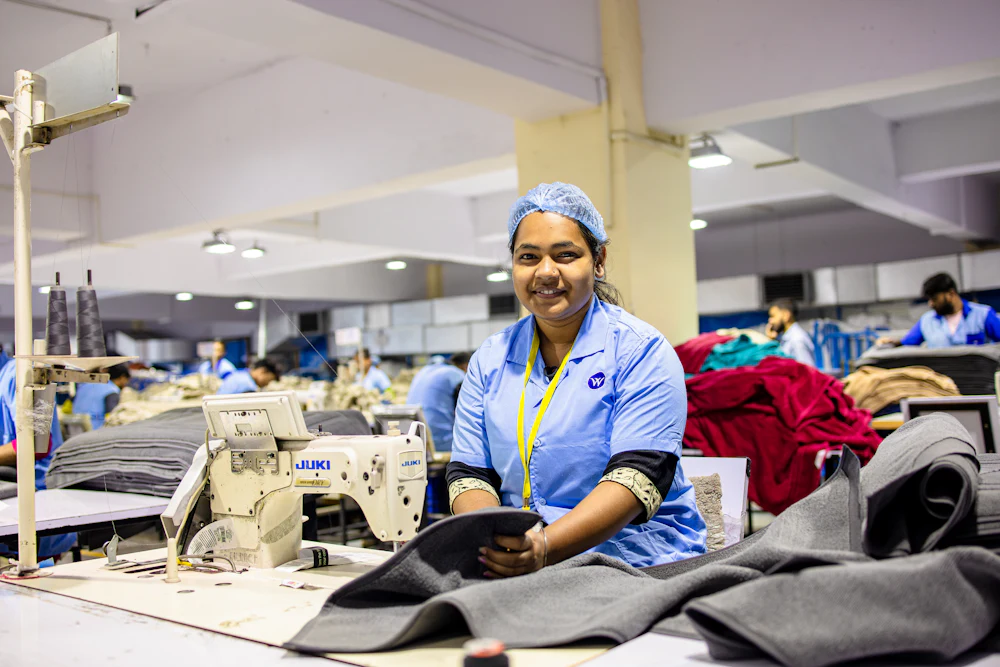
PRP Apparel produces bralettes as part of its Underwear & Base Layers line, alongside seamless underwear and thermal base layers, using micro modal, bamboo, and cotton-spandex fabrics. Construction covers wireless, unlined three-panel and four-panel cup builds in cut-and-sew, with both plain jersey and lace-panel-over-backing options available. Production starts at 50 pieces per style, the same minimum across every product category, with a 12-15 day sample lead time and 35-45 day bulk production window after an approved sample. Fabric is OEKO-TEX Standard 100 certified. Because bralette pricing varies by panel count, fabric combination, and strap configuration, PRP Apparel provides a project-specific quote rather than a flat per-unit figure, the same honest scoping approach applied to seamless underwear and thermal base layer pricing.
Summary Table
| Spec | Detail |
|---|---|
| Construction | Wireless, unlined; 3-panel or 4-panel seamed cup |
| Strap options | Classic parallel, racerback (Y/T), crossback/strappy |
| Closure | Pullover (most common) or hook-and-eye back |
| Fabric options | Cotton-spandex, nylon-spandex, micro modal, bamboo; lace/mesh panel over jersey/mesh backing |
| MOQ | 50 pieces per style |
| Sample lead time | 12-15 days |
| Sample cost | $80-$250 per sample set |
| Bulk lead time | 35-45 days from approved sample |
| Certifications | OEKO-TEX Standard 100 |
For the mechanical standard covering elastic fabric recovery testing, the ASTM D4964 tension and elongation of elastic fabrics standard details the testing procedure a mill uses to verify elastic recovery specs. Fabric certification claims should be checked against the OEKO-TEX Standard 100 certification database before a supplier’s documentation is accepted at face value.
FAQ
What makes a bralette different from a regular bra?
A bralette has no underwire and no molded or foam cup. Support comes entirely from the fabric’s own stretch recovery and the underbust elastic band, while a standard bra uses a rigid wire channel or a pre-shaped molded cup to hold form independent of the fabric.
Can a bralette manufacturer also produce sports bras?
Often yes, since both use stretch-knit construction, but the build methods differ. A sports bra typically uses encapsulation or compression construction with a molded or lined cup, while a bralette uses unlined seamed panels. Confirm the factory has produced wireless, unlined styles before assuming sports bra experience transfers directly.
What fabric works best for a bralette?
Cotton-spandex and nylon-spandex jersey are the most common base fabrics, often combined with a lace or mesh front panel over a jersey or mesh backing layer for structural support. Plain jersey construction (no lace) is lower cost and suits a simpler everyday style.
How do I know if a factory sent a genuine wireless sample?
Run a hand along the inside of the cup seam. A true wireless bralette has no rigid channel and the cup collapses flat when not worn. A cup that holds shape on its own indicates a hidden foam or molded construction, regardless of what the factory calls the style.
What’s the minimum order quantity for a custom bralette?
50 pieces per style, matching the MOQ structure used across other product categories, with the same fabric and construction customization available at that minimum as at higher volumes.
Does a bralette need a hook-and-eye back closure?
No. Most bralettes use a pullover construction with no back closure, relying on the garment’s own stretch to go on and off. A hook-and-eye closure is an option for styles built with less overall stretch, but it isn’t a category requirement.
To discuss a bralette project, including strap configuration, fabric and panel construction, and size range, reach out directly through the inquiry form with your target fabric, style count, and construction details.
Related Reading
Related Manufacturing Services
Ready to Start Your Clothing Project?
- MOQ from 50 pieces per style
- OEM and private label production
- Sample development support
- Fabric sourcing
- Quality inspection before shipment
- Worldwide shipping support