
Decorating Jersey and Knits: What Stretch Does to Embroidery, Patches, Beads and Laser Edges
A knit stretches; most decoration does not. That mismatch decides what works on a jersey tee, a spandex training top or a fleece hoodie. Prophesy Apparel (PRP) runs embroidery in-house on a 24-head line and 3-metre-format laser cutting on our own production floor, and routes chenille, silicone patches, pleating and hand beading through our production network. Below is which decoration holds on which knit, and which ones we turn down before sampling.
Embroidery on stretch knits
backing, or the design distorts
Laser edge on polyester / nylon knit
cotton jersey scorches brown instead
Embroidery line
in-house, 24 garments per pass
MOQ, per style per colour
same minimum on decorated knits
Why Knits Push Back Against Decoration
A woven holds its shape around a patch or a row of beads. A knit gives under them. So on knits, the question is rarely “can it be applied” — it is whether the decoration pulls the fabric out of shape, or kills the stretch the garment was cut for.
Weight pulls light knits. A chenille patch distorts a lightweight knit, and stretch fabrics are on the unsuitable list for chenille altogether. Hand beading needs a knit to be interlined, and on a high-stretch fabric the beading kills the stretch and the threads snap. Our chenille and appliqué and beading and rhinestone pages set out the fabric limits for each.
Needle work needs the right backing. Embroidery on a high-stretch knit needs cut-away backing; an ultralight knit without backing bubbles.
Fibre still decides the heat questions. A polyester or nylon knit — including mesh and scuba — seals clean under our laser cutting; a cotton jersey scorches. Under a 150–170°C heat press, thin nylon distorts and ultralight polyester glazes or melts, which is why a silicone patch on those knits goes on as a sew-on version.
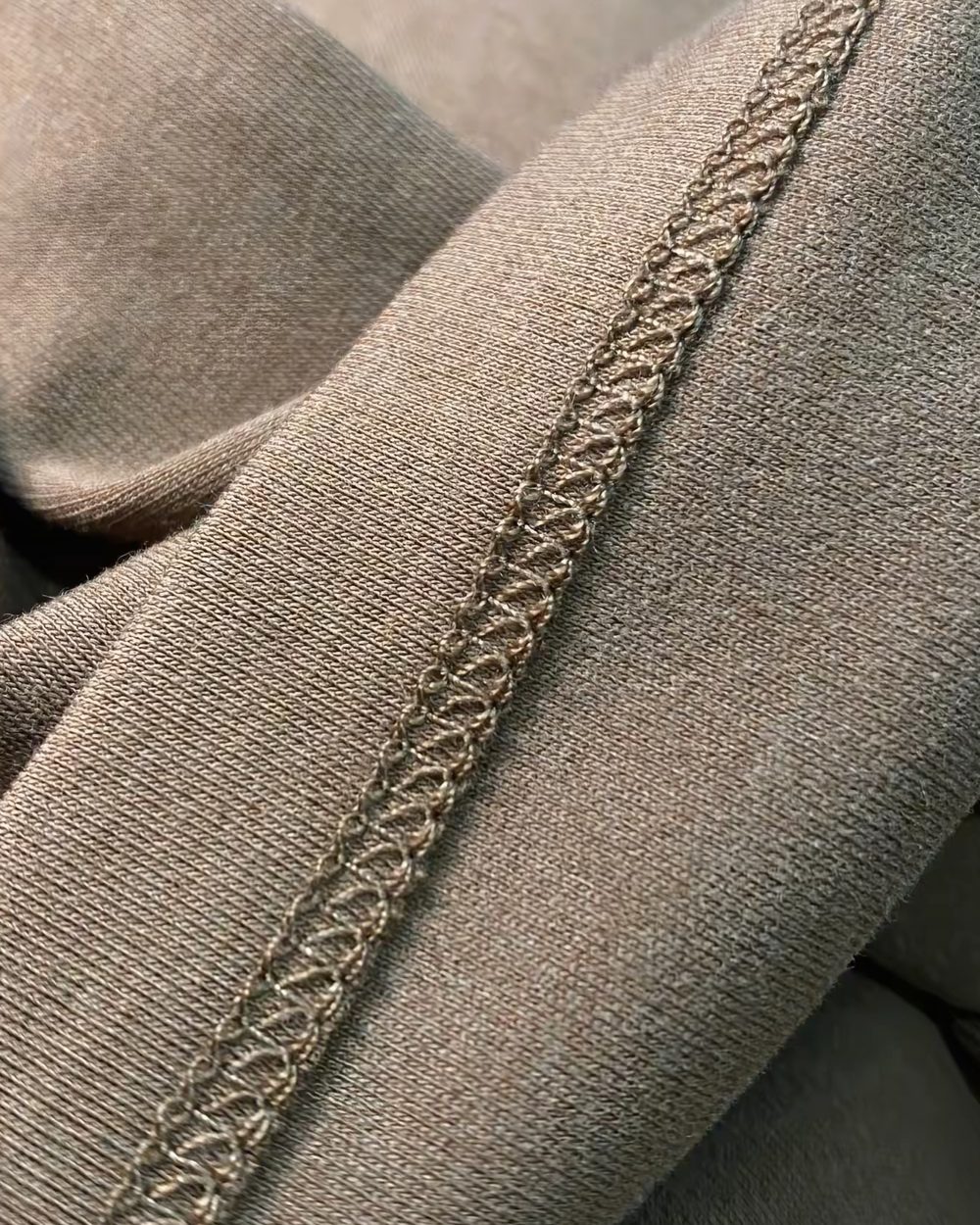
A looped overlock seam on jersey. The thread loops give with the fabric — decoration sewn across a knit has to do the same.
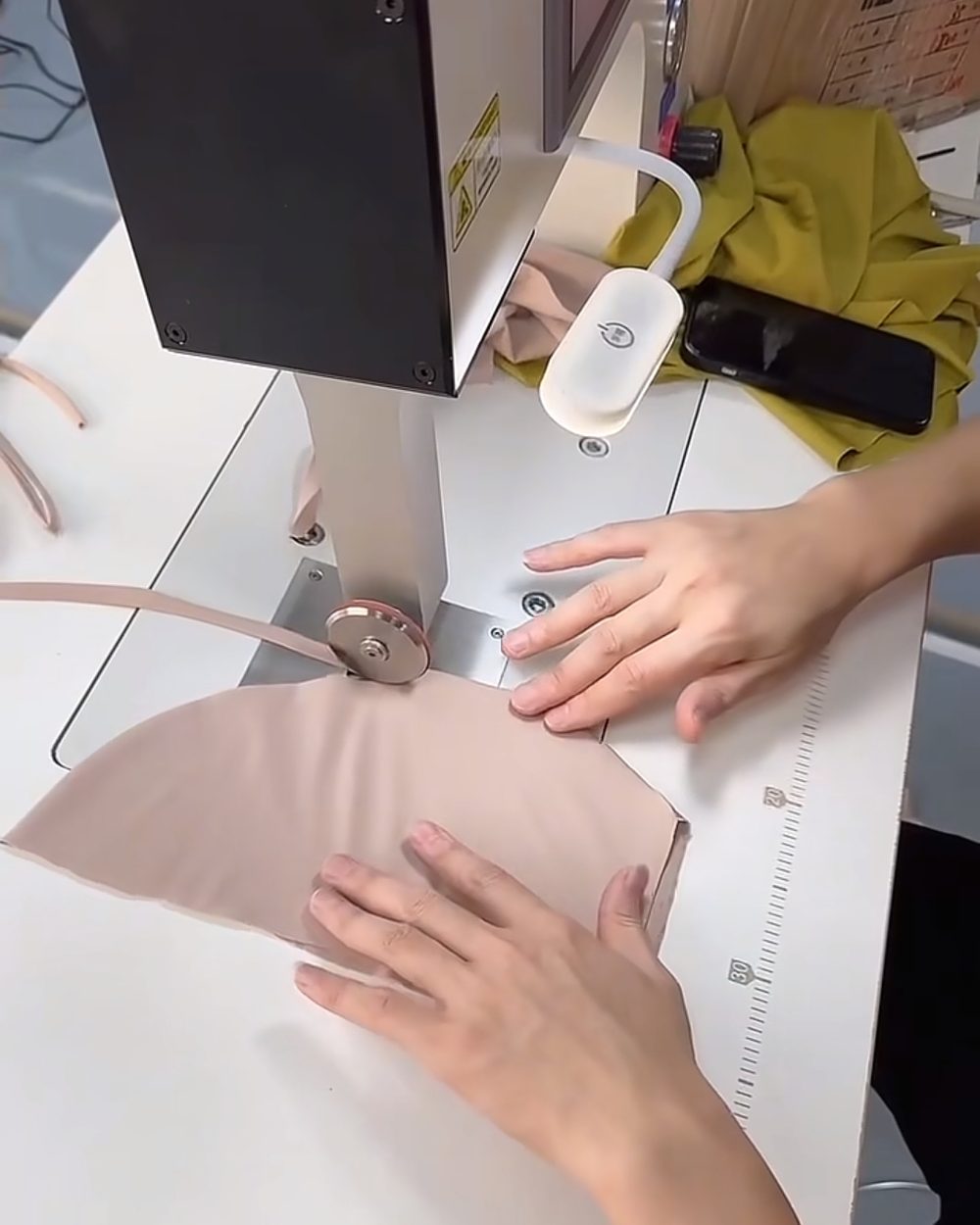
Feeding a curved stretch-knit panel and a matching edge tape under the wheel. On fabric this stretchy, the panel is guided flat by hand, never pulled.
Knit Decoration Specifications
| Brand | Prophesy Apparel (PRP) |
| Founded | 2015 |
| MOQ | 50 pieces per style, per colour |
| Sample lead time | 7–14 days |
| Bulk lead time | 25–45 days from approved sample |
| Knit bases we sew | Jersey tees 140–200gsm; heavyweight tees 200–280gsm; activewear knits 150–280gsm (nylon/spandex 80/20, polyester/spandex 87/13); fleece and French terry hoodies 280–400gsm; modal, bamboo and cotton jersey loungewear; micro modal and cotton/spandex underwear; seamless circular knit |
| Knit construction in-house | Flatlock seaming, bonded seams, sublimation all-over print |
| Embroidery | In-house, 24 heads. Flat satin lettering down to about 5mm. High-stretch knits need cut-away backing; ultralight knits need backing. Digitizing fee USD 40–100 one-time per style |
| Laser cutting | In-house, 3-metre format. Polyester, nylon, polyester mesh and scuba seal and do not fray; cotton jersey scorches brown — dark fabric or concealed edges only. Minimum hole about 0.5–1mm; bridges under 1.5mm burn through |
| 3D silicone patches | Partner facility. Heat press about 150–170°C for 10–15 seconds. Thin nylon distorts and ultralight polyester glazes or melts — sew-on version on those. Mould fee USD 40–100 one-time per style |
| Chenille patches & appliqué | Partner facility. Heavy fleece only among knits; lightweight knits and stretch fabrics are unsuitable. Sewn on for any garment that will be washed |
| Hand beading | Partner workshop. Knits must be interlined; not on high-stretch fabric. Dry clean or cold hand wash only |
| Heat-set pleating | Partner facility. Not on cotton or viscose knits; nothing over 200gsm takes a crisp pleat |
| Not offered | Scrubs / medical wear |
When a Knit Is the Wrong Base for the Decoration
Most tees, hoodies and training tops are knits, so most decoration requests land on one. These are the combinations we flag before a sample round:
Chenille on a jersey tee or a spandex top. The patch weight drags a lightweight knit out of shape, and stretch fabric is unsuitable for chenille. Chenille belongs on heavy fleece — or on twill and denim, covered in decorating cotton and cotton blends. Our note on why chenille patches pucker on lightweight fabric shows what goes wrong.
Hand beading on a high-stretch performance knit. The beading kills the stretch and the threads snap when the garment is pulled on. On a jersey the knit has to be interlined first; if the stretch matters, the beading moves to a woven panel.
A heat-pressed silicone patch on thin nylon or ultralight polyester. The press distorts thin nylon and glazes or melts ultralight polyester. Those garments get the sew-on version of the 3D silicone patch.
Crisp pleats in a heavy or cellulose knit. Nothing over 200gsm takes a crisp pleat, so fleece and heavyweight jersey are out. Cotton and viscose jersey collapse on the first wash. A permanent pleat needs polyester — see decorating polyester and poly blends and our pleating and smocking page.
Embroidery on a waterproof-coated technical knit. Needle holes destroy the waterproof performance. A coated softshell takes a sew-on or a different decoration, not direct embroidery.
Cotton Jersey vs Spandex Performance Knit vs Fleece: Which Decoration Works on Which
“Knit” covers a 140gsm tee, an 87/13 polyester/spandex training top and a 400gsm hoodie. Stretch and fibre decide the answer more than the word “knit” does. Where a cell says “judged at sampling”, there is no single rule we would put in writing.
| Technique | Cotton jersey (tees, 140–280gsm) | Polyester or nylon / spandex knit (activewear, 150–280gsm) | Fleece & French terry (hoodies, 280–400gsm) |
|---|---|---|---|
| Multi-head embroidery | Works with backing | Works with cut-away backing | Works |
| Chenille patch / appliqué, sewn | No — patch weight distorts light knits | No — stretch fabrics are unsuitable | Works on heavy fleece |
| 3D silicone patch | Heat-pressed; failure mode is edge lift | Sew-on version on thin nylon or ultralight polyester | Heat-pressed |
| Hand beading | Interlining required | No on high-stretch — threads snap | Interlining required |
| Heat-set pleating | Collapses on first wash | Polyester base judged at sampling | Not offered — over 200gsm |
| Laser-cut visible edge | Scorches brown; dark fabric or concealed edge only | Seals on polyester and nylon; actual blend test-cut at sampling | Scorches on 100% cotton; blends judged at sampling |
Knit Weight and Fibre: Where the Rules Change
Tee weight. A standard jersey tee runs 140–200gsm and a heavyweight blank 200–280gsm. The lighter the jersey, the more it needs backing under embroidery and the less weight it carries — dense beading and patches belong on the heavier end, interlined.
Spandex content. Our activewear knits run nylon/spandex 80/20 and polyester/spandex 87/13 at 150–280gsm, sewn with flatlock seams in-house. The polyester and nylon in them seal under the laser, which makes laser-cut vents and cut-out panels the natural decoration for training wear. The stretch is what rules out hand beading and chenille.
Modal, bamboo and micro modal. These are regenerated cellulose fibres, the same family as viscose, so heat-set pleats do not hold on them. They appear in our loungewear and underwear knits; decoration on them is mostly embroidery with backing.
Seamless circular knit. Seamless underwear is knitted as a tube; our seamless underwear construction note covers how that changes sewing. For decoration it is still a high-stretch knit: cut-away backing for embroidery, no hand beading.
For every fabric we cut and sew, see our materials overview. For every decoration technique in one place, see the embellishment hub.
Feel a Silicone Patch and a Laser-Cut Edge Before Ordering
How a silicone patch sits, how a sealed laser edge feels and how dense specialty embroidery is do not show in a product photo. Our embellishment swatch card carries real samples of pleating, laser cutting, silicone patches, beading, chenille and specialty embroidery. The card is free; shipping is paid by the buyer, and we confirm the cost before anything ships.
Knit Decoration Questions Buyers Actually Ask
Can stretch jersey and spandex knits be embroidered?
Yes, with cut-away backing. Without it, a high-stretch knit distorts around the design. Flat satin lettering reaches about 5mm on our in-house 24-head line.
Can a chenille patch go on a T-shirt?
Not on a lightweight jersey tee: the patch weight distorts light knits, and stretch fabrics are unsuitable for chenille. Heavy fleece hoodies work, with the patch sewn on rather than heat-pressed.
Do laser-cut edges fray on knit fabric?
Polyester and nylon knits, including mesh and scuba, seal at the cut and do not fray. Cotton jersey scorches brown instead. Minimum holes are about 0.5–1mm, and bridges under 1.5mm burn through.
Can beading go on activewear?
Not on high-stretch fabric. Beading kills the stretch and the threads snap when the garment is pulled on. On a jersey or fleece, the knit must be interlined before hand beading.
Will a heat-pressed silicone patch work on a thin nylon or polyester knit?
Usually not. The press runs at about 150–170°C, which distorts thin nylon and glazes or melts ultralight polyester. Those garments take the sew-on version of the patch.
What is the minimum order for decorated knit garments?
50 pieces per style, per colour, so three colourways of one style means 150 pieces. Most factories that handle heavy embellishment want 300+ pieces. We start at 50.
Send Us the Knit and the Decoration
Send the fabric composition, the weight, the spandex content, the decoration and the quantity. If the knit will not hold what the design needs — beads on a high-stretch top, chenille on a light tee, a heat-pressed patch on thin nylon — we say so before a sample round, not after. Email works too: tkandyyu01@gmail.com.