
A Melbourne streetwear label sent a tech pack for a three-panel track jacket to a factory in Guangzhou, approved a swatch card, and placed a 150-piece order. The bulk shipment arrived with side panels a full shade off the approved swatch, a zipper that jammed on one in ten units, and a collar rib already separating from the body seam. The factory had substituted a cheaper zipper mid-production and never mentioned it. The brand ate the cost of a second production run six weeks later.
None of that is unusual for track jackets specifically. The garment looks simple on a flat lay, but it carries more construction variables than a hoodie or a tee: multiple fabric panels that need to color-match across a dye lot, a zipper that has to survive repeated pulls without failing, and rib-knit trim that has to stay attached through commercial washing. A track jacket manufacturer with a real cut-and-sew line handles all three without substituting materials mid-run. This guide covers the fabric, closure, and construction decisions that separate a durable track jacket from one that fails in the first wash cycle.
Where Track Jackets Fit in Streetwear Manufacturing
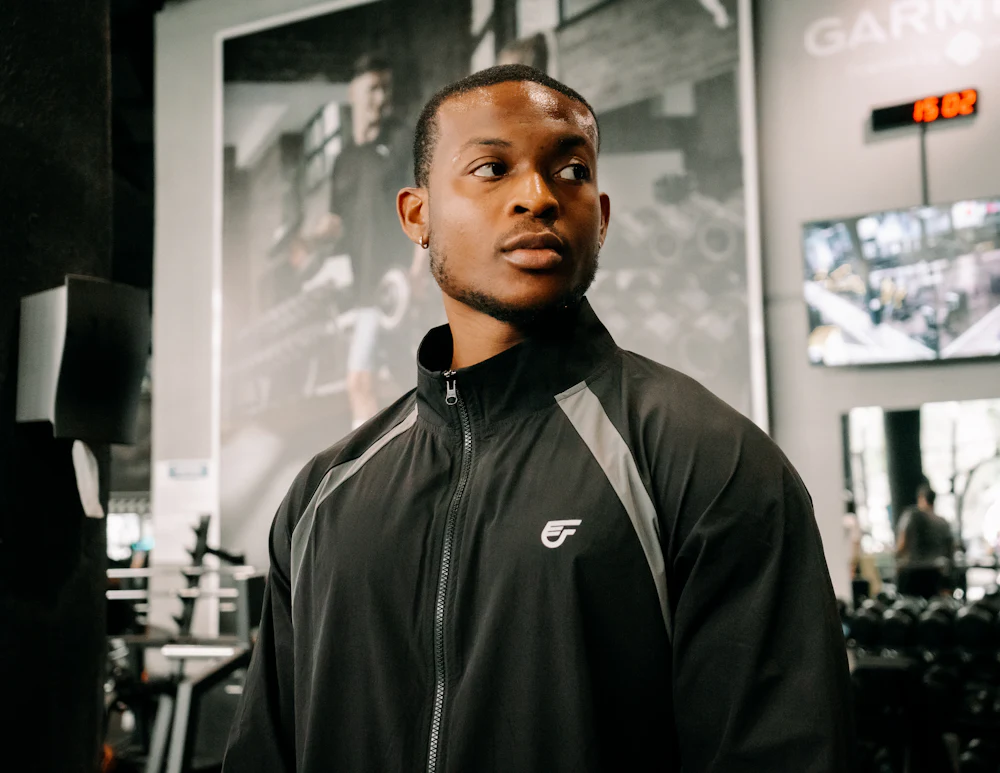
Track jackets sit inside the broader streetwear and athleisure category alongside joggers, cargo pants, and graphic tees, but they’re a different manufacturing problem. A streetwear manufacturer in China producing graphic tees is mostly managing print placement and blank quality. A factory producing track jackets is managing multi-panel cut-and-sew construction, hardware sourcing, and trim application on every unit.
The category stays in steady commercial demand because it crosses two markets: performance brands sell it as a lightweight training layer, and streetwear labels sell it as a retro silhouette on its own. Both are sourcing the same base construction, so the fabric and hardware decisions below apply whether the end use is a gym or a runway.
Brands new to the category often assume a track jacket is a simplified hoodie. It isn’t. A hoodie is typically a single fleece body with a hood and pocket added. A track jacket is usually three to five separate fabric panels, a full-length zipper, and rib-knit trim at three points — each one a place quality can slip during production.
Core Construction Decisions
Shell Fabric: Tricot, Dobby Weave, and French Terry-Backed
Most track jackets use one of three shell fabrics, and the choice affects drape, breathability, and price before a single stitch happens.
Tricot is a warp-knit polyester with a smooth, slightly glossy face — the classic ’80s and ’90s track jacket hand-feel. It’s lightweight, moves with the body, and takes dye evenly across large panels, which matters when a jacket has three or more colorways in one garment.
Dobby weave polyester is a woven construction with a subtle textured jacquard-style pattern. It holds a crisper shape than tricot and resists wrinkling better, making it the more common choice for a structured, less athletic-leaning silhouette.
French terry-backed shells pair a woven or tricot face with a looped terry interior, adding warmth and a softer hand at a higher fabric cost. Brands positioning the jacket as year-round outerwear rather than a training layer typically request this construction.
None of these three fabrics appear in PRP Apparel’s standard pricing reference table the way hoodie fleece or compression fabric do, because per-unit pricing on a multi-panel garment depends on panel count and colorway complexity more than fabric type alone. Get a quote against your specific panel layout rather than assuming a flat per-unit number.
Closure Type: Full-Zip, Quarter-Zip, and Snap-Button
Full-zip is the standard for a track jacket and the configuration most buyers should default to unless there’s a specific reason to deviate. Request a named zipper brand (YKK is the industry standard) rather than accepting “zipper” as a spec line — unbranded zippers fail at a materially higher rate under repeated pull-tab use, the exact failure mode the Melbourne brand above ran into.
Quarter-zip track jackets use a shorter zipper (typically 8–12 inches) starting at the collar, with the lower body as a closed pullover panel. This isn’t a like-for-like swap for full-zip — confirm which one is actually in the tech pack before sampling, since the two require different pattern pieces.
Snap-button closures are less common on modern track jackets but appear on retro and varsity-adjacent silhouettes. Snaps are cheaper hardware than a zipper but read as a different, more casual garment category — a design decision, not a cost-cutting substitution to accept without asking.
Panel Construction and Sleeve Type
Raglan sleeves — where the sleeve panel extends in a diagonal seam up to the collar rather than a set-in seam at the shoulder — are the more common construction because they allow a contrast-color sleeve panel without an additional shoulder seam. This is also the construction behind the classic track jacket look: a contrast stripe running the full arm length.
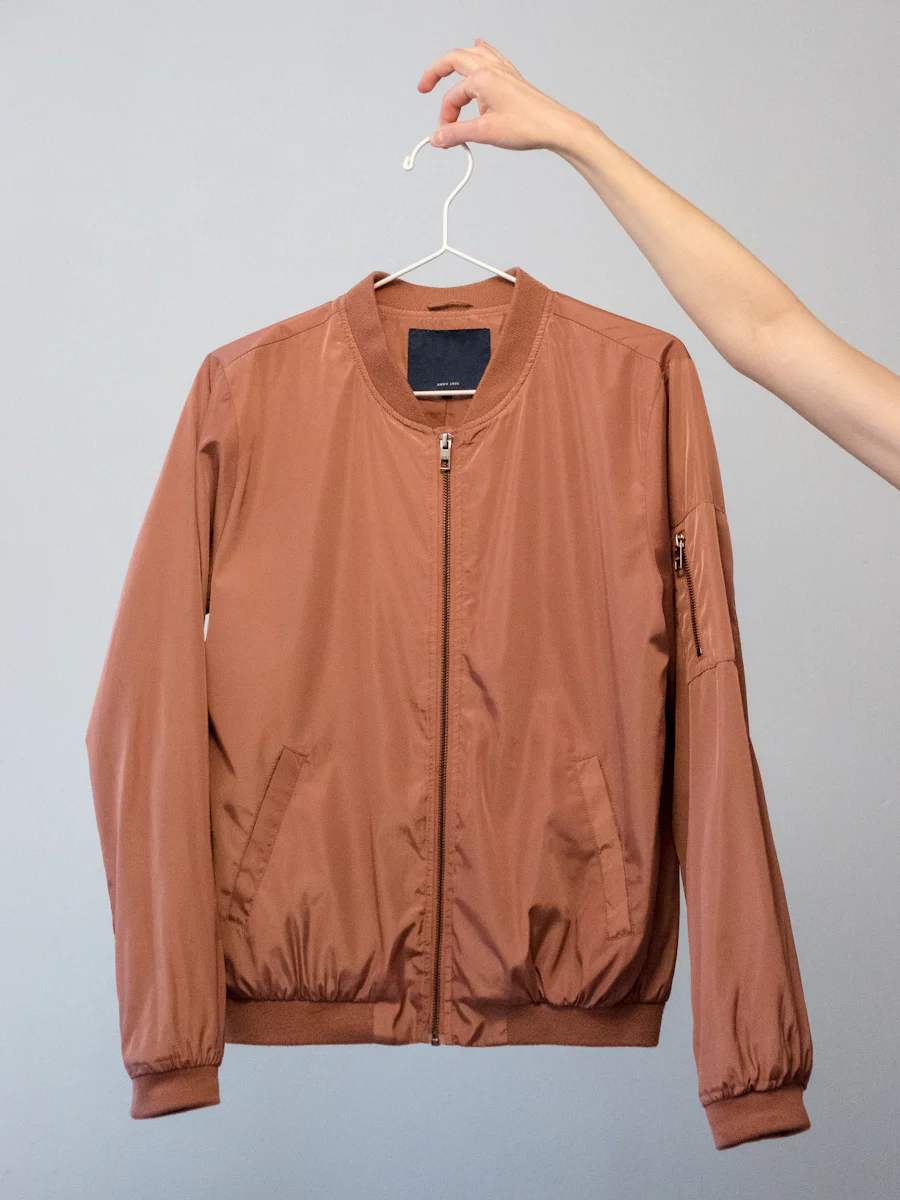
Set-in sleeves use a traditional shoulder seam and are more common on dobby-weave, structured-fit jackets that lean closer to a bomber silhouette. It’s marginally more labor-intensive per unit because of the additional seam, but holds a cleaner shoulder line.
Side panel piecing — contrast color panels running down the torso — is where colorway-matching problems most often originate, since each panel is potentially a separate fabric roll and dye lot. Request a pre-production sample specifically to check panel-to-panel color consistency, not just the garment against the approved swatch card.
Trim: Ribbing at Collar, Cuff, and Hem
Rib-knit trim at the collar, cuff, and waist hem is standard on nearly every track jacket, and it’s a common point of failure when a factory cuts corners on rib fabric weight or attachment method. Lightweight rib knit stretches out of shape after repeated wear and loses recovery within a few wash cycles — ask for stretch recovery to be part of the pre-production sample review, not just visual color match.
Rib attachment should be a bound or top-stitched seam, not simply serged to the body panel — a serged-only attachment is the weak point that separated on the Melbourne order above. It’s a two-second check on a sample garment: turn the collar or cuff inside out and look for a secondary stitch line reinforcing the seam.
Verification: What to Check Before Bulk Production
A pre-production sample is the checkpoint that catches all four of the issues above before they scale to a full order. Specifically verify:
- Zipper brand and function — confirm the branded zipper matches the tech pack, and run the slider the full length 15–20 times checking for snagging or looseness.
- Panel-to-panel color match — lay the sample flat under neutral lighting and compare each panel against the approved Pantone or swatch card.
- Rib attachment — turn cuffs, collar, and hem inside out and confirm a bound or top-stitched seam, not a single serge line.
- Colorfastness — for dark colorways paired with light rib trim or contrast panels, request colorfastness-to-rubbing test results so dye doesn’t transfer between panels during wear or washing.
Factories that skip a written sample approval step, or push straight to bulk cutting after a verbal color approval, are the ones most likely to substitute materials mid-run. Get approval in writing with dated photos before authorizing bulk cutting — a verbal approval leaves no record if a component gets swapped afterward.
Track Jacket vs. Bomber Jacket: Construction Comparison
Buyers sourcing outerwear for the first time sometimes conflate these two categories because both use ribbed trim and a front closure. The construction differs enough that quoting one against the other’s spec sheet produces the wrong price and the wrong garment.
| Attribute | Track Jacket | Bomber Jacket |
|---|---|---|
| Shell fabric | Tricot, dobby weave, or lightweight French terry-backed | Heavier woven nylon or poly shell, often with lining |
| Typical closure | Full-zip (occasionally quarter-zip or snap) | Full-zip, usually heavier-gauge zipper |
| Ribbing | Collar, cuff, hem — lightweight rib knit | Collar, cuff, hem — often heavier ribbing, sometimes wider band |
| Lining | Rarely lined | Frequently lined (mesh, quilted, or satin) |
| Typical use case | Athletic layering, retro streetwear silhouette | Outerwear, heavier seasonal wear |
| Panel complexity | Often 3–5 color-blocked panels | Usually fewer panels, more focus on shell/lining construction |
A factory quoting both categories from the same base price sheet is a signal to ask more questions — the lining, hardware weight, and shell fabric differences mean a properly quoted bomber jacket should not carry an identical per-unit price to a track jacket in the same fabric class.
Sourcing Track Jackets Through PRP Apparel
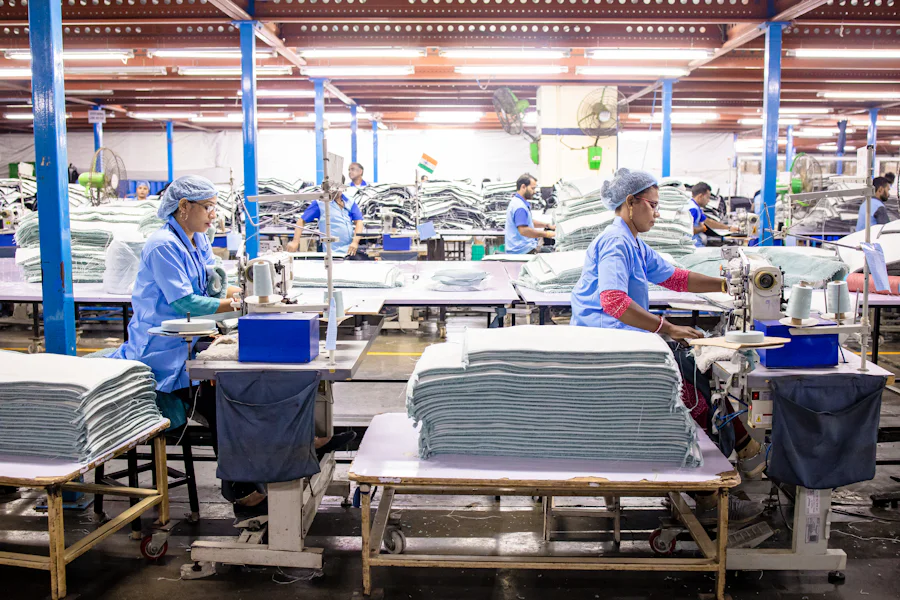
PRP Apparel runs track jacket and bomber jacket production through the same cut-and-sew Streetwear line used for graphic tees, cargo pants, and joggers, based in Dongguan with direct access to the Pearl River Delta’s fabric mills and trim suppliers. Production starts at 50 pieces per style — a genuine per-style minimum, not a per-colorway minimum that quietly multiplies a multi-panel order into several hundred units.
Pre-production samples run 12–15 days from order confirmation at $80–$250 per sample set, with 1–3 rounds standard before bulk cutting — enough to catch a panel mismatch or hardware substitution before it reaches a 150-piece order. Bulk production runs 35–45 days from approved sample. Screen print, embroidery, and DTG are all available in-house, so decoration doesn’t route through a second subcontractor with its own timeline and quality variance.
Track Jacket Manufacturing at a Glance
| Spec | Detail |
|---|---|
| MOQ | 50 pieces per style |
| Sample lead time | 12–15 days |
| Sample cost | $80–$250 per set |
| Sample rounds | 1–3 rounds standard |
| Bulk lead time | 35–45 days from approved sample |
| Common shell fabrics | Tricot, dobby weave polyester, French terry-backed |
| Standard closure | Full-zip, branded zipper (YKK or equivalent) |
| Decoration methods | Screen print, embroidery, DTG |
| Zipper test standard | ASTM D2061 strength tests for zippers |
Brands sourcing OEKO-TEX-verified shell and trim fabric should request documentation against the OEKO-TEX Standard 100 criteria — PRP Apparel’s fabric is certified across its product lines, not sold as a premium add-on. A factory that can’t produce this documentation for a compliance-conscious market (US, EU, UK) is worth a second look before a bulk order. See the guide on sustainable clothing certifications for apparel brands for what should come standard rather than as an upsell.
Buyers weighing decoration options across the Streetwear line should also review the comparison of embroidery vs. screen printing, since stitch count and ink type affect cost and durability differently on a woven shell than on a cotton tee. And because MOQ structure on a multi-panel garment gets complicated fast, it’s worth reading how to negotiate MOQ with clothing manufacturers before confirming a per-style vs. per-colorway minimum.
Frequently Asked Questions
What’s the difference between a track jacket and a bomber jacket?
A track jacket uses a lighter shell (tricot or dobby weave), is rarely lined, and typically has 3–5 color-blocked panels. A bomber jacket uses a heavier shell, is frequently lined, and has fewer panels with more focus on shell-and-lining construction. The two shouldn’t be priced from the same sheet.
What is the minimum order quantity for custom track jackets?
50 pieces per style is the standard minimum. Confirm upfront whether that applies per style or per colorway — a jacket with 3 color-blocked panels in 2 colorways can multiply into a much larger order under a per-colorway quote.
What fabric is best for a track jacket?
Tricot polyester is standard for a classic, lightweight jacket with even dye across panels. Dobby weave holds a crisper, more structured shape. French terry-backed shells add warmth for brands positioning the piece as outerwear rather than a training layer. The right choice depends on end use.
Can track jackets be embroidered at low MOQ?
Yes. Embroidery, screen print, and DTG are all available at the standard 50-piece MOQ. Embroidery is the more common choice for a chest logo on a woven shell since it holds up better than screen print on a non-cotton surface over repeated washing.
How long does it take to produce a bulk order of track jackets?
Budget 12–15 days for pre-production samples and 35–45 days for bulk production once a sample is approved. Multi-panel garments with 3+ colorways sometimes run toward the longer end of that window.
What zipper type should I request for a track jacket?
A full-length branded zipper (YKK or equivalent) is standard. Specify the brand by name in the tech pack rather than leaving “zipper” unspecified — unbranded zippers fail at a materially higher rate under repeated use, and a mid-production substitution is a common source of bulk-order complaints.
To discuss your track jacket project — panel layout, fabric, hardware, and timeline — reach out directly via the inquiry form.
Related Reading
- Bomber Jacket Manufacturer
- Streetwear Manufacturer China
- Sweatpants Manufacturer
- Embroidery vs. Screen Printing
Related Manufacturing Services
Ready to Start Your Clothing Project?
- MOQ from 50 pieces per style
- OEM and private label production
- Sample development support
- Fabric sourcing
- Quality inspection before shipment
- Worldwide shipping support