
A Los Angeles activewear brand shipped 600 leggings to a regional retailer last spring and got 600 leggings back. The garments were fine. The care label was not. It read “92% Polyester 8% Spandex” and gave wash instructions, and that was all — no country of origin, no company name or registered identification number. The retailer’s compliance team flagged it in receiving, and the brand spent five weeks relabeling at a US warehouse at roughly $1.80 a unit. The factory had printed exactly what the brand’s tech pack specified. Nobody had checked the clothing care label requirements against the actual rule.
Care labels are the cheapest component in the garment and one of the few that carries legal consequences. A woven label costs a few cents. Getting it wrong costs relabeling, delayed sell-in, and occasionally a customs hold.
What US Law Actually Requires
Two separate federal rules apply, and brands routinely satisfy one while missing the other.
The FTC Care Labeling Rule (16 CFR Part 423) covers the care instructions themselves. The Textile Fiber Products Identification Act covers fiber content, country of origin, and who made or imported the garment. The FTC’s business guidance on textile labeling is the plain-language version and is worth reading once before your first order.
The Four Elements a US Care Label Carries
Fiber content comes first — generic fiber names, listed in order of predominance by weight, with percentages for any fiber at 5% or more of the total. “Cotton” and “polyester” are generic names. Trade names alone are not sufficient.
Country of origin comes second. For imported garments this is where the product was assembled — “Made in China,” not the country the fabric came from.
Manufacturer or importer identity comes third: your company name, or a registered identification number issued by the FTC, commonly seen as an RN number. This is the field the leggings brand above left off entirely.
Care instructions come fourth, and they have to be complete enough that following them will not damage the garment.
Care Instruction Wording Is Not Free-Form
The Care Labeling Rule expects washing, bleaching, drying, and ironing information, plus any warning needed to prevent damage. If a garment needs dry cleaning, that has to be stated. If a normally expected care procedure would harm the garment — bleaching a garment-dyed piece, tumble drying a heavy knit that will shrink — the label needs a warning saying so.
The practical failure here is a label that reads “Machine wash cold” and stops. That tells a consumer nothing about drying or ironing, and it is the version factories print when a tech pack supplies one line of care copy.
Care instructions also have to be based on reliable evidence. If you claim a garment is machine washable, someone needs to have washed one. This is what wash testing during the sampling stage is for, and it is the step that catches a 100% cotton heavyweight tee that shrinks two full sizes on a hot cycle.
Symbols or Words, Not Guesswork
The FTC rule permits the ASTM D5489 care symbol system in place of written terms, and symbols may be combined with words. Symbols travel across languages, which is why most brands selling into more than one market use them.
What does not work is inventing symbols, or using the ISO/GINETEX symbol set assuming it is identical to the ASTM set. They overlap heavily but are separate systems with separate licensing. If you are selling into both the US and Europe, decide which system your label uses and keep it consistent across every style.
Permanence and Placement
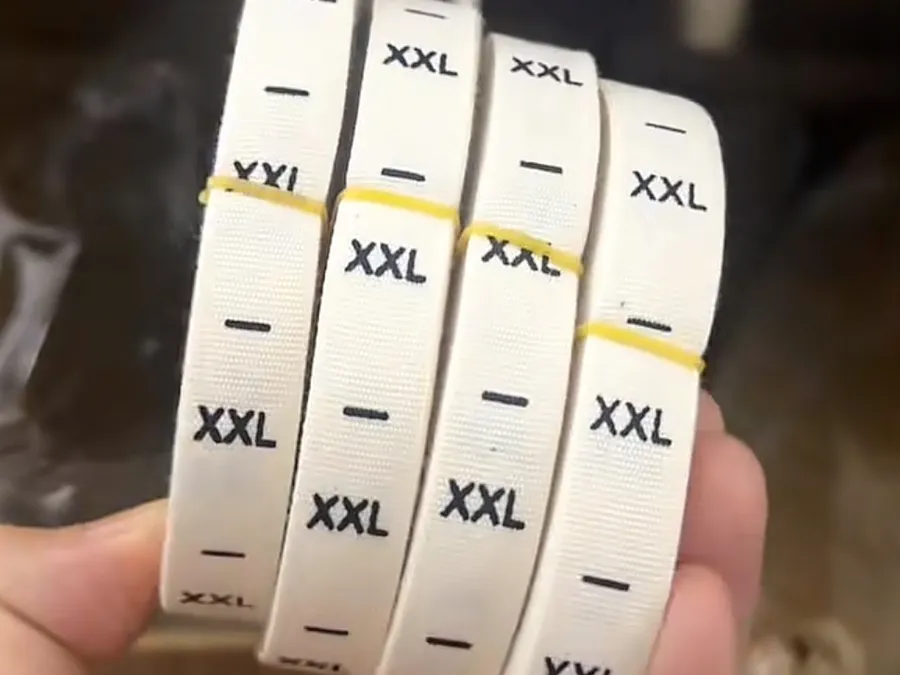
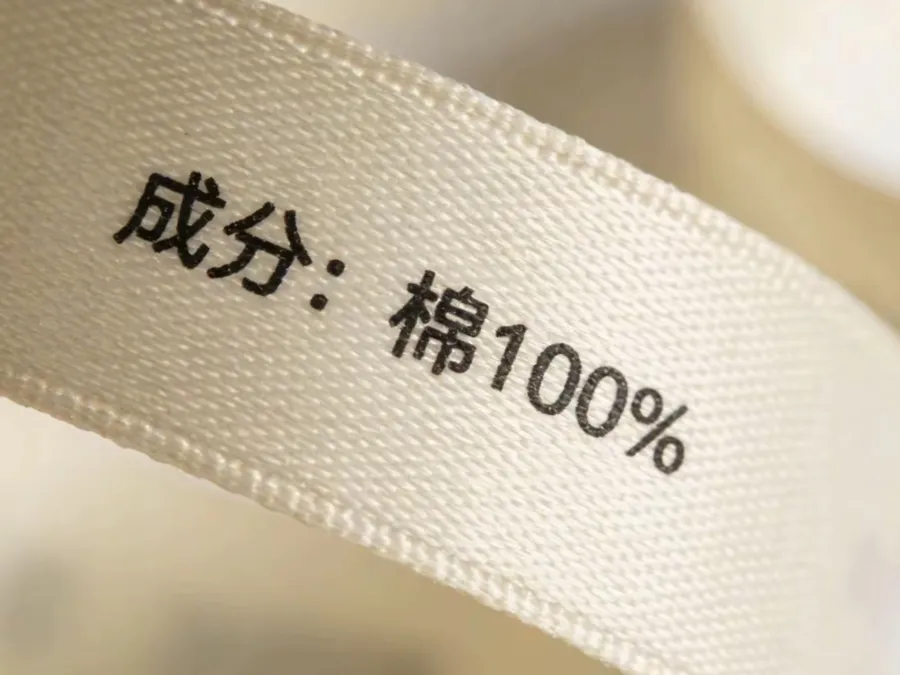
The label has to be permanently attached and remain legible for the useful life of the garment. A heat-transfer print that fades after fifteen washes does not satisfy that, which is the practical argument for woven or printed satin labels on anything that will be washed frequently.
Placement is not dictated by the rule, but it must be findable at point of sale. Neck labels, side-seam labels, and waistband labels are all normal. Tagless heat transfers are acceptable if they are genuinely durable.
What Changes Outside the US
The European Union runs the opposite way around. Under Regulation (EU) No 1007/2011, fiber composition labeling is mandatory and must appear in the language of the member state where the product is sold — but care labeling is voluntary. The Commission concluded the voluntary EN ISO 3758 standard already covered it. In practice virtually every brand includes care symbols anyway, because retailers demand them.
The United Kingdom retained the same fiber composition requirement after Brexit, so a label built for the EU generally works for the UK.
Canada requires the dealer’s name and mailing address or a CA Identification Number — five digits preceded by “CA” — plus fiber content showing generic name and percentage for any fiber at 5% or more. Fiber content has to be bilingual English and French, and the bilingual declaration cannot be split across non-adjacent labels. Dealer identity and country of origin do not need to be bilingual.
The pattern worth internalizing: a label built to satisfy US rules usually needs a French addition for Canada and a language check for the EU, not a redesign. Build the US label first if the US is your primary market, then extend it.
How to Check a Label Proof Before It Goes to Production
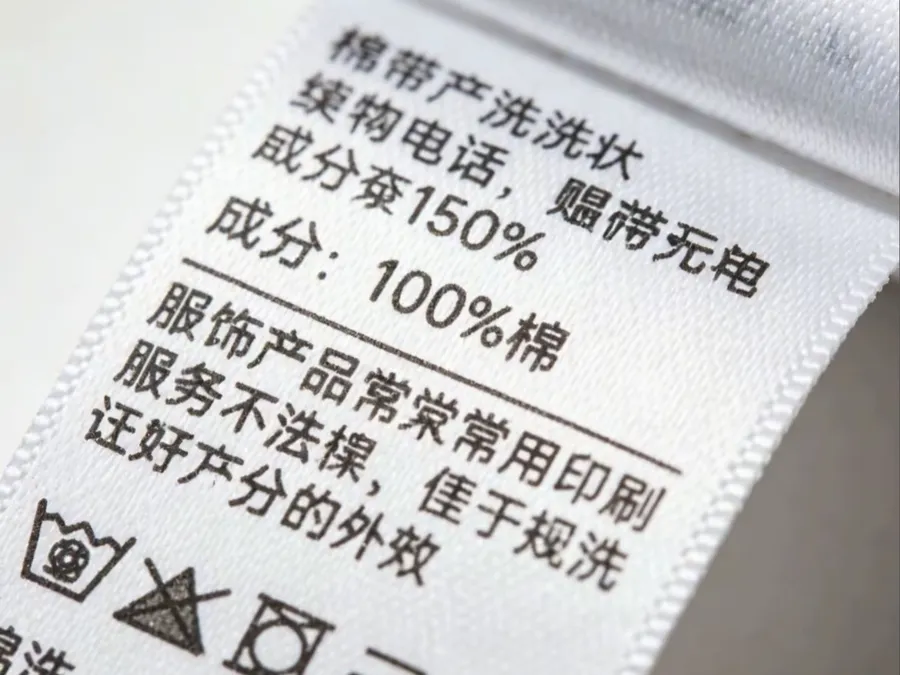
Ask for a physical label sample, not a PDF. Color, legibility at actual size, and edge finish are all things a proof on screen hides, and a label that is technically correct but unreadable at 15mm wide fails in a fitting room even if it passes a compliance audit.
Then run four checks against the sample. Confirm all four required US elements are present, not three. Confirm the fiber percentages on the label match the fabric you actually bought — if you changed from 180 GSM cotton jersey to a cotton/modal blend during sampling and nobody updated the label artwork, the label is now wrong. Confirm the care instructions match your wash test results rather than a template. Confirm the label is the version approved, since label artwork is one of the most commonly re-sent files in a development cycle.
One more check applies to children’s sleepwear specifically: US flammability requirements under CPSC add their own labeling obligations on top of everything above, and they are handled separately from ordinary care labeling. Our children’s sleepwear production covers what that involves.
Care Label Requirements Compared by Market
| Requirement | United States | EU / UK | Canada |
|---|---|---|---|
| Fiber content | Mandatory, generic names, % at ≥5% | Mandatory, in local language | Mandatory, bilingual EN/FR, % at ≥5% |
| Care instructions | Mandatory (16 CFR 423) | Voluntary (EN ISO 3758) | Not federally mandated |
| Country of origin | Mandatory | Not required by 1007/2011 | Required for imports |
| Company identity | Name or FTC RN number | Manufacturer details | Name and address, or CA number |
| Symbol system | ASTM D5489 permitted | ISO 3758 / GINETEX | Either, commonly ISO |
How PRP Apparel Handles Care Labels
Custom woven labels, printed satin labels, and heat-transfer neck tags are all available at our 50-piece minimum with no separate accessory minimum, which matters because label suppliers selling direct often hold their own MOQ at 500 or 1,000 pieces. Label sourcing sits inside the same order as the garment rather than as a component you chase separately — the practical detail behind our custom labels and packaging work.
We print the destination market’s required content, in the destination market’s language, from artwork you approve. What we ask for is the destination market up front. A label built for one market and shipped to another is the single most common labeling correction we see, and it is entirely avoidable at the tech pack stage.
We do not provide legal compliance advice or register RN numbers on your behalf — the RN is issued to your company by the FTC and belongs on your side of the file. What we do is print exactly what you specify and flag it when what you have specified looks incomplete against the market you have named.
Care Label Checklist
| Element | Required where | Common failure |
|---|---|---|
| Fiber content with percentages | US, EU, UK, Canada | Percentages stale after a mid-sampling fabric change |
| Country of origin | US, Canada | Omitted entirely |
| Company name or RN / CA number | US, Canada | Left blank on first orders |
| Wash, bleach, dry, iron instructions | US | Only one line of care copy supplied |
| Warnings for damaging procedures | US | Missing on garment-dyed and heavy knits |
| Language | EU local, Canada bilingual | English-only label sent to Quebec |
| Permanence | All | Heat transfer that fades in wash |
Frequently Asked Questions
What are the clothing care label requirements in the United States?
A US care label must show fiber content by generic name with percentages for fibers at 5% or more, country of origin, the company name or FTC registered identification number, and care instructions covering washing, bleaching, drying, and ironing plus any warnings. The care instructions fall under the FTC Care Labeling Rule; the other three elements fall under the Textile Fiber Products Identification Act.
Can I use care symbols instead of written instructions?
Yes. The FTC rule permits the ASTM D5489 care symbol system in place of written terms, and symbols may be combined with terms. Be aware that the ISO 3758 symbol set used in Europe is a separate system, so decide which one your label uses and apply it consistently across styles.
Do I need an RN number to sell clothing in the US?
No. An RN is an optional alternative to printing your company name on the label. If you do not have one, print the name of the company that manufactured or imported the garment. What is not acceptable is leaving the field off entirely.
Are care labels mandatory in the European Union?
Fiber composition labeling is mandatory under Regulation (EU) No 1007/2011 and must be in the language of the country of sale. Care labeling itself is voluntary in the EU because the voluntary EN ISO 3758 standard covers it, though most retailers require care symbols regardless.
What does Canada require that the US does not?
Canada requires the fiber content declaration in both English and French, and requires the dealer’s name and mailing address or a five-digit CA Identification Number. The bilingual fiber content cannot be split between labels that are not adjacent to each other.
Send us the markets you are selling into along with your tech pack and we will come back with label content laid out per market before anything goes to print. If you are not sure what your current label is missing, send a photo of it through our inquiry form and we will tell you what we see.
Related Reading
- Woven Label Manufacturer: A Buyer’s Guide to Garment Labels
- Custom Labels and Packaging: The Details That Define Your Brand
- Importing Apparel From China: A Practical Guide
Related Manufacturing Services
Ready to Start Your Clothing Project?
- MOQ from 50 pieces per style
- OEM and private label production
- Sample development support
- Fabric sourcing
- Quality inspection before shipment
- Worldwide shipping support