
A Berlin loungewear brand picked their signature color off a Pantone book, emailed the code to their factory, and approved the sampling photos on a laptop screen. The bulk arrived a shade deeper than expected — close enough to argue about, far enough that the two production runs sitting side by side on their own website did not look like the same color. They reordered six months later and got a third shade. Nothing was defective. They had simply never run a lab dip approval process, so no physical standard existed for anyone to dye against.
Color is the most subjective thing in a garment order and the one most often settled by email. A lab dip is the mechanism the industry uses to make it objective, and it costs a fraction of what a mismatched bulk run costs.
What a Lab Dip Actually Is
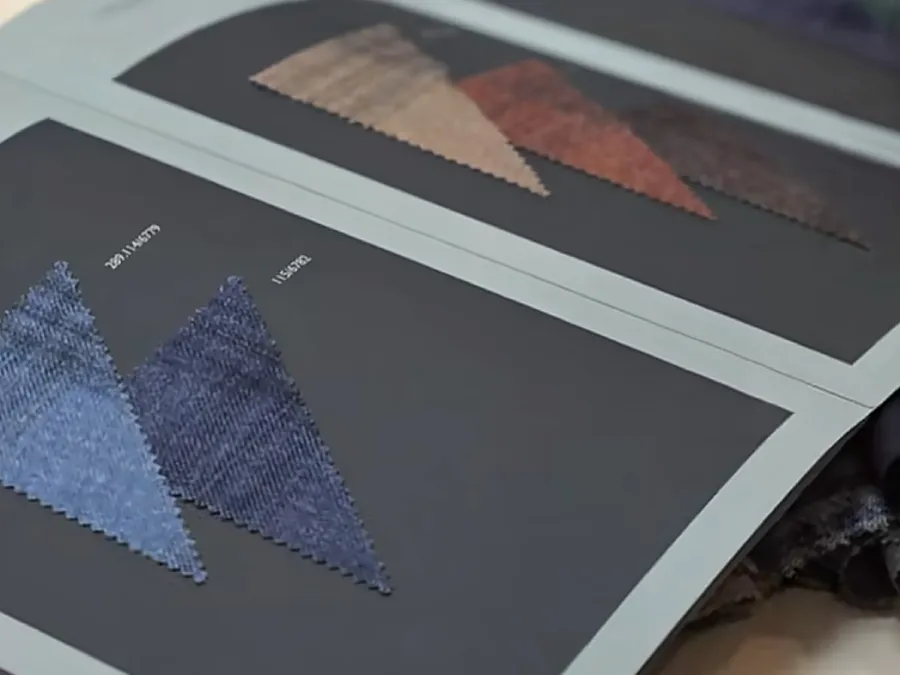
A lab dip is a small swatch of your actual production fabric, dyed by the mill or dyehouse to match a target color, and sent to you physically for approval before anything goes into a bulk dye vat. The emphasis is on both halves: your actual fabric, and physically.
Both halves matter because color is not a property of the dye alone. The same dye recipe reads differently on cotton jersey than on polyester interlock, because cotton takes reactive dyes and polyester takes disperse dyes through an entirely different chemistry. It reads differently again on modal, on a cotton/spandex blend, and on the same cotton at a different GSM — heavier fabric absorbs more dye and reads deeper. A color approved on one fabric type does not transfer to another.
What You Send
You give the dyehouse a target. There are two workable formats and one that causes trouble.
A Pantone TCX reference is the cleanest. TCX chips are dyed cotton, which means the dyehouse is matching fabric to fabric. Pantone’s paper systems — TPG and the older TPX — are printed on paper, and paper and textile surfaces reflect light differently, so a paper reference introduces error before anyone starts.
A physical swatch of your own works just as well, and often better if you are matching an existing product. Send a piece large enough to evaluate, kept out of sunlight so it has not faded.
What does not work is a hex code, a screenshot, or a photograph. Screens are backlit and uncalibrated, and no dyehouse can match to one.
What Comes Back
A dyehouse typically returns two or three lab dip options per color, deliberately bracketed — one slightly lighter than target, one on target, one slightly deeper. This is not indecision. It gives you a choice that accounts for how the color reads on your fabric at scale rather than on a chip.
You approve one, or you reject all of them with direction. Useful direction is comparative and specific: “closer to option B but less red,” “half a shade deeper.” Unhelpful direction is “warmer” without a reference, because warmer means different things to different people looking at different screens.
How to Evaluate Under Light, Not Guesswork
Evaluate lab dips against your standard under controlled lighting, in a light box, not at your desk. The standard illuminants are D65 for daylight, TL84 for European retail fluorescent, CWF for US store fluorescent, and incandescent for warm domestic light.
The reason is metamerism: two samples can match perfectly under one light source and visibly differ under another. A color that matches under store lighting and separates under daylight is a real and common failure, and it is invisible if you only ever look at the swatch in one place. If you do not have a light box, at minimum check the sample against your standard in direct daylight and under indoor light, and say which you approved under.
Approving, Then Living With Bulk Variation
Approval produces the standard. From that point the approved swatch is the reference for bulk dyeing, and it should be physically retained by both sides.
Bulk dyeing runs in lots, and lots vary. Some lot-to-lot variation is normal and unavoidable in wet processing. What matters is the tolerance you agree — the shade band — and the operational rule that follows from it: garments should be cut and bundled by dye lot, so that a single garment never has a body from one lot and sleeves from another. A shade difference that is invisible between two folded garments on a shelf is glaring across a seam.
This is also where color differs from the garment washing techniques applied after construction, which deliberately introduce variation rather than control it.
Where the Lab Dip Process Goes Wrong
Four failures account for most color disputes.
Approving on screen is first, and it is the one in the opening story. A photograph of a lab dip is not a lab dip.
Skipping the fabric match is second — approving a color on a cotton swatch and running bulk on a poly blend, then being surprised the shade moved.
Ignoring metamerism is third, discussed above.
Not testing colorfastness is fourth, and it is the one that surfaces after the customer has the garment. A color can match the standard perfectly and still bleed in the wash, transfer onto a white sofa, or fade under perspiration. These are separate tests from shade approval. ISO 105-C06 covers color fastness to domestic and commercial laundering; the rubbing and perspiration tests are separate parts of the same ISO 105 series. Deep saturated shades, reds and indigos in particular, are the ones worth testing rather than assuming.
Fabric certification is a separate question again from color performance — OEKO-TEX Standard 100 tests for harmful substances rather than shade accuracy, and we cover what it does and does not certify in our OEKO-TEX guide.
Lab Dip, Strike-Off, and Shade Band Compared
| Item | What it approves | Made from | When |
|---|---|---|---|
| Lab dip | Solid color on your fabric | Small dyed swatch | Before bulk dyeing |
| Strike-off | Printed artwork, color and scale | Short print run on fabric | Before bulk printing |
| Size set | Fit across the size run | Full garments | After fit approval |
| Shade band | Acceptable lot-to-lot variation | Range of bulk swatches | At bulk dyeing |
The distinction between lab dip and strike-off is the one brands mix up most. A lab dip is for solid dyed color. A strike-off is for printed artwork, where you are checking color, registration, hand feel, and scale together. An all-over sublimation print needs a strike-off, not a lab dip.
How PRP Apparel Handles Lab Dips
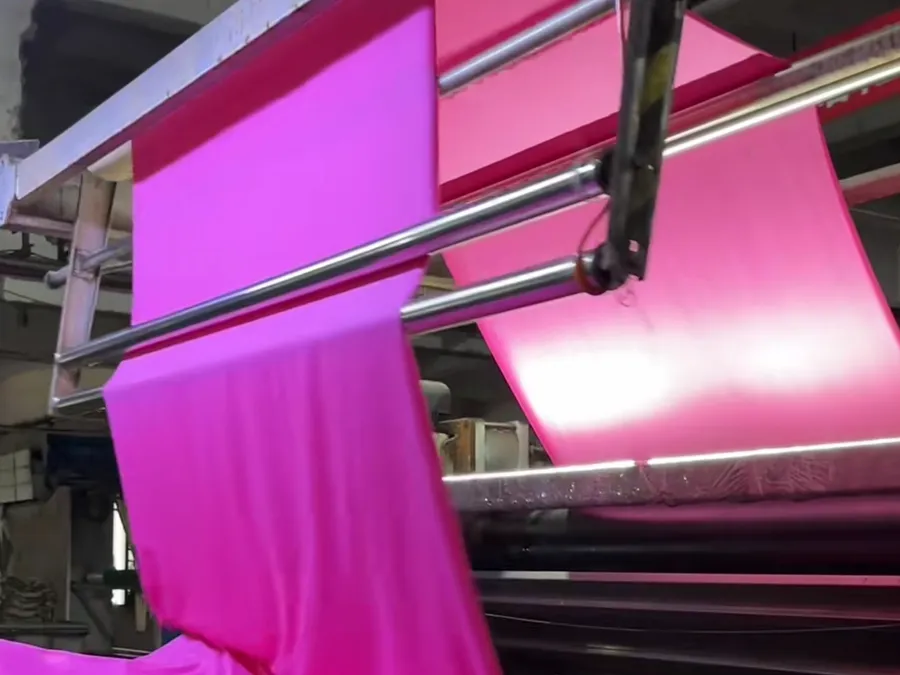
Pantone-matched solid dyeing is done in-house at our Dongguan factory rather than brokered out, which mainly shortens the resubmit loop — when a lab dip comes back off-target, the correction happens in the same building instead of across a supplier gap.
Lab dips are produced inside the normal sampling cycle rather than billed as a separate development stage. Sample lead time runs 12–15 days from order confirmation at $80–$250 per sample set, with 1–3 rounds standard, and color rounds sit inside that. ISO colorfastness testing — ISO 105-C06 for laundering, ISO 105-X12 for rubbing, ISO 105-E04 for perspiration — is available on request rather than run by default, so ask for it on saturated shades.
We ask for a physical target, TCX or your own swatch. If you send only a hex code we will tell you it is not enough rather than guess and dye 400 pieces on a guess. Our minimum of 50 pieces per style applies per colorway at the dyeing stage, which is the practical reason color count drives cost more than unit count on small orders.
Lab Dip Timeline
| Stage | What happens | Who acts |
|---|---|---|
| Target submission | TCX code or physical swatch sent | Brand |
| Lab dip production | 2–3 bracketed options dyed on your fabric | Dyehouse |
| Evaluation | Compared to standard under controlled light | Brand |
| Approve or resubmit | One approved, or direction given for round 2 | Brand |
| Standard retained | Approved swatch held by both sides | Both |
| Bulk dyeing | Lots dyed to approved standard within shade band | Factory |
| Cutting by lot | Garments bundled so one piece uses one lot | Factory |
Frequently Asked Questions
What is a lab dip in garment manufacturing?
A lab dip is a small swatch of your actual production fabric dyed to match a target color and sent to you physically for approval before bulk dyeing begins. It exists so that a physical color standard exists on both sides of the order rather than a screen reference that neither party can dye against.
How many lab dip rounds should I expect?
One to three rounds is standard. A first round often lands close but not exact, and one correction round resolves most colors. Complex shades — deep saturated tones, and colors that must match an existing product — more often need a second correction.
Can I approve a lab dip from a photo?
No. Screens are backlit and uncalibrated, and a photograph adds camera and lighting error on top of that. Color approval requires the physical swatch in hand, compared against your standard under controlled lighting.
What is metamerism and why does it matter for lab dips?
Metamerism is when two samples match under one light source and visibly differ under another. It matters because a lab dip approved under one light can separate from your standard under store lighting or daylight. Evaluating under multiple standard illuminants — D65, TL84, CWF, incandescent — catches it before bulk.
What is the difference between a lab dip and a strike-off?
A lab dip approves a solid dyed color on your fabric. A strike-off approves printed artwork, checking color, registration, scale, and hand feel together on a short print run. Solid colorways need lab dips; all-over prints and screen-printed graphics need strike-offs.
If you have a color you need matched and are not sure whether you need a lab dip, a strike-off, or both, send the target and the fabric you are planning to use through our inquiry form and we will tell you which applies before you commit to a sampling round.
Related Reading
- Hospitality Uniform Manufacturer
- trims sourcing for clothing manufacturers
- Fabric Sourcing for Clothing Manufacturers: How Mills Get Vetted Before Bulk Production
- Textile Dyeing Techniques for Custom Apparel
- The Garment Sampling Process: What Happens Between Your Tech Pack and Bulk Production
- Garment Washing Techniques and What They Do to Fabric
Related Manufacturing Services
Ready to Start Your Clothing Project?
- MOQ from 50 pieces per style
- OEM and private label production
- Sample development support
- Fabric sourcing
- Quality inspection before shipment
- Worldwide shipping support