
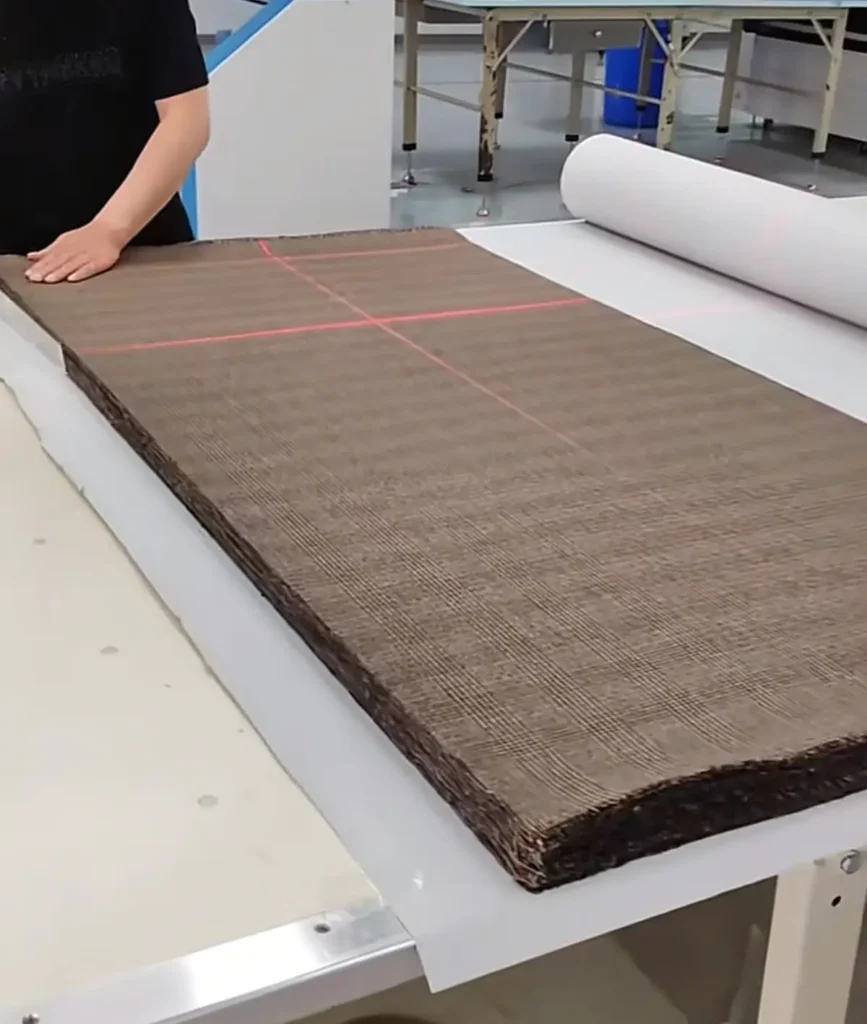
A Seattle-based outerwear brand spent six weeks emailing fabric mills in Shaoxing directly, trying to lock in a 320 GSM French terry for a 200-piece hoodie order before the project ever reached a cut-and-sew factory. Two mills quoted 500 kg minimums per colorway, more than three times what the order needed. A third mill shipped a swatch that matched nothing once the bulk roll arrived: a half-shade darker, with a hand-feel closer to 280 GSM than the 320 GSM originally quoted.
The founder had confused two separate jobs. Fabric sourcing for clothing manufacturers is a distinct operational skill from sewing garments, and most brands placing a first order don’t need to do it themselves.
What Fabric Sourcing for Clothing Manufacturers Actually Means
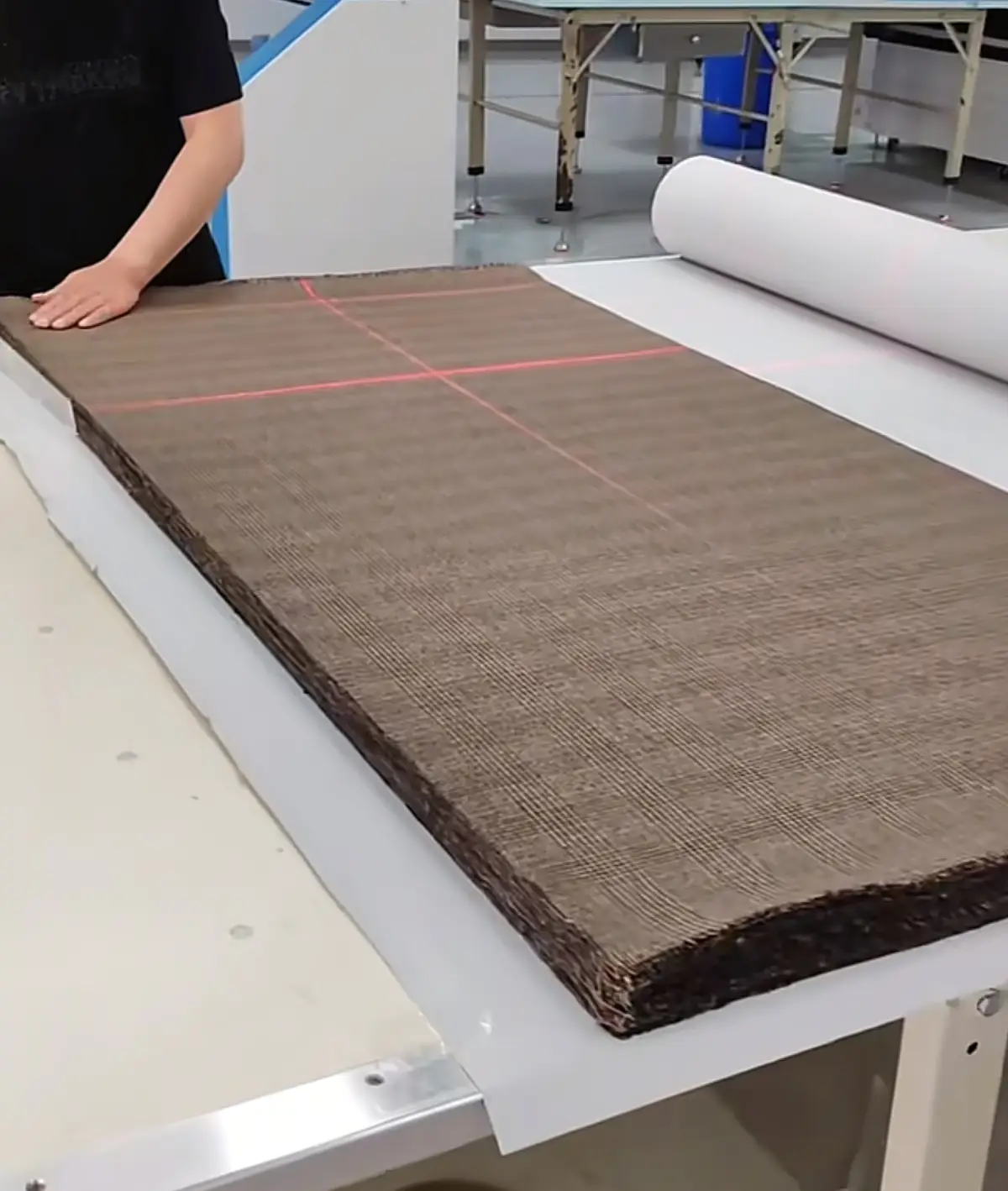
Fabric selection and fabric sourcing get treated as the same step, and they aren’t. Selection is a spec decision: choosing a fiber blend, a GSM range, a finish. That part is covered in depth in the guide on fabric types and GSM for clothing manufacturing. Sourcing is the operational job that happens after the spec is set: finding a mill that actually produces that fabric at the required GSM, negotiating a fabric-level minimum order, confirming the mill can hold color and weight consistently across a bulk run, and getting the yardage into the factory’s hands on schedule.
These are different skill sets because they require different relationships. A brand can research GSM ranges and fiber blends from a laptop. Vetting a mill requires a physical presence in the supply chain: knowing which mills actually run the loom or knit machine for a given fabric construction, which ones ship on time, and which ones substitute a cheaper yarn when a large order comes in and nobody’s watching the line.
Three models exist for getting fabric into production. A factory can source it from mills it already has a relationship with. A brand can provide its own fabric to a cut-make-trim (CMT) factory that only handles construction. Or a brand can hire a third-party sourcing agent to sit between the two.
Each model shifts who owns quality control, lead time, and cost.
Factory-Sourced vs. Brand-Provided Fabric (CMT)
Factory-Sourced Fabric
The manufacturer sources fabric from its own mill network, usually within the same regional supply chain as the factory itself. This is the default for the vast majority of orders under 500 pieces, because the factory’s existing relationships absorb the fabric-level minimum order that an individual brand can’t negotiate alone. The factory also carries QC responsibility end to end. If the bulk roll doesn’t match the approved lab dip, that’s the factory’s problem to fix before cutting, not the brand’s.
Brand-Provided Fabric (CMT)
A brand sources its own fabric and ships it to a CMT factory that only cuts, sews, and finishes. This model makes sense when a brand has a proprietary fabric (a custom Jacquard, a licensed technical textile) or an existing mill relationship it wants to keep. It also means the brand owns every fabric-side problem: shrinkage, colorfastness, dye lot variance, and customs documentation for the fabric itself before it even reaches the factory. Lead time typically stretches, since the fabric shipment has to clear customs and arrive before construction can start.
Third-Party Sourcing Agent
An agent sources fabric on the brand’s behalf, independent of the factory. This adds a markup and a coordination layer, and it only pays off at volumes large enough to justify a dedicated sourcing relationship, generally well above the 50-to-500-piece range most first-time brands are placing.
Mill MOQ vs. Garment MOQ: Two Different Minimums
A garment minimum order quantity, the number a brand negotiates with the factory, and a fabric minimum order quantity, the number the mill requires to weave or knit a run, are not the same figure and don’t move together. The guide on minimum order quantity structures for clothing brands breaks down per-style and per-colorway garment MOQs in detail. Mill MOQ works on a separate axis entirely: kilograms of raw fabric, not finished pieces.
Most mills in the Pearl River Delta supply chain quote fabric minimums of 50–100 kg per colorway. A 50-piece hoodie order in 320 GSM French terry uses roughly 20–25 kg of fabric, depending on pattern size and grading. The mill’s 50–100 kg minimum exceeds what a single 50-piece order needs, which is exactly why factory-level mill relationships matter: an established factory buys in volume across multiple client orders and absorbs the gap between what one brand needs and what a mill will actually cut a roll for. A brand sourcing fabric independently for a single 50-piece order either eats the full mill minimum as wasted yardage or gets turned away by mills unwilling to run a colorway that small.
How a Factory Vets a Fabric Mill Before Committing to an Order
Physical Swatch Verification, Not Digital Samples
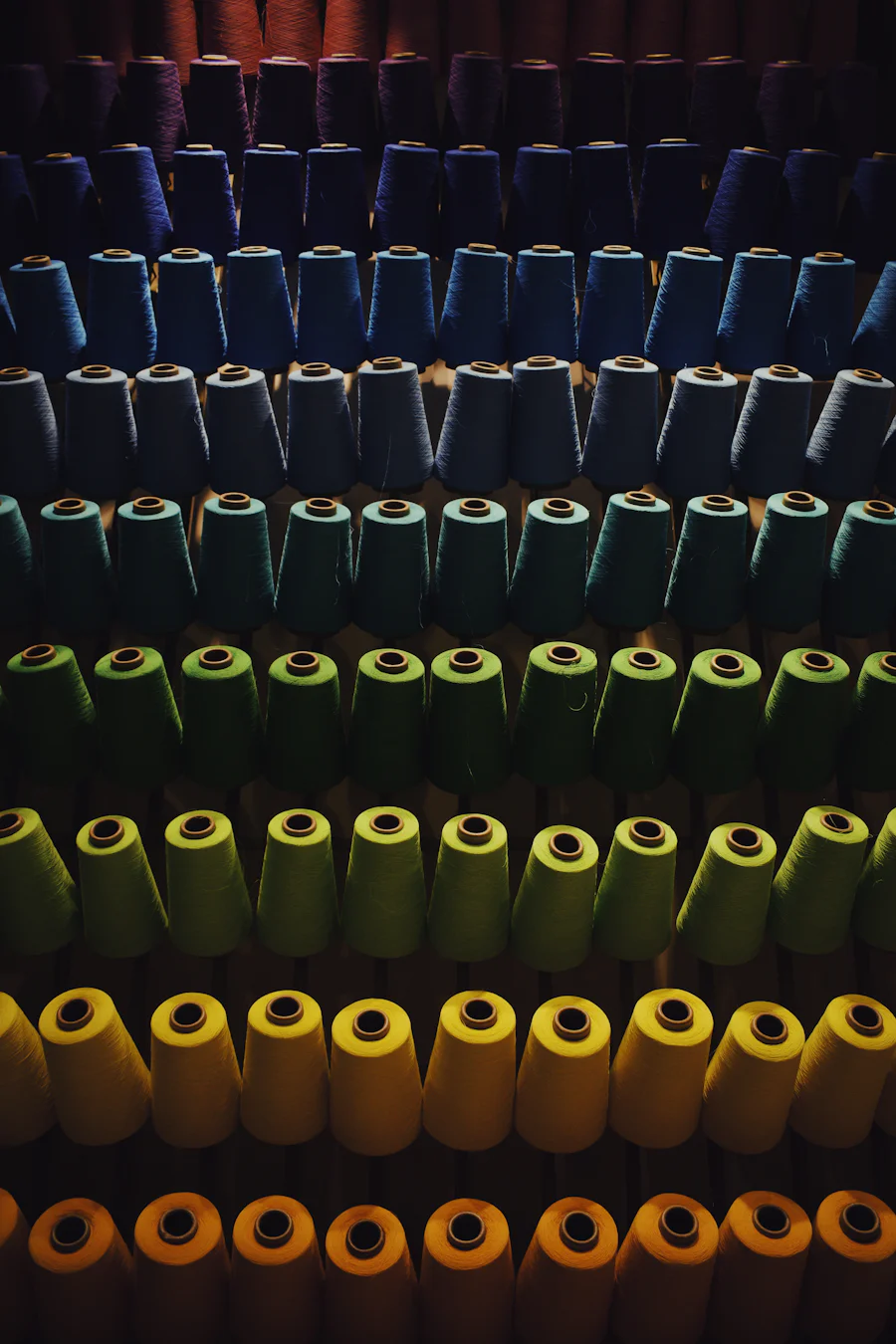
A legitimate sourcing relationship starts with a physical swatch card pulled from the mill’s actual production stock, not a digital color chart or a supplier’s marketing photo. Screen colors shift by device and lighting; a printed swatch under standardized light does not.
Lab Dip Approval Before Bulk Dyeing
Before a mill commits a bulk dye lot, the factory runs a lab dip: a small dyed sample checked against the brand’s Pantone reference under multiple light sources. The full process, including why hex codes and screenshots can’t be matched and how shade bands get set, is covered in the guide on the lab dip approval process. Skipping this step is the single most common reason a bulk fabric shipment arrives off-shade.
Shrinkage and Colorfastness Testing
A mill that can’t produce a consistent GSM and shrinkage rate across repeat runs is a liability regardless of how good its first swatch looks. The dimensional testing that should happen before a fabric order is confirmed, covered in the guide on fabric shrinkage testing, catches mills that pass off unsanforized fabric as pre-shrunk.
Chain-of-Custody Documentation for Certified Fabric
For OEKO-TEX or GRS-certified fabric, certification has to trace to the mill itself, not just the garment factory. A factory can hold its own OEKO-TEX certification and still receive uncertified fabric from a mill that never tested it. For rPET specifically, this means Transaction Certificates at every processing stage, detailed in the guide on recycled fabric and GRS documentation. Ask which entity’s name is actually on the certificate.
Dye Lot Consistency Across Reorders
A first order and a reorder six months later rarely draw from the same dye bath, even when both go through the same mill. Fabric ordered for a reorder gets dyed fresh, against the same Pantone reference but in a new lot, and dye lots carry natural shade variance even under tight process control. This matters most for brands reordering a single component of a multi-piece set: a hoodie reordered alone three months after the matching sweatpants shipped will not sit in the exact same shade family unless the factory locks the reorder against the original lab dip approval, not just the Pantone code. Brands placing a reorder should ask the factory to reference the original approved lab dip, not re-run a fresh one from scratch, whenever shade continuity across the two production runs matters.
Verifying a Factory Actually Sources From a Mill, Not a Trading Company
A factory that can’t name its fabric mill, or that routes every order through an unnamed “supplier,” is usually buying from a trading company that adds a markup and a layer of quality-control distance. A few direct questions separate a factory with real mill access from one reselling fabric it doesn’t control:
- Ask for the mill’s name and general location. A factory with a genuine relationship answers without hesitation. Vague answers like “our supplier” or “a partner factory” are a signal to dig further.
- Ask whether the sample fabric and the bulk fabric come from the same production run. Sample yardage pulled from stock and bulk yardage dyed to order can vary, even from the same mill, if the factory doesn’t flag this upfront.
- Request the lab dip approval record before bulk dyeing starts, not after the roll arrives. A factory that skips this step to save a few days is trading your shade accuracy for its own schedule.
- Confirm who owns the fabric-level minimum order. If a factory quotes a garment price that seems too low for the fabric spec, ask whether they’re actually absorbing the mill’s kg minimum or substituting a cheaper stock fabric to avoid ordering from the mill at all.
Sourcing Model Comparison
| Model | Who Owns QC | Fabric-Level MOQ | Lead Time Impact | Best For |
|---|---|---|---|---|
| Factory-sourced | Factory | Absorbed into factory’s existing mill relationships | Standard 35–45 day bulk lead time | Brands under 500 pieces per style, first-time orders |
| Brand-provided (CMT) | Brand | Brand negotiates directly with mill | Extended by fabric shipping/customs before construction starts | Proprietary or licensed fabrics, existing mill relationships |
| Third-party agent | Agent, with factory | Agent negotiates, adds markup | Extra coordination step, variable | High-volume brands with dedicated sourcing budgets |
Fabric Sourcing at PRP Apparel
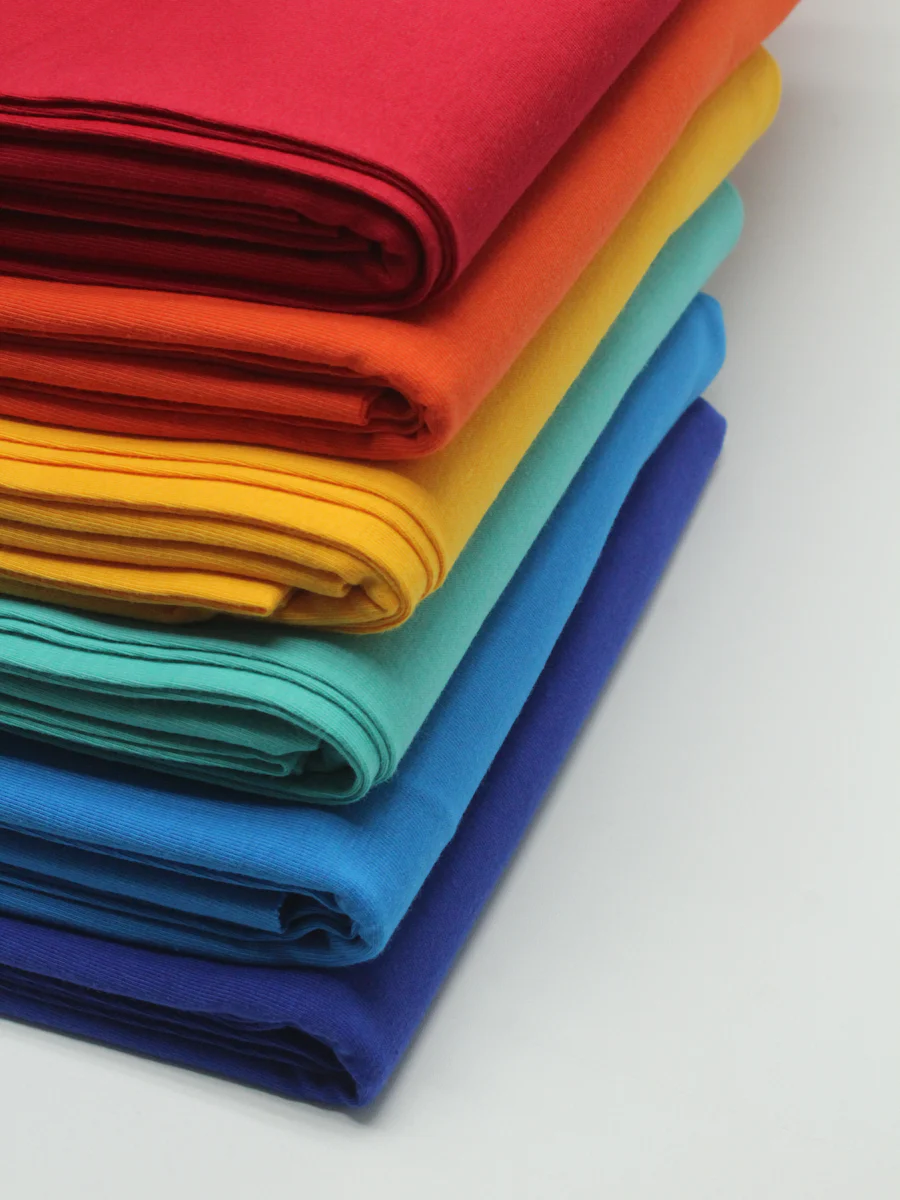
PRP Apparel sources fabric through mill relationships within the Pearl River Delta, the same regional supply chain the Dongguan factory operates in. That proximity is why the standard 35–45 day bulk production lead time holds even on orders that start at 50 pieces per style: the factory isn’t waiting on fabric shipped in from outside the region before cutting can begin.
Pantone-matched solid dyeing runs in-house rather than through a separate dye house, which removes one handoff where shade drift typically creeps in between lab dip approval and bulk dyeing. OEKO-TEX Standard 100 certified fabric is available across product lines, and ISO colorfastness testing (ISO 105-C06 for washing, ISO 105-X12 for rubbing, ISO 105-E04 for perspiration) is available on request, with documentation that traces to the fabric itself rather than a general factory claim. Fabric-level minimums from mill partners run 50–100 kg per colorway, consistent with the regional standard, and PRP Apparel’s own production volume across concurrent client orders is what absorbs that minimum for a single 50-piece style.
Summary Table
| Item | Detail |
|---|---|
| Garment MOQ | 50 pieces per style |
| Typical mill fabric MOQ | 50–100 kg per colorway |
| Bulk production lead time | 35–45 days from approved sample |
| Sample lead time | 12–15 days from order confirmation |
| Sample cost | $80–$250 per sample set |
| Colorfastness testing | ISO 105-C06, ISO 105-X12, ISO 105-E04 (on request) |
| Fabric certification | OEKO-TEX Standard 100; GRS documentation for rPET |
For fabric quality standards, the OEKO-TEX Standard 100 certification tests fabric for harmful substances at every processing stage, from raw fiber through the finished textile. On the mill-vetting side, ISO 9001:2015 defines the quality management system requirements a serious mill or factory should be able to point to, beyond a verbal claim of “we do QC.”
Frequently Asked Questions
Do I need to find my own fabric mill if I’m placing a first order?
No. Most factories, including established ones in the Pearl River Delta, already have mill relationships that absorb the fabric-level minimum order a single brand’s 50-piece style can’t meet on its own. Brand-sourced fabric only makes sense for proprietary textiles or existing mill relationships a brand wants to keep.
What’s the difference between a garment MOQ and a fabric MOQ?
Garment MOQ is the piece count a factory will produce, commonly 50 pieces per style. Fabric MOQ is the kilogram minimum a mill requires to run a colorway, typically 50–100 kg. These are separate numbers set by different parties, and a factory’s existing mill relationships are what let a brand place an order below the mill’s own minimum.
Can I request a specific fabric mill for my order?
Yes, if you have an existing relationship or a proprietary fabric that requires it. Expect this to shift the order toward a brand-provided (CMT) model, which moves fabric-side quality control and customs documentation onto the brand and can extend lead time versus factory-sourced fabric already staged in the regional supply chain.
How do I know a factory is actually sourcing from a real mill and not a trading company?
Ask for the mill’s name and location directly, and ask whether your sample fabric and bulk fabric come from the same production run. A factory with a genuine mill relationship answers both without hesitation. Vague references to “our supplier” without a name are worth pressing on further.
Why did my reorder come back a slightly different shade than my first order?
Reorders draw from a fresh dye lot, even from the same mill, and dye lots carry natural shade variance under normal process control. Ask the factory to reference your original lab dip approval for the reorder rather than running a new one from scratch when shade continuity matters, particularly for a single component of a multi-piece set.
Does fabric sourcing affect my production lead time?
Yes. Factory-sourced fabric, already staged within the same regional supply chain as the factory, keeps the standard 35–45 day bulk lead time intact. Brand-provided fabric adds the time needed to ship and customs-clear the fabric itself before construction can start.
To work through fabric sourcing for your next order, styles, fabric specs, and production timeline, reach out directly via the inquiry form.
Related Reading
- trims sourcing for clothing manufacturers
- The Lab Dip Approval Process: How Color Gets Locked Before Bulk Dyeing
- Fabric Shrinkage Testing: What to Verify Before Bulk Production Starts
- Fabric Types and GSM: What Clothing Brands Need to Know
Related Manufacturing Services
Ready to Start Your Clothing Project?
- MOQ from 50 pieces per style
- OEM and private label production
- Sample development support
- Fabric sourcing
- Quality inspection before shipment
- Worldwide shipping support