
A Los Angeles streetwear brand approved a pre-production sample for a run of 500 heavyweight fleece hoodies. The sample fit exactly as designed: 28-inch body length, boxy silhouette, no complaints. The bulk shipment arrived six weeks later, cut from a different fabric lot at the same mill.
After the first customer wash, the body length measured 26.8 inches, more than an inch short of spec. Every unit passed stitching inspection. None of them matched the sample anymore. Nobody had run a fabric shrinkage test between sample approval and bulk cutting, so nobody caught the lot-to-lot difference until customers did.
This isn’t a rare failure mode. It’s what happens when a factory treats shrinkage as a known constant instead of a measured variable.
What Fabric Shrinkage Testing Actually Confirms
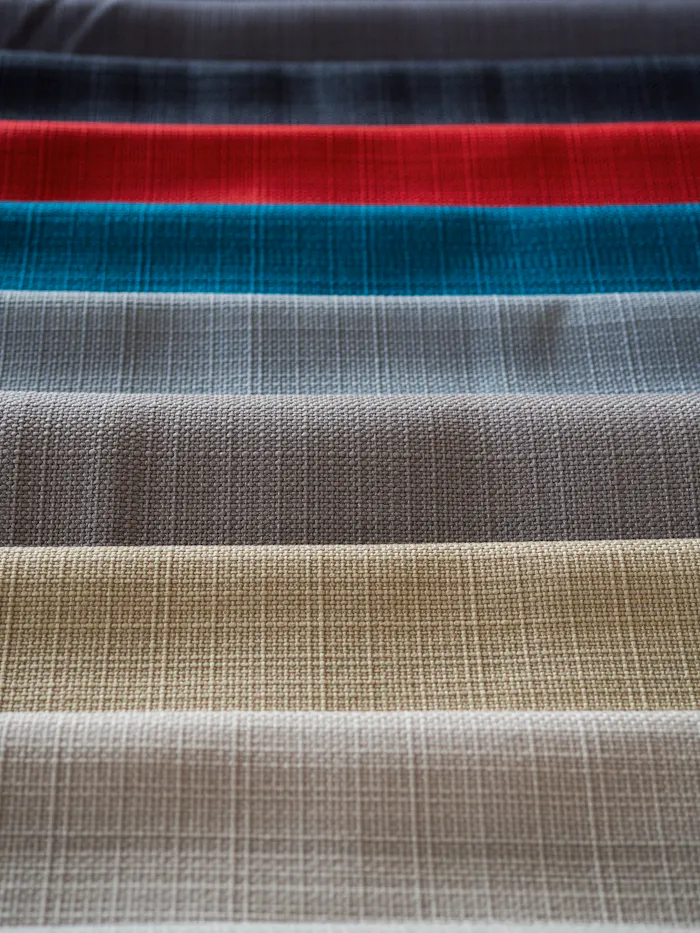
Fabric shrinkage testing measures how much a specific roll of fabric changes dimensionally after washing and drying, expressed as a percentage change in length and width. It is not a one-time industry constant. Fiber content, knit or weave structure, finishing process, and even the specific mill lot all move the number. A 240 GSM cotton jersey from one dye lot can shrink 4% in length; the next lot from the same mill can shrink 6% if the finishing tension varied during processing.
The test itself is straightforward: cut a marked specimen from the fabric roll before any garment construction, record its exact dimensions, run it through a specified wash-and-dry cycle, then measure it again. The percentage difference between the two measurements is the shrinkage figure a factory should hand a buyer before pattern grading starts, not after bulk units ship.
Skipping this step doesn’t make a fabric shrink less. It just moves the discovery of the number from the sample stage, where it costs nothing to fix, to the customer’s first laundry cycle, where it costs a return.
Relaxation Shrinkage vs. Residual Shrinkage
Fabric leaves the mill under tension from knitting, weaving, and finishing. The first wash releases most of that tension in a single event — relaxation shrinkage — typically the largest dimensional change a garment will ever experience. Every wash after that produces a much smaller change called residual shrinkage, usually under 1% per cycle, as remaining fiber tension slowly releases.
This is why a garment that fits after the second or third wash but not the first isn’t defective. It already shed most of its relaxation shrinkage before it reached the customer. A factory that only tests dry, unwashed fabric and never runs it through an actual wash cycle hasn’t measured relaxation shrinkage at all, which is the number that matters most for sizing.
The Standard Test Methods: ISO 6330 and AATCC 135
Two test methods cover almost all fabric shrinkage testing in apparel manufacturing. ISO 6330 specifies the domestic washing and drying procedures — which machine type, wash temperature, detergent, and drying method to use — so results are reproducible across different labs. It doesn’t specify how to measure the fabric before and after; that step comes from a companion standard, ISO 3759, which defines how specimens are marked, prepared, and measured for dimensional change. AATCC 135 is the equivalent US-market test method, used more often by brands selling primarily into the United States.
Buyers don’t need to specify which standard a factory uses in most cases. What matters is that the factory names one, applies it consistently, and can produce a written before-and-after measurement, not a verbal assurance that the fabric is “pre-shrunk.”
Sanforization Doesn’t Replace Testing
Sanforizing is a mechanical compressive finishing process applied to woven cotton fabric before cutting, and it’s genuinely effective: a properly sanforized woven typically drops residual shrinkage to 1% or less. But sanforization is a finishing step, not a test result. A factory claiming “sanforized fabric” without a measured percentage is stating an intention, not a verified outcome. Finishing quality varies by mill and by run, the same way dye lots vary. The only way to confirm a sanforizing line actually hit its target is to test the output.
Shrinkage Tolerance Buyers Should Ask For
Most buyer testing protocols set a maximum acceptable shrinkage percentage per fabric category, and construction type is the biggest driver of where that number lands. Woven cotton, tightly interlaced and often sanforized, typically tolerates 3% or less in both length and width. Knit cotton jersey, built from interlocking loops that relax more freely, commonly runs a 5% tolerance. Cotton-spandex blends sit lower than pure cotton knits, usually 3–5%, because the spandex content restrains some of the loop relaxation that drives shrinkage in 100% cotton knits.
These figures are industry benchmarks, not universal law. The right number for a specific style belongs in the tech pack as an agreed tolerance, verified against the actual fabric lot, not assumed from a category average. The tech pack creation guide covers where shrinkage tolerance should be documented alongside grading rules and construction specs.
Why Testing Has to Happen Before Grading and Cutting, Not After
Pattern grading and marker-making both assume the fabric dimensions in front of the cutter match the finished garment dimensions after the customer’s first wash. If shrinkage testing happens after cutting, or not at all, that assumption is untested. The apparel size grading process builds a size run from a single approved base pattern; if the base pattern was cut from fabric that shrinks differently than the sample did, every graded size inherits the same error, multiplied across the run.
The fix is procedural, not technical: shrinkage testing runs on the actual bulk fabric lot during the pre-production sample stage, before the pattern is finalized for cutting. If the tested percentage differs meaningfully from what the sample assumed, the pattern gets adjusted to compensate before a single bulk unit is cut. Catching a 2% discrepancy at the sample stage costs a pattern revision. Catching it after 500 units ship costs a return program.
Verifying a Factory Actually Ran the Test
A factory that tests fabric shrinkage will hand over a number, not a reassurance. Ask for the specific before-and-after measurements from the specimen, in inches or centimeters, along with the wash temperature and cycle used. A written report with matching numbers on both ends is verifiable. A statement like “this fabric doesn’t shrink much” with no measurement attached is not.
Watch for three specific gaps:
- No written report. If a factory can’t produce specimen measurements on request, the test likely didn’t happen, or happened on a different fabric lot than the one going into bulk production.
- Dry-only measurement. A factory that measures fabric before and after pressing, but never actually washes the specimen, hasn’t tested relaxation shrinkage at all.
- One test covering multiple colorways. Dye processes affect finishing tension. A shrinkage result from an undyed or single-colorway specimen doesn’t automatically apply to a different colorway of the same base fabric.
The garment quality control guide covers the broader inspection checkpoints a factory should be running through sampling and bulk production; shrinkage verification is one checkpoint inside that larger process, not a separate audit.
Fabric Type Comparison
| Fabric Construction | Typical Shrinkage Tolerance | Primary Driver | Common Category |
|---|---|---|---|
| Woven cotton (sanforized) | 1–3% | Compressive finishing quality | Wovens, structured bottoms |
| Woven cotton (unsanforized) | 5–8% | No mechanical pre-shrink step | Raw or selvedge denim-adjacent fabrics |
| Cotton jersey knit | 4–6% | Loop relaxation in circular knit | T-shirts, sweatshirt fleece |
| Cotton-spandex knit | 3–5% | Spandex restrains loop relaxation | Fitted tees, leggings |
| Polyester/spandex knit | 2–4% | Synthetic fiber, lower moisture absorption | Activewear, compression garments |
How PRP Apparel Handles Shrinkage Verification
PRP Apparel runs fabric shrinkage measurement inside the same pre-production sample stage used for fit and construction approval, not as an added step or a separate line item. Sample lead time is 12–15 days at $80–$250 per sample set, the same figures that apply across every product category, and the measured shrinkage percentage gets locked into the tech pack alongside the grading rules before pattern cutting starts on the bulk order.
This sits next to PRP’s existing colorfastness testing program: ISO 105-C06, ISO 105-X12, and ISO 105-E04 testing available on request, the same in-house verification process covered in the garment sampling process guide. A brand that requests both colorfastness and shrinkage figures at the sample stage gets a complete dimensional and color-stability picture before committing to a 35–45 day bulk production run.
Buyers sourcing from a fabric mill outside their factory’s direct supply chain should still request the lot-specific shrinkage number rather than relying on a spec sheet from a different production run. The fabric types and GSM guide covers how GSM and fiber blend affect fabric selection more broadly, shrinkage behavior included.
Frequently Asked Questions
What is fabric shrinkage testing?
Fabric shrinkage testing measures the percentage change in a fabric’s length and width after a standardized wash-and-dry cycle. A marked specimen is measured before washing, washed according to a set procedure like ISO 6330 or AATCC 135, then measured again. The percentage difference is the shrinkage figure used to set tolerances and adjust pattern grading before bulk cutting.
How much fabric shrinkage is acceptable?
It depends on construction. Sanforized woven cotton typically tolerates 1–3% shrinkage, cotton jersey knits run 4–6%, and cotton-spandex blends usually land between 3–5%. These are industry benchmarks; the confirmed tolerance for a specific style should come from testing the actual fabric lot, not from a category average alone.
What’s the difference between AATCC 135 and ISO 6330?
Both test dimensional change after washing. AATCC 135 is the standard used more often by factories and labs serving the US market; ISO 6330 is the international equivalent, commonly paired with ISO 3759 for specimen preparation and measurement. Buyers generally don’t need to specify one over the other, as long as the factory names a method and applies it consistently.
Does PRP Apparel test fabric shrinkage before bulk production?
Yes. Shrinkage measurement runs during the same pre-production sample stage used for fit and construction approval, at the standard 12–15 day sample lead time. The result gets locked into the tech pack before pattern grading and bulk cutting begin.
What is the difference between relaxation shrinkage and residual shrinkage?
Relaxation shrinkage is the large dimensional change that happens on a fabric’s first wash, as tension from knitting, weaving, and finishing releases. Residual shrinkage is the much smaller change, usually under 1%, that continues over subsequent wash cycles as remaining fiber tension slowly releases.
Does sanforized fabric still need shrinkage testing?
Yes. Sanforizing reduces expected shrinkage but doesn’t eliminate the need to verify it. Finishing quality varies by mill and by production run, so a factory’s sanforizing line can underperform its target on a given lot. A measured result confirms the finishing actually worked; a “sanforized” label alone does not.
To discuss shrinkage tolerance, testing standards, or any other pre-production verification step for your next order, reach out directly via the inquiry form.
Related Reading
- Fabric Sourcing for Clothing Manufacturers: How Mills Get Vetted Before Bulk Production
- Garment Sampling Process
- Garment Quality Control Guide
- Apparel Size Grading
Related Manufacturing Services
Ready to Start Your Clothing Project?
- MOQ from 50 pieces per style
- OEM and private label production
- Sample development support
- Fabric sourcing
- Quality inspection before shipment
- Worldwide shipping support