
Trims Sourcing for Clothing Manufacturers: Zippers, Elastic, and Hardware
A Los Angeles activewear brand reordered a legging style that had sold well for a year, same fabric mill, same pattern file, same factory. The waistband on the second batch felt looser out of the box. The factory’s fabric mill hadn’t changed, but the elastic had. The original elastic width was on backorder, so the line switched to a different trim supplier’s stock without flagging it to the brand. Recovery on the new elastic was measurably weaker, and waistband stretch-out complaints tripled within two months of the reorder shipping.
Fabric gets most of a buyer’s attention during sourcing. Trims sourcing, the zippers, elastic, drawcords, buttons, and hardware that go into a finished garment, usually gets none, until a component like this one changes mid-production and nobody said anything.
What Counts as a Trim, and Why It’s a Separate Sourcing Problem
Trims are every non-fabric component sewn or attached to a garment: zippers, elastic, drawcords, buttons, snaps, hook-and-eye closures, and interlining. Woven labels, hang tags, and packaging are a related but separate category, covered in detail in PRP Apparel’s custom labels and packaging guide, and this article does not repeat that ground.
Fabric comes from a mill and gets dyed or knitted to spec. Trims come from a different tier of supplier entirely, zipper factories, elastic and webbing mills, button and snap manufacturers, each running their own production lines, colorways, and minimums. A factory that sources fabric well can still source trims badly, because the two supply chains don’t overlap and rarely get the same scrutiny from a buyer reviewing a quote.
Trim MOQ runs on a different axis than garment MOQ. A 50-piece-per-style garment order (see PRP Apparel’s MOQ negotiation guide for how garment minimums are structured) still has to clear a trim supplier’s own minimum for a custom-colored zipper, elastic width, or button finish, and that trim-level minimum is set by the trim factory, not the garment factory. A factory that quotes a clean 50-piece MOQ on the garment can still hit a wall at the trim level if a brand wants a non-stock zipper color or elastic width, and a factory that doesn’t flag this upfront is setting up the same kind of mid-order substitution that hit the legging reorder above.
How Trims Sourcing for Clothing Manufacturers Actually Works
Zippers: Coil, Vislon, and Metal, and Why the Slider Brand Matters
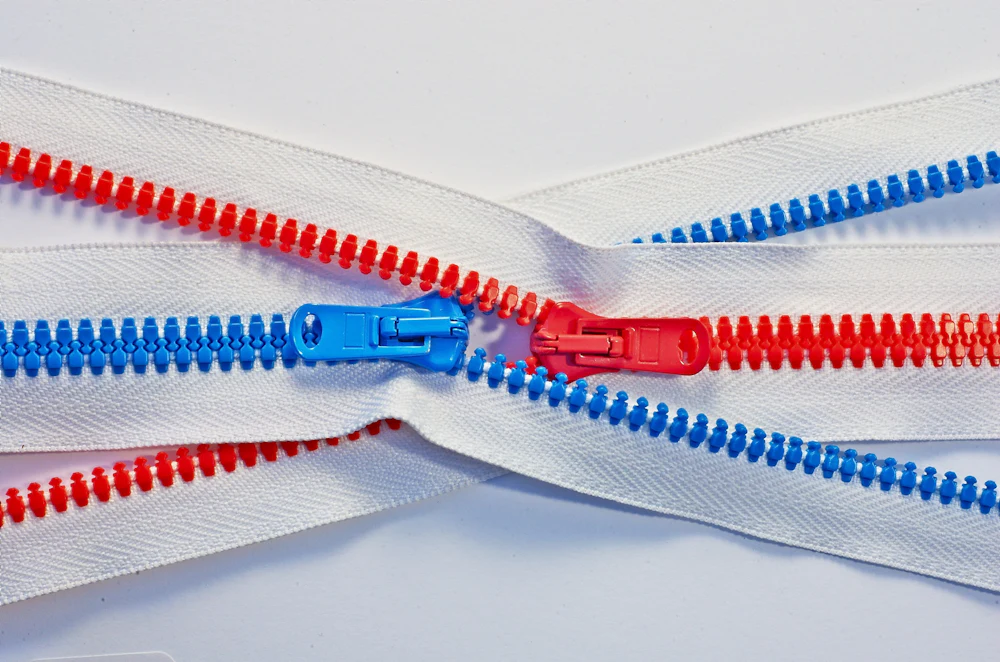
Coil zippers use a spiral of nylon monofilament sewn to the tape, the lightest of the three types and the standard choice for activewear, loungewear, and any garment where the zipper needs to lie flat under a lighter-weight shell fabric. Vislon zippers use individually molded plastic teeth, heavier and more visually chunky, common on hoodies and mid-weight jackets. Metal zippers use stamped brass or aluminum teeth, the heaviest option and typical on denim, workwear-influenced streetwear, and premium outerwear where the hardware is meant to be seen.
The slider, the pull tab that moves along the teeth, is where counterfeit trims show up most often in Chinese sourcing. A tape printed with a brand name and a slider stamped with the same brand’s logo should trace back to an authorized distributor, not a generic hardware wholesaler. Request the actual trim supplier’s name on the quote, not a vague “YKK-style” or “premium zipper” line item. PRP Apparel’s track jacket manufacturer and cargo pants construction guides both reference zipper strength testing to ASTM D2061 for exactly this reason: a verified test result is a more useful sourcing signal than a brand name alone, since a counterfeit slider can carry the right logo and still fail under load.
Elastic and Drawcord: Recovery Testing and Construction Type
Elastic comes in three base constructions: braided (round profile, common in lightweight waistbands and low-cost applications), knitted (flatter, softer hand, used in most activewear and underwear waistbands), and woven (the strongest and most expensive, used where recovery under heavy stretch matters most, like compression leggings). Exposed elastic sits raw against the skin or under a fold-over waistband; covered elastic is wrapped in fabric before it’s sewn in, adding a labor step but improving comfort and hiding the elastic’s raw edge. PRP Apparel’s custom legging manufacturer guide covers the waistband construction side of this in more depth; this article focuses on the sourcing and verification side.
Recovery, how well the elastic snaps back after repeated stretching, is tested to ASTM D4964 and is the single most important spec a buyer should ask for on any waistband or cuff elastic. Two rolls of elastic can look and feel identical off a spool and still have meaningfully different recovery numbers after a wash cycle, which is exactly the failure mode in the legging reorder scenario above: the replacement elastic looked right and tested wrong.
Drawcords carry their own sourcing chain, separate from elastic. A flat drawcord and a round drawcord aren’t interchangeable in a cord-lock or eyelet designed for one or the other, and the metal or plastic aglet on the cord end is itself a small hardware component sourced from yet another supplier. Confirming drawcord width and aglet type before bulk avoids a fit issue at the eyelet stage that’s expensive to catch after cutting.
Buttons, Snaps, and Hardware Finish
Metal buttons and snaps are plated, and the plating type matters for two reasons: corrosion resistance on garments that will be washed repeatedly, and compliance with nickel-release limits under regulations like EU REACH. Nickel-free hardware is not automatic on a standard quote. Buyers exporting into the EU or UK should ask specifically for nickel-free plating and should treat OEKO-TEX Standard 100 certification, covered in full in PRP Apparel’s OEKO-TEX certification guide, as a relevant check on hardware components, not just fabric.
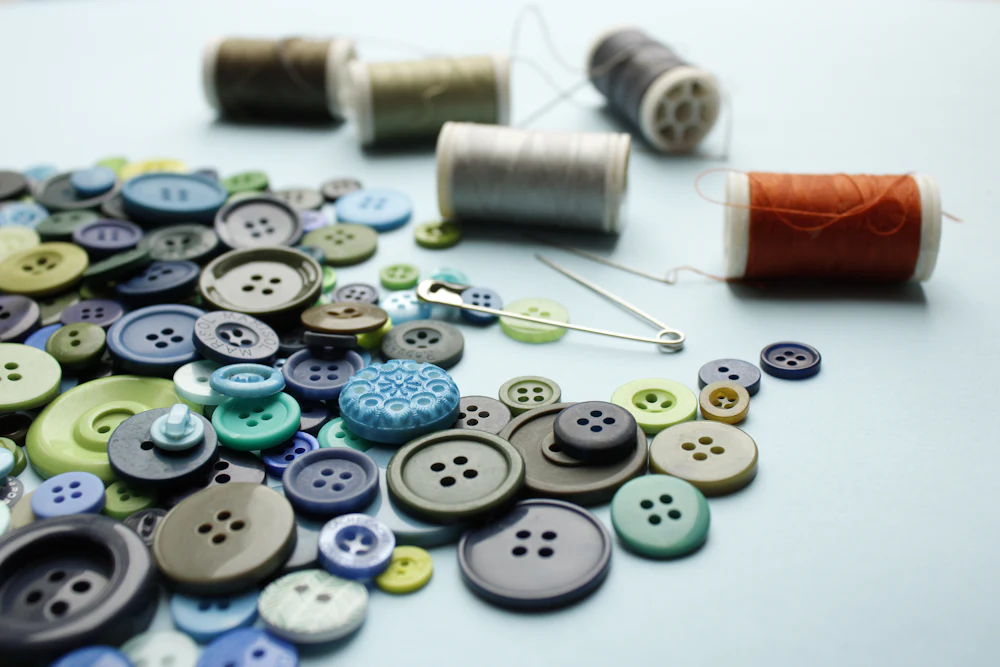
Button attachment method also affects durability: sew-through buttons (holes stitched directly to the garment) are standard on shirts and light layers, while shank buttons (attached via a small loop of metal or thread beneath the button) sit further off the fabric and are more common on structured outerwear, where a flush button would crack under repeated flexing.
Verifying a Factory’s Trim Sourcing Before You Commit
A factory that sources trims well can usually answer these questions without hesitation. One that can’t is telling a buyer something about how the rest of production is run.
- Ask for the trim supplier’s name, not a brand adjective. “YKK zipper” on a quote means nothing if the factory can’t produce a supplier invoice or authorized-distributor reference when asked.
- Request a physical trim card before bulk, not just a spec sheet. A swatch card with the actual zipper tape, elastic sample, and button finish lets a buyer catch a color or texture mismatch before 500 units are cut, not after.
- Confirm trims go through the same color-matching process as fabric. PRP Apparel’s lab dip approval process exists to lock fabric color before bulk dyeing; trims (especially elastic and drawcord meant to match a shell fabric) should go through the same bracketed-sample approval, not a separate, looser process.
- Ask whether trims are sourced locally or through a trading-company middleman. The same mill-vetting logic that applies to fabric sourcing, detailed in PRP Apparel’s fabric sourcing guide, applies to trims: a factory with direct trim-supplier relationships in its own production hub can catch and fix a shortage before it becomes a substitution. A factory routing trims through an unnamed third party usually can’t.
- On a reorder, confirm the factory kept the trim supplier and lot reference on file. PRP Apparel’s reorder process guide covers dye-lot continuity for fabric; the same question applies to elastic and zipper lots, and it’s the exact question that would have caught the legging waistband substitution before it shipped.
Trim Type Comparison
| Trim Type | Common Construction | Test Standard | What to Verify Before Bulk |
|---|---|---|---|
| Zipper (coil) | Nylon spiral tooth, lightweight | ASTM D2061 (strength) | Slider brand match, tape color lot |
| Zipper (vislon/metal) | Molded plastic or stamped metal teeth | ASTM D2061 (strength) | Slider brand match, plating finish |
| Elastic (knitted/woven) | Flat or contoured band, exposed or covered | ASTM D4964 (recovery) | Recovery after wash, width consistency |
| Drawcord | Flat or round cord with aglet | No standard test; verify by fit | Aglet type, cord-lock compatibility |
| Buttons/snaps | Sew-through or shank, plated metal | Nickel-release limits (REACH) | Plating type, corrosion resistance |
Trims Sourcing at PRP Apparel
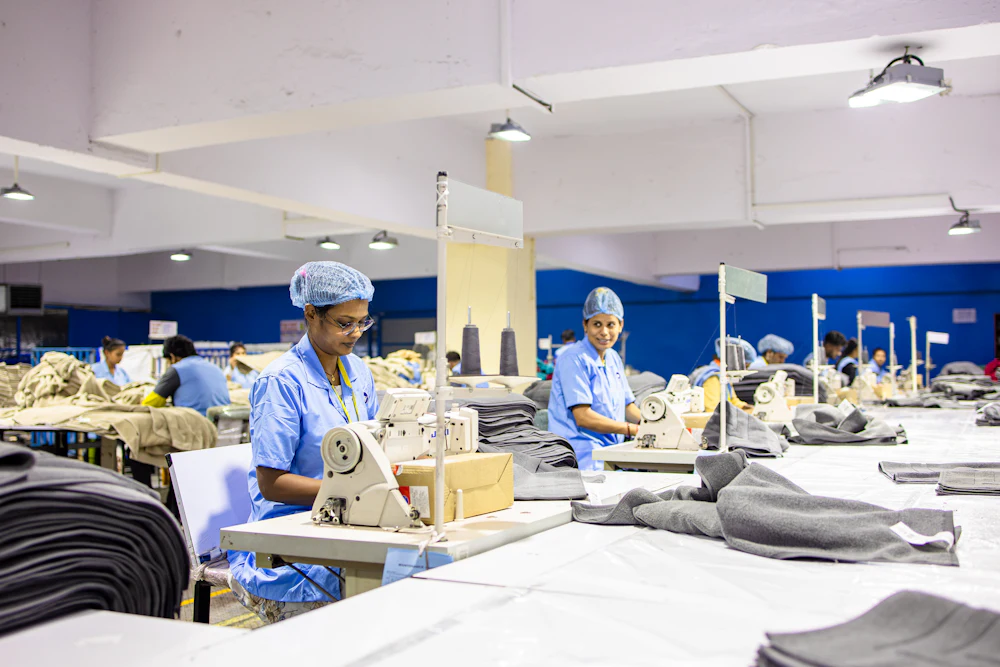
PRP Apparel is based in Dongguan, inside the Pearl River Delta manufacturing hub, with direct access to the same trim suppliers, zipper factories, elastic and webbing mills, button and snap manufacturers, that fabric mills in the same region already work with. Trim color matching runs through the same lab dip approval step as fabric before a bulk order starts, so a zipper tape or elastic band is checked against the shell fabric’s approved color, not guessed at separately.
Trim cost is built into the per-unit pricing already published in PRP Apparel’s production specs, not billed as a separate line item at 50-piece MOQ. A brand ordering a track jacket or a compression legging isn’t quoted a garment price and then hit with a second, hidden trim minimum after the deposit is paid.
FAQ
What’s the difference between fabric sourcing and trims sourcing?
Fabric sourcing covers the base material (knit or woven cloth) that makes up most of a garment’s surface area. Trims sourcing covers everything else sewn or attached to it: zippers, elastic, drawcords, buttons, and hardware. The two run through different supplier tiers with different MOQ structures, so a factory can be strong on one and weak on the other.
How do I know if a factory is using genuine YKK zippers?
Ask for the trim supplier’s invoice or authorized-distributor reference, not just a brand name on the quote. A tape and slider both stamped with a matching brand logo is a better signal than a verbal claim, and requesting an ASTM D2061 strength test result on the actual zipper going into your order removes the guesswork entirely.
What’s a typical MOQ for a custom zipper color or elastic width?
Custom-colored zippers and non-stock elastic widths carry their own minimum set by the trim supplier, separate from the garment’s 50-piece MOQ. This minimum varies by supplier and isn’t a fixed number across the industry, which is why it needs to be confirmed at quoting, not assumed to match the garment minimum.
Why did my reorder’s elastic or zipper feel different from the first batch?
The most common cause is a trim substitution made without the brand’s knowledge, usually because the original trim supplier was out of stock on that color or width. Confirming that a factory keeps the original trim supplier and lot reference on file for reorders is the direct way to prevent this.
Do trims need OEKO-TEX certification too?
Fabric-level OEKO-TEX Standard 100 certification doesn’t automatically cover metal hardware. Nickel-release limits on buttons, snaps, and zipper components are a separate compliance check, particularly relevant for brands exporting into the EU or UK under REACH restrictions.
What’s the difference between coil and vislon zippers?
Coil zippers use a nylon spiral tooth and lie flatter, making them standard for activewear and lighter garments. Vislon zippers use individually molded plastic teeth, are heavier and more visually prominent, and are more common on hoodies and mid-weight outerwear.
To discuss your trims sourcing or overall production project, styles, fabric specs, timeline, and pricing, reach out directly via the inquiry form.
Related Reading
- Fabric Sourcing for Clothing Manufacturers
- Lab Dip Approval Process
- Clothing Manufacturer Reorder Process
Related Manufacturing Services
Ready to Start Your Clothing Project?
- MOQ from 50 pieces per style
- OEM and private label production
- Sample development support
- Fabric sourcing
- Quality inspection before shipment
- Worldwide shipping support